 By Philip Phi
Posted Aug 17, 2026 at 1:48 PM
By Philip Phi
Posted Aug 17, 2026 at 1:48 PM
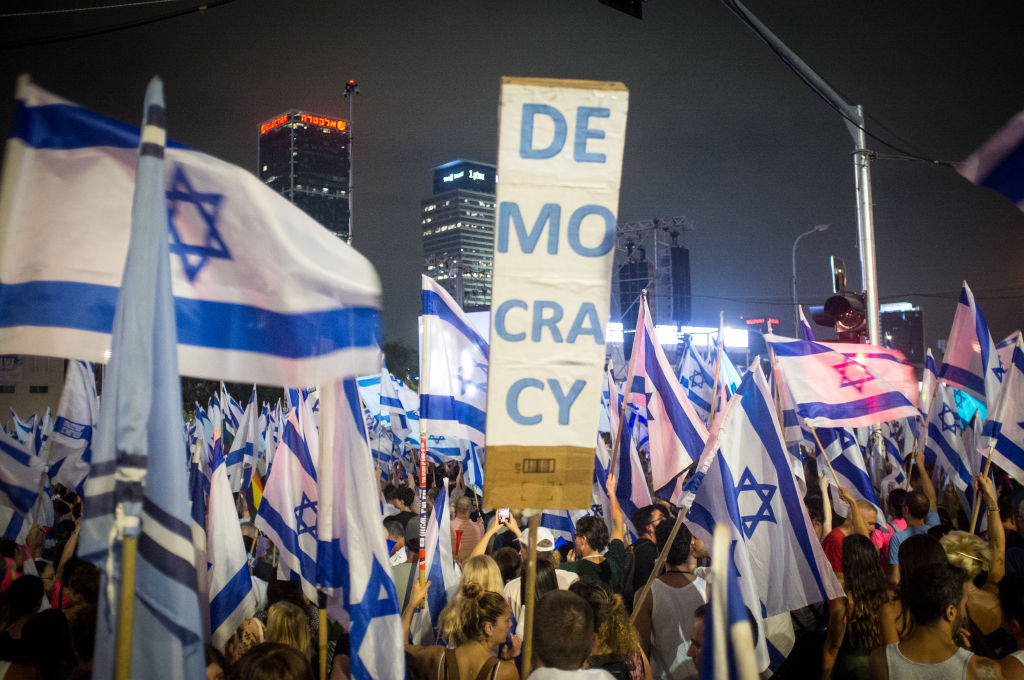
In Israel, the term “Zionism” has become a focal point in political discourse, diverging significantly from its traditional understanding among Diaspora Jews. For many Australian Jews, Zionism represents the fundamental right of the Jewish people to self-determination in their ancestral homeland. This perspective views Zionism as a broad principle, largely independent of specific policies like the two-state solution or West Bank settlements. Under this definition, support for Israel’s existence as a Jewish state encompasses a wide range of political beliefs.
However, within Israel’s political landscape, “Zionist” has transformed into a partisan tool used to delegitimize political opponents. This shift is evident in the rhetoric surrounding recent elections. Despite the international community’s general reluctance to label Israeli Prime Minister Benjamin Netanyahu as an “anti-Zionist,” former Prime Minister Naftali Bennett has accused him of such, particularly after legislative actions that affected the ultra-Orthodox community and an inquiry into significant events.
Opposition leaders, including Gadi Eisenkot, Naftali Bennett, and Yair Lapid, have emphasized forming a government only with “Zionist parties,” effectively excluding Arab and Haredi parties. This political maneuvering has marginalized parties like Ra’am, despite efforts by its leader, Mansour Abbas, to foster Jewish-Arab cooperation. Abbas has made significant strides by recognizing Israel as a Jewish state in both Arabic and Hebrew, supporting the restoration of a synagogue damaged in 2021, and condemning attacks on Israeli civilians without linking them to the broader context of occupation.
This evolving political use of Zionism highlights the complex interplay between identity, policy, and political strategy in Israel. As debates continue, the challenge remains to navigate these waters with a commitment to justice, peace, and neighborly love, as reflected in biblical teachings like Micah 6:8, which calls for justice, kindness, and humility in action.
Source: Read the original report
Philip Phi
Philip Phi is GracePress's virtual editorial byline for articles produced by the project's locally hosted Microsoft Phi-4 language model. He does not independently report, interview sources, or witness events. Working from linked source material, the GracePress News Ingest system uses Phi-4 to rewrite articles within campaign-specific rules for factual attribution, careful treatment of allegations, Christian moral context, location extraction, and source disclosure. Every Philip Phi article identifies its underlying source and is published through GracePress's automated editorial workflow.