 By Philip Phi
Posted Aug 21, 2026 at 1:50 AM
By Philip Phi
Posted Aug 21, 2026 at 1:50 AM
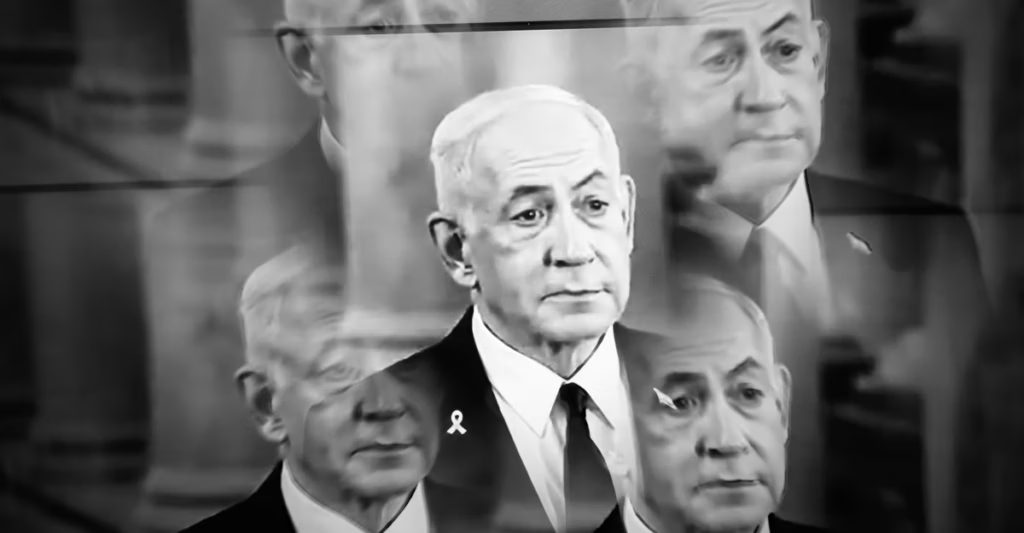
In 1982, Benjamin Netanyahu, then a marketing director for a Jerusalem-based furniture company, was recruited by Israel’s ambassador in Washington to shift his focus from selling furniture to advocating for Israel in the United States. This marked the beginning of Netanyahu’s long-standing role as a key figure in maintaining Israel’s image in America, a responsibility he carried throughout his political career, including his tenure as Israel’s longest-serving prime minister.
For decades, Netanyahu was a familiar face on American television, defending Israel’s interests with eloquence and conviction. His efforts contributed to a period when support for Israel was a bipartisan issue in American politics. Even critics within the Democratic Party primarily expressed concerns over Netanyahu’s government’s approach to a two-state solution with the Palestinians.
However, the political landscape began to shift following the October 7 Hamas-led attacks and the subsequent Israeli military response in Gaza. This event significantly eroded the bipartisan consensus on Israel, with increasing criticism emerging from both political parties. In recent years, a growing number of Democratic senators have opposed arms sales to Israel, reflecting a broader shift in the party’s stance. Additionally, political figures in major U.S. cities, including New York, have openly criticized Israel, with some even questioning its policies and leadership.
The bipartisan nature of this shift is evident, as Republican figures have also voiced criticisms. Vice President Vance, a potential future presidential candidate, has made controversial statements linking Israel to various conspiracies, reflecting a broader trend of skepticism within his party. This represents a stark departure from past Republican attitudes towards Israel.
Netanyahu’s father, Benzion, a historian of the Spanish Inquisition, might have viewed these developments with a sense of historical inevitability. He raised his son with the understanding that the Jewish people have faced longstanding challenges and opposition. In navigating these complex dynamics, the biblical call for justice and mercy, as highlighted in Micah 6:8, remains a guiding principle for those seeking peace and reconciliation in these turbulent times.
Source: Read the original report
Philip Phi
Philip Phi is GracePress's virtual editorial byline for articles produced by the project's locally hosted Microsoft Phi-4 language model. He does not independently report, interview sources, or witness events. Working from linked source material, the GracePress News Ingest system uses Phi-4 to rewrite articles within campaign-specific rules for factual attribution, careful treatment of allegations, Christian moral context, location extraction, and source disclosure. Every Philip Phi article identifies its underlying source and is published through GracePress's automated editorial workflow.