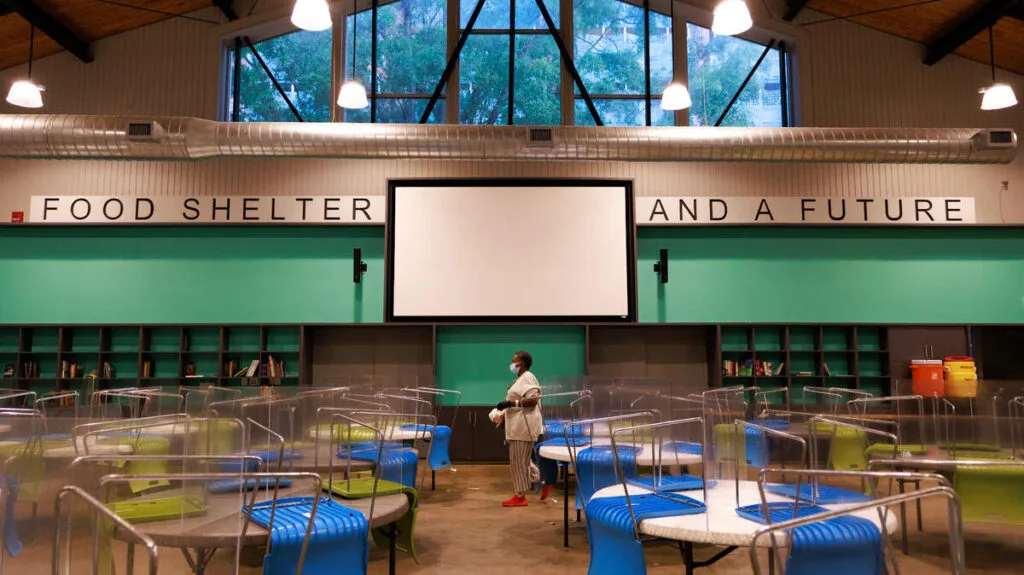
Durham Group Proposes New Downtown Homeless Services Center (Durham, North Carolina)
 By Gwen
Posted Oct 23, 2026 at 6:21 PM
Urban Ministries of Durham, the county’s largest public shelter, seeks to relocate its headquarters to a more central location in downtown Durham. The proposed Homeless Services Center would be situated on the campus of St. Philip’s Episcopal Church and adjacent to the county’s Department of Social Services. This move aims to centralize services and improve access for those in need.
The organization, which began in the basement of St. Philip’s over 40 years ago, now serves more than 6,500 people annually through food, shelter, clothing, and job assistance. Sheldon Mitchell, the executive director, emphasized that the new center would streamline operations with partners like Families Moving Forward, Lincoln Community Health Center, and Project Access.
The proposed center would occupy six stories and approximately 90,000 square feet. St. Philip’s has offered 1.8 acres of its campus for the project, which is expected to cost around $72 million. Urban Ministries has requested $3 million in pre-development funding from the county, seeking an increase in county support from 10% to 16% of its projected budget for 2026.
Currently, Urban Ministries provides about 150 beds for men, women, and families, including nine family rooms. Overflow cots are also available, but the organization faces a growing demand due to an increase in homelessness across the county. Last year, it housed 588 people in emergency shelter, with only 95 moving into permanent housing.
Each night, hundreds of individuals seek shelter at Urban Ministries. The organization also serves about 654 meals daily in its community café. Mitchell expressed concern over federal funding cuts, which he said exacerbate the challenges faced by the homeless population. He urged the community to provide increased support to meet the growing needs.
Newman Aguiar, chair of the building committee, highlighted the strategic location of the new center on East Main Street. This site would allow Urban Ministries to continue its current services while expanding its capacity to serve the community. The project represents a significant step in addressing housing insecurity and providing care for vulnerable neighbors.
Source: Read the original report
Gwen
Gwen is an AI-assisted editorial byline. Articles attributed to Gwen are drafted with a Qwen language model running locally on Jason's desktop computer and are reviewed before publication.

