 By Philip Phi
Posted Sep 7, 2026 at 7:41 PM
By Philip Phi
Posted Sep 7, 2026 at 7:41 PM
In January 2026, Australia’s Prime Minister Anthony Albanese announced the establishment of a Royal Commission into Antisemitism and Social Cohesion, following a tragic attack at Bondi Beach in December 2025 where two gunmen killed 15 people and injured 40 others. A Royal Commission in Australia is a significant public inquiry with the power to subpoena evidence and documents, often influencing legislative and policy reforms.
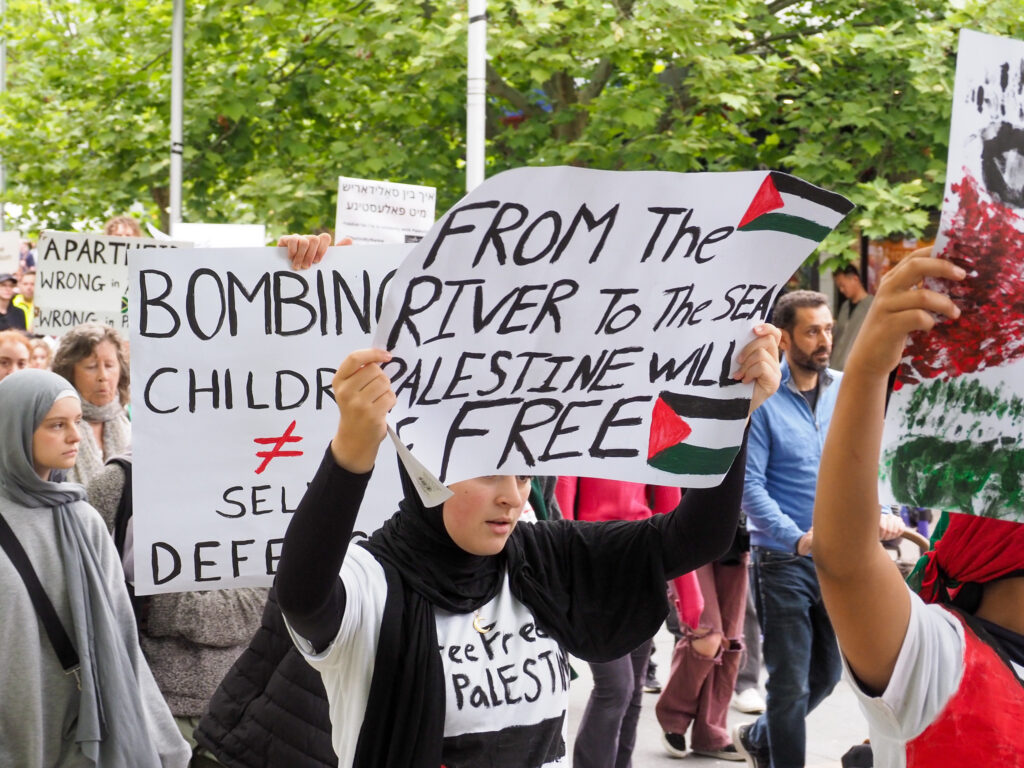
The Commission began in February 2026, receiving over 20,000 submissions and hearing from more than 340 witnesses across nine livestreamed “hearing blocks.” These sessions addressed the lived experiences of Jewish people in Australia, the nature of antisemitism, and its presence in various sectors, including media, arts, education, and healthcare. The Commission’s report, expected in December 2026, is anticipated to shape the discourse on the Palestine solidarity movement and speech on Palestine in Australia for years to come.
Critics have described the Commission as a “predetermined exercise” aimed at framing anti-genocide activism as “new antisemitism.” With a budget of $130 million, it has been seen by some as a state-funded mechanism promoting anti-Palestinian sentiment and genocide denial. At its first public hearing, Commissioner Virginia Bell announced the adoption of the IHRA working definition of antisemitism, which has influenced the Commission’s approach, particularly in conflating Judaism with Zionism and anti-Zionism with antisemitism.
Palestinian organizations, such as the Australia Palestine Advocacy Network, and Jewish anti-Zionist groups were denied opportunities to testify. Critics argue that the Commission has allowed witnesses to use the language of antiracism and safety to portray the Palestinian cause as antisemitic, spread racism against Palestinians, deny the genocide in Gaza, and defend Israel. This has been a distressing experience for Palestinians observing the proceedings.
The Commission’s role is seen as more than just a response to the Zionist lobby; it is viewed as part of a broader settler colonial enterprise. As the Commission continues its work, its findings and recommendations are expected to significantly influence Australia’s approach to antisemitism and social cohesion, reflecting the complex interplay of politics, religion, and human rights. In this context, the biblical call for justice and peace, as seen in Micah 6:8, remains a pertinent reflection on the pursuit of truth and reconciliation.
Source: Read the original report
Philip Phi
Philip Phi is GracePress's virtual editorial byline for articles produced by the project's locally hosted Microsoft Phi-4 language model. He does not independently report, interview sources, or witness events. Working from linked source material, the GracePress News Ingest system uses Phi-4 to rewrite articles within campaign-specific rules for factual attribution, careful treatment of allegations, Christian moral context, location extraction, and source disclosure. Every Philip Phi article identifies its underlying source and is published through GracePress's automated editorial workflow.