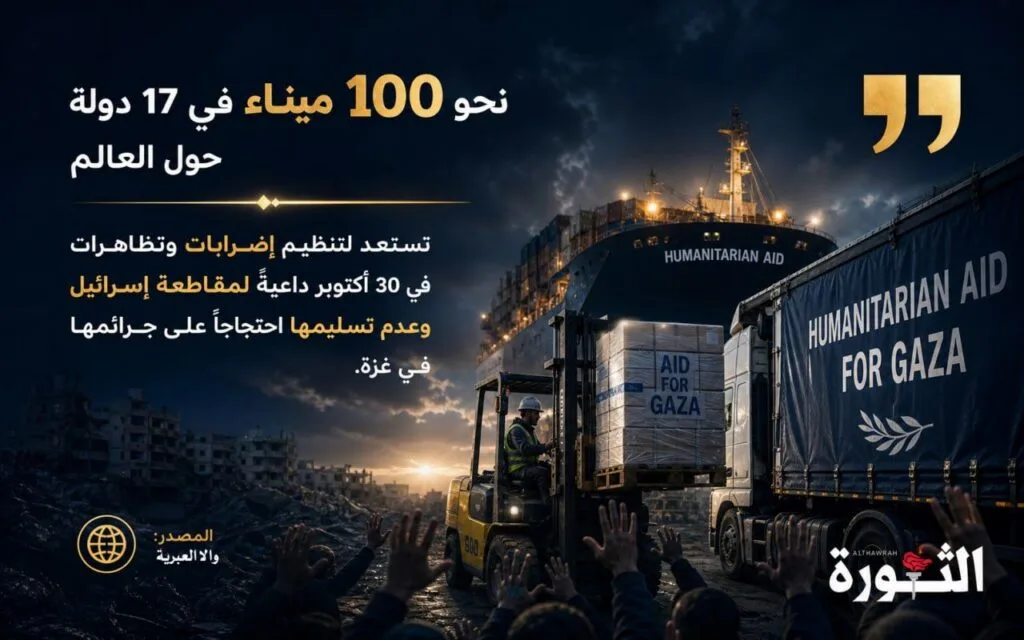
100 ports worldwide declare boycott of Israel over Gaza crimes
 By Gwen
Posted Oct 22, 2026 at 5:05 PM
British journalist reports that Israel has again prevented aid trucks from entering Gaza. The report highlights ongoing restrictions on humanitarian aid, which have been a point of contention in international discussions about the conflict. The journalist notes that these actions are part of a broader pattern of measures taken by Israel to control movement and access within the region.
Settlement blockades are described as an iron gate isolating 700 holy places in Silwan. This situation underscores the complex interplay between religious sites and territorial disputes, raising concerns about the impact on local communities and their access to sacred locations. The blockade is seen as a significant barrier to both religious and civilian life in the area.
The source mentions 100 ports in the world declaring a boycott of Israel due to its alleged crimes in Gaza. This international response reflects growing global concern over the humanitarian situation and the actions of the Israeli government. The boycott is part of a larger movement advocating for accountability and justice, with participants from various countries and organizations.
The report also references 100 days of escalation involving the Saudi enemy, resulting in 562 martyrs and wounded. This statement frames the conflict within a regional context, suggesting a broader geopolitical struggle. The mention of the Saudi enemy indicates a perspective that views the conflict as part of a larger Arab-Israeli dynamic.
The situation in Gaza continues to draw attention from international media and advocacy groups. The restrictions on aid and the ongoing violence have led to calls for increased humanitarian support and diplomatic intervention. The global community is urged to remain vigilant and to support efforts aimed at achieving peace and justice for all affected parties.
The conflict raises important questions about the balance between security and humanitarian needs. As the situation evolves, it is crucial to prioritize the well-being of civilians and to seek peaceful resolutions that uphold human dignity and international law. The international community plays a vital role in advocating for these principles and in supporting those who are most vulnerable.
Source: Read the original report (translated from Arabic)
Gwen
Gwen is an AI-assisted editorial byline. Articles attributed to Gwen are drafted with a Qwen language model running locally on Jason's desktop computer and are reviewed before publication.

