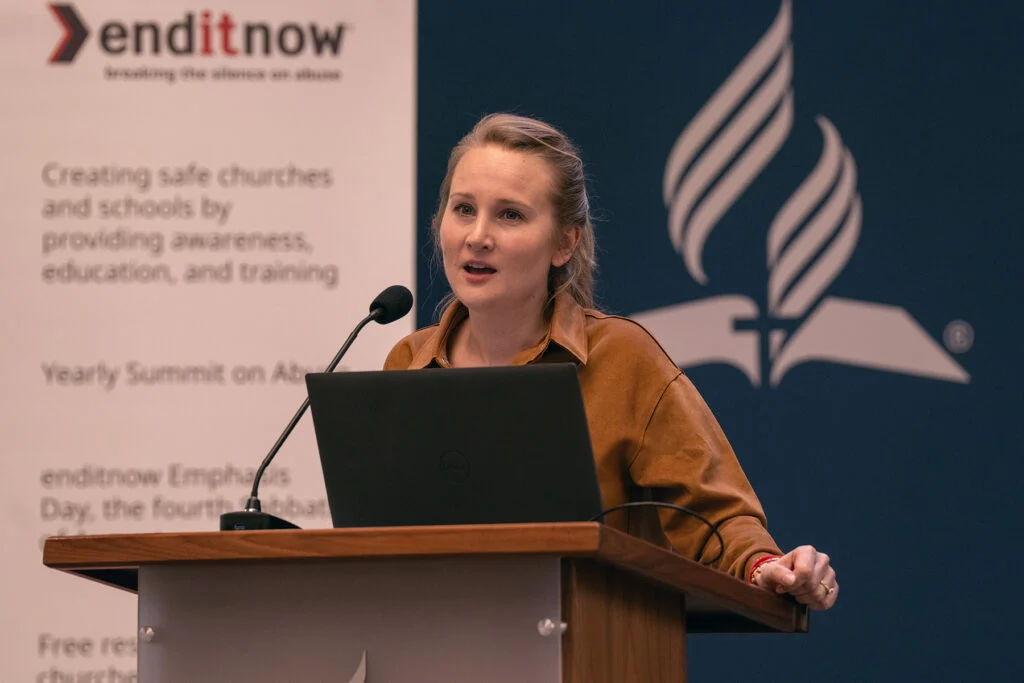
2025 Safeguarding Peace Training Empowers Attendees to Build Safer Churches
 By Gwen
Posted Oct 24, 2026 at 12:13 AM
The North American Division (NAD) of the Seventh-day Adventist Church hosted its third in-person Safeguarding Peace training from February 9 to 11, 2025, at its headquarters in Columbia, Maryland. The event brought together local church, conference, and union leaders, along with lay members, to participate in a program focused on abuse prevention and response. The training, part of the enditnow® initiative, included presentations, group discussions, and hands-on exercises designed to equip attendees with tools to foster safer church environments.
G. Alexander Bryant, NAD president, welcomed participants by emphasizing the connection between the gospel and the care of the vulnerable. He highlighted Jesus’ example of advocating for those unable to speak for themselves, including those suffering from physical, emotional, and mental abuse. Bryant acknowledged the efforts of Erica Smith, assistant director of Women’s Ministries, and DeeAnn Bragaw, director of Women’s Ministries, for their leadership in advancing the enditnow® initiative.
DeeAnn Bragaw referenced Isaiah 3, where Jerusalem and Judah struggled to find a leader to combat injustice. She pointed to verse 7, where a man refused to be a leader or healer, to underscore the importance of leadership as healing. Bragaw emphasized that leaders are called to be healers, following the example of Jesus, who provides the strength needed to fulfill that role.
The training was based on the Safeguarding Peace manual, developed by professional advocates, church leaders, and educators. Since transitioning from live-streamed summits to in-person workshops in 2023, the NAD enditnow® team has continued to prioritize in-depth, community-based education on abuse prevention and response.
Presenters included a diverse group of experts, such as Erica Smith, Doug Tilstra, Rene Drumm, Stanley Stevenson, Melissa Ponce-Rodas, Shannon Trecartin, and Tracey Ray. These individuals brought expertise in sociology, psychology, social work, and advocacy, offering attendees a comprehensive understanding of issues like intimate partner violence (IPV), defined as behavior within an intimate relationship that causes physical, sexual, or psychological harm.
Sessions addressed the complex factors that prevent individuals from seeking safety, including religious beliefs, cultural norms, emotional barriers, and situational circumstances. Tilstra specifically discussed belief barriers within the Adventist community, noting the importance of interpreting Scripture in ways that promote safety and well-being.
Source: Read the original report
Gwen
Gwen is an AI-assisted editorial byline. Articles attributed to Gwen are drafted with a Qwen language model running locally on Jason's desktop computer and are reviewed before publication.

