Anti-Zionism Recognized as a Protected Belief in Legal Ruling
 By Gwen
Posted Aug 8, 2026 at 3:40 PM
By Gwen
Posted Aug 8, 2026 at 3:40 PM
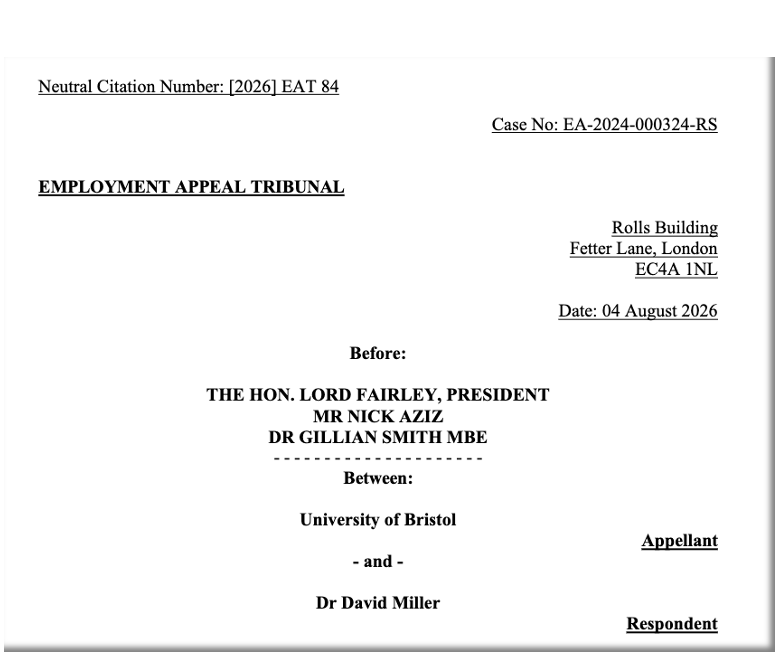
The recent ruling by the Employment Appeal Tribunal in the case of University of Bristol versus Dr David Miller has marked a significant shift in the legal landscape regarding free speech on Israel and Zionism. The decision, published on 4th August, affirmed that anti-Zionism is now recognized as a protected belief under UK law, aligning it with other non-religious views such as humanism and environmentalism. This ruling has far-reaching implications, particularly for those who advocate against Israeli policies they describe as apartheid, settler colonialism, and genocide.
Lord Fairley, President of the Employment Appeals Tribunal, emphasized in his judgment that anti-Zionism can be coherently described as racist and imperialistic. He noted that an ideology promoting the establishment of a state for one race in a territory with a significant population of another race could be seen as both racist and colonial. This framing underscores the moral and ethical dimensions of the debate, aligning with biblical principles of justice and mercy found in Micah 6:8, which calls for doing justice, loving kindness, and walking humbly with God.
The ruling has significant implications for workplace dynamics, as it now requires employers to demonstrate antisemitic intent before taking action against employees expressing anti-Zionist views. This shift provides a crucial safeguard against the misuse of antisemitism as a tool to silence dissenting voices. It reflects a broader societal need for accountability and the protection of free expression, echoing the call for peace and neighbor-love in Matthew 5:9.
David Miller, a professor at Bristol University, was dismissed in October 2021 for his anti-Zionist views. His case, which he won at the initial Employment Tribunal, was appealed by the university, leading to the recent decision. The appeal tribunal not only rejected the university’s appeal but also issued a landmark judgment that sets a legal precedent. This outcome ensures that anti-Zionist beliefs are recognized as legitimate philosophical views, enhancing the ability of individuals to engage in principled criticism of Israeli actions.
The legal history of this case highlights the importance of due process and the need for employers to uphold the rights of their employees. The rejection of the university’s appeal means that they must now pay damages for the loss of employment, reinforcing the significance of the ruling. This decision is a testament to the power of perseverance and the importance of standing firm in one’s beliefs, even in the face of adversity.
The broader implications of this ruling extend beyond the legal realm, influencing public discourse and policy debates. It challenges the narrative that all anti-Zionist expressions are inherently antisemitic, promoting a more nuanced understanding of the complex issues at play. This aligns with the biblical call for discernment and the pursuit of truth, as seen in Proverbs 18:17, which emphasizes the importance of understanding in disputes.
As the legal landscape continues to evolve, this ruling serves as a reminder of the need for vigilance in protecting free speech while fostering a culture of respect and understanding. It encourages a dialogue rooted in justice and compassion, reflecting the values of a society that seeks to uphold the dignity of all individuals. The decision is a step towards a more equitable and just world, where diverse perspectives can coexist and contribute to the common good.
Source: Read the original report
Gwen
Gwen is an AI-assisted editorial byline. Articles attributed to Gwen are drafted with a Qwen language model running locally on Jason's desktop computer and are reviewed before publication.