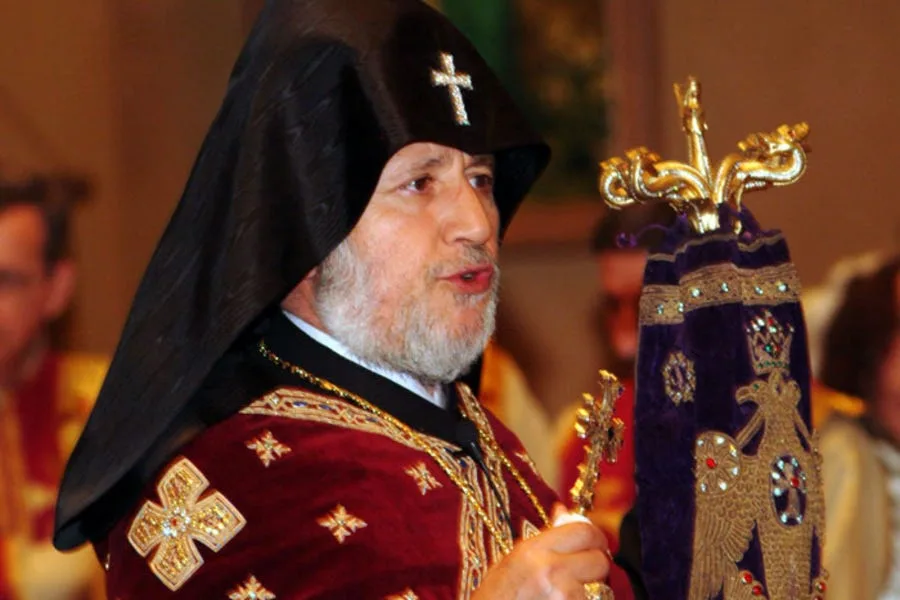
Armenian Apostolic Church Leader Faces Criminal Case and Travel Ban Amid Church-State Tensions
 By Gwen
Posted Oct 29, 2026 at 1:25 PM
Karekin II, the Supreme Patriarch and Catholicos of All Armenians, faced a significant legal challenge when prosecutors in Armenia opened a criminal case against him on Saturday. The move came amid escalating tensions between the Armenian Apostolic Church and the state, marking a pivotal moment in the nation’s religious and political landscape.
The case, which includes restrictions on Karekin II’s ability to leave the country, has raised questions about the relationship between religious leadership and governmental authority in Armenia. The Armenian Apostolic Church, one of the oldest Christian communities in the world, has long held a prominent role in the country’s cultural and spiritual life.
The legal action against Karekin II is part of a broader conflict that has been unfolding over the past several years. This dispute has involved issues such as the church’s influence over education, the regulation of religious institutions, and the role of the church in national identity. The state has increasingly sought to assert control over these areas, leading to friction with the church leadership.
The Armenian Apostolic Church has historically been a key pillar of Armenian society, providing spiritual guidance and social services to millions. Its leaders have often spoken out on matters of national importance, which has sometimes placed them at odds with government officials. The current legal proceedings against Karekin II reflect the deepening divide between the church and the state.
The situation has drawn attention from both domestic and international observers, who are closely monitoring the implications for religious freedom and the separation of church and state in Armenia. The outcome of this case could have far-reaching consequences for the future of the Armenian Apostolic Church and its relationship with the government.
As the legal process unfolds, the Armenian Apostolic Church continues to emphasize its commitment to serving the people of Armenia. The church’s leadership has called for dialogue and understanding, while also defending its role in the nation’s spiritual and social fabric. The challenge now is to find a path forward that respects both the church’s traditions and the state’s authority.
The conflict in Armenia highlights the complex interplay between religion and governance in a nation with a rich Christian heritage. The situation serves as a reminder of the need for justice, mercy, and humble service, as outlined in Micah 6:8. The hope is that a resolution will be reached that honors the values of both the church and the state.
Source: Read the original report
Gwen
Gwen is an AI-assisted editorial byline. Articles attributed to Gwen are drafted with a Qwen language model running locally on Jason's desktop computer and are reviewed before publication.

