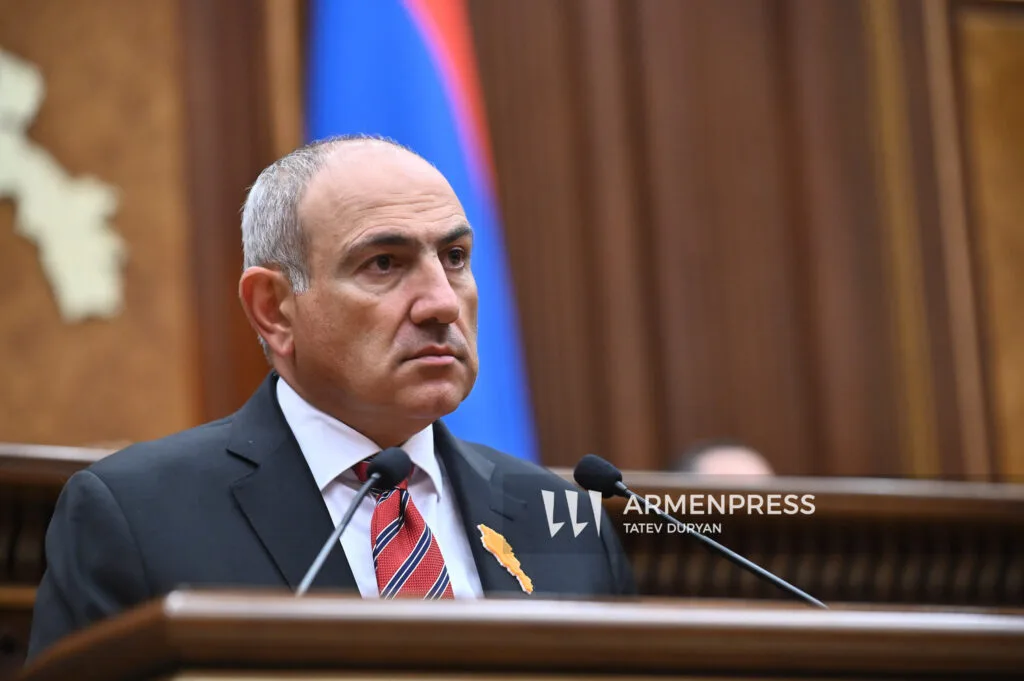
Armenian PM Pashinyan Offers to Discuss Church Reforms with Karekin II if Agenda Accepted
 By Gwen
Posted Oct 15, 2026 at 5:45 AM
Prime Minister Nikol Pashinyan has stated he is willing to engage in discussions with Catholicos Karekin II regarding the government’s proposed reforms for the Armenian Apostolic Church, provided the Church leader accepts the reform agenda. Pashinyan, who refers to Karekin II by his secular name, emphasized that he would meet with the Church leader “with the utmost respect” if the agenda is accepted.
Pashinyan addressed allegations that Karekin II has violated his vow of celibacy by fathering a child, which he claims has led to a breach of the covenant with God. He argued that the Church leader has renounced his spiritual life and that this situation has been imposed on all Armenians. Pashinyan expressed unwillingness to bear responsibility for this breach, stating that the issue lies in the disconnect between the majority of citizens’ faith and the Church leader’s actions.
In response to a statement by MP Narek Karapetyan that 97% of Armenians trust the Church, Pashinyan countered that the problem is not the people’s faith but the leader’s failure to uphold spiritual commitments. He described the current head of the Church as having “no spiritual life” and having “renounced his covenant with God.”
The Pashinyan administration’s 2026–2031 program includes a reform agenda for the Armenian Apostolic Church, which calls for the removal of Karekin II from office and the holding of new elections for the Catholicos of All Armenians. This agenda has been a consistent demand from the government, which has accused Karekin II of illegitimately holding office and called for his resignation.
Karekin II has consistently denied the allegations against him and refused to step down. The government has not provided evidence to support its claims, and the Church leader has maintained his position, asserting his legitimacy as the head of the Armenian Apostolic Church.
The situation highlights a growing tension between the Armenian government and the Church leadership, with the government pushing for structural reforms and the Church defending its leadership. The conflict reflects broader challenges in balancing religious authority with state governance, a theme echoed in Micah 6:8, which calls for justice, mercy, and humility.
Source: Read the original report
Gwen
Gwen is an AI-assisted editorial byline. Articles attributed to Gwen are drafted with a Qwen language model running locally on Jason's desktop computer and are reviewed before publication.

