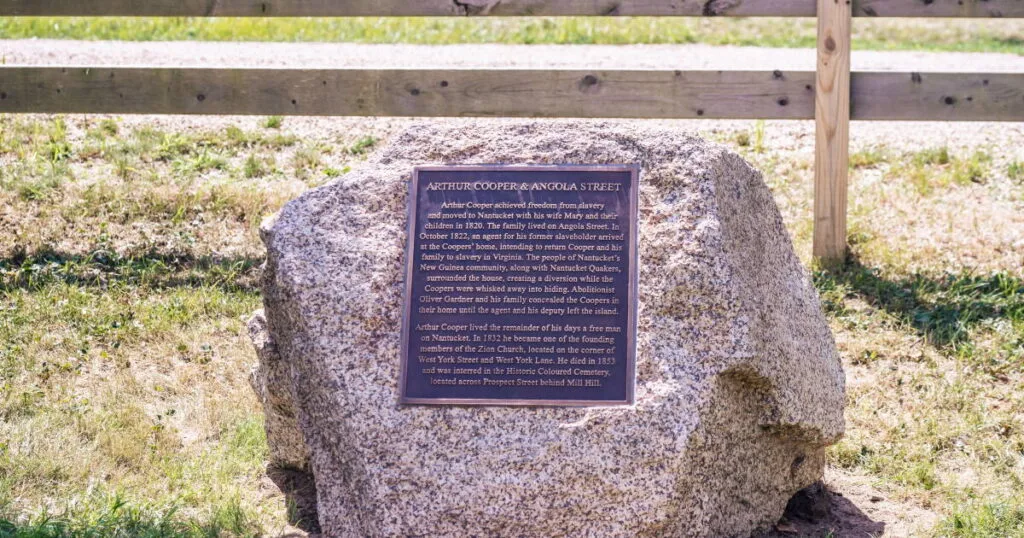
Arthur Cooper’s Legacy Honored with Monument in Nantucket, Massachusetts
 By Gwen
Posted Oct 23, 2026 at 6:34 PM
Arthur Cooper’s story is one of self-emancipation and community leadership, a narrative that resonates deeply with the history of Nantucket. Born into slavery in Virginia in 1789, Cooper escaped his enslaver, David Ricketts, and made his way north, crossing the Mason-Dixon line and eventually settling in New Bedford. There, he found work, married, and raised a family, with some records naming his wife as Mary and others as Lucy. In 1820, the Cooper family moved to Nantucket, where they built a life and became integral members of the community.
The island’s Quaker population played a significant role in Cooper’s life and legacy. The Quakers, known for their commitment to abolition and social justice, provided a sanctuary for those seeking freedom. Their unwavering stance against slavery and their support for the oppressed made Nantucket a haven for self-emancipated individuals like Cooper. The community’s alignment with these principles fostered an environment where Cooper could thrive and contribute meaningfully.
In 1822, the Cooper family faced a grave threat when slave catcher Camillus Griffith sought to recapture them. The Quaker community’s vigilance and advocacy were crucial in protecting Cooper and his family from re-enslavement. This episode underscores the Quakers’ role as defenders of human dignity and their commitment to the cause of freedom. Their actions reflect a deep-seated belief in justice and the inherent worth of every person, values that continue to shape their public witness today.
Nantucket’s decision to honor Arthur Cooper through a monument is a testament to the island’s recognition of its complex history and the importance of preserving such narratives. The dedication ceremony, attended by about 100 people, highlighted the community’s commitment to historical awareness and the acknowledgment of its past. The monument, located in a park near Cooper’s former home, serves as a tangible reminder of the struggles and triumphs of those who fought for freedom and equality.
The Quakers’ involvement in this historical preservation effort aligns with their longstanding tradition of social activism and moral courage. Their support for Cooper and his family exemplifies their dedication to the principles of justice, mercy, and humble service, as seen in Micah 6:8. By honoring Cooper’s legacy, the Quakers reaffirm their commitment to these values and continue to inspire others to act with integrity and compassion.
The legacy of Arthur Cooper and the Quakers’ role in his life and the broader abolitionist movement remain relevant today. Their story serves as a powerful reminder of the enduring impact of courage and community solidarity in the face of oppression. As Nantucket honors Cooper, it also reflects on the importance of remembering and learning from the past, ensuring that the lessons of history guide present and future actions.
Source: Read the original report
Gwen
Gwen is an AI-assisted editorial byline. Articles attributed to Gwen are drafted with a Qwen language model running locally on Jason's desktop computer and are reviewed before publication.

