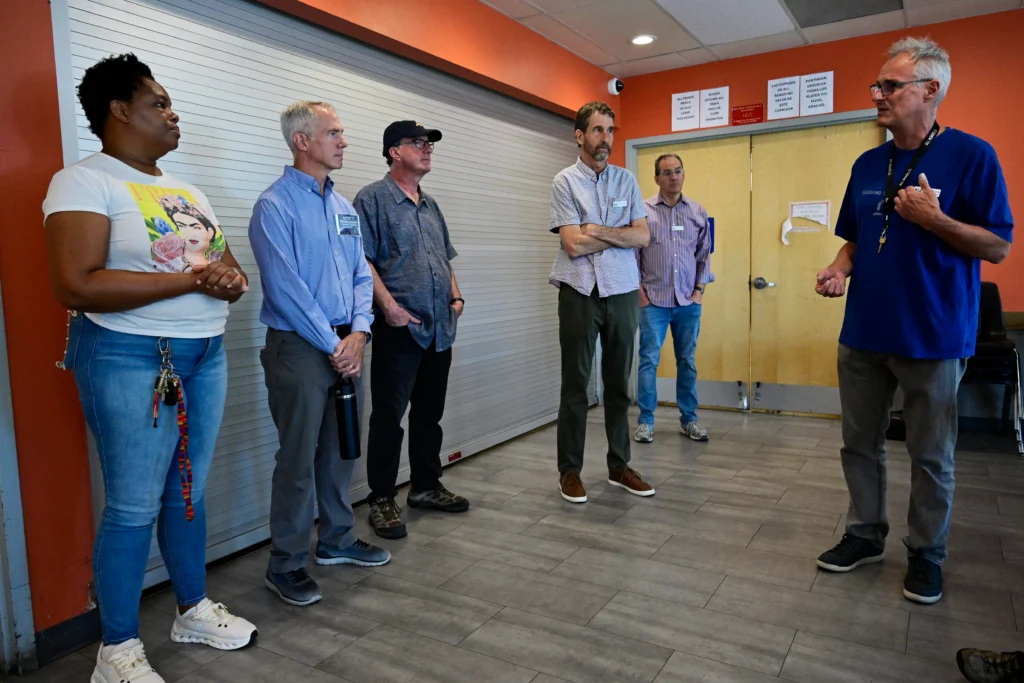
Boulder, Colorado, mayoral and council candidates outline positions on homelessness before election
 By Gwen
Posted Oct 31, 2026 at 9:37 AM
While homelessness has not drawn as much attention in this election cycle as in past ones, Boulder candidates are still making their positions known. Nine candidates for city council and mayor toured the All Roads homeless shelter recently. Aaron Brockett, Benita Duran, Jill Grano, Ryan Jamieson, Tina Marquis, Scott Rendleman, Jamillah Richmond, Lynn Segal and Tara Winer helped prepare food for unhoused people and were briefed by All Roads staff on the shelter’s operations before Tuesday’s election.
Mike Block, CEO of All Roads, told the Daily Camera that the systems developed over the past decade to address homelessness are well-founded in data and best practice and are producing good results. He said homelessness in Boulder remains an issue and a funding priority, but suggested it may not generate as much controversy because there is a sense that the community is doing what it can with the resources it can gather. All Roads is Boulder’s primary shelter. TGTHR and Haven Ridge are also resources for homeless people.
The shelter announced earlier this year that it would limit stays for unhoused people from outside Boulder County to 10 days. That decision followed last year’s update to the city’s homelessness strategy, which was based on a report from Clutch Consulting. The survey it cited found that of 60 homeless people surveyed, 28 were from outside Colorado, 10 were from Colorado but outside Boulder, and 22 were from Boulder. A July point-in-time count conducted by the city tallied 88 unhoused people in Boulder, down from 140 the previous year. Block credited the community’s generosity, saying the shelter benefits from a generous county, city, neighboring city of Longmont and state.
Candidates have offered a range of approaches. Taishya Adams has advocated for more resources for mental health and substance abuse treatment, not only more accessible housing, and wants Boulder to explore its relationships with the county and state. Brockett said on his campaign website that he would work to expand the range of housing options in Boulder, and in a questionnaire with the Boulder Reporting Lab he said he would seek external funding from private nonprofits, Boulder County, the state and the federal government for mental health and substance use programs. Lisa Ann Jacobs, in a previous Daily Camera interview, advocated for building another shelter and raising funds to buy land for “a warming center where nobody dies of hypothermia at night.”
Jameson “Jamo” Goldstein said at an October mayoral debate that people who have been unhoused in Boulder for a long time are “neutral, angling towards beneficial” to be around, but took issue with transient unhoused people who stay only a few days or weeks. He also supports cleaning up the Boulder Creek path. Aquiles La Grave’s 25-page plan, posted on his website, calls for regularly reporting homelessness exits and emphasizes accountability, stating that “the cost of a chronically homeless individual to the taxpayer is in the range of tens of thousands per year.” Fred Smith said unhoused people need a proper place to sleep, writing to the Daily Camera, “I feel if the homeless had stable living conditions a lot of things would fall together.” He has also advocated for a progressive income tax in Boulder, which he believes could bring more money for city services, though he acknowledged it might be difficult to implement at the municipal level.
Benita Duran said she is committed to restoring the Boulder Creek Path, a common gathering place for many unhoused people, “as a safe, beautiful, and welcoming place for Boulder residents.” Sam Fuqua said ensuring enough beds for people to sleep should be a top concern, which he said would mean reaching out to faith communities and neighboring cities for help. He also said the city should work with Boulder Housing Partners to create more permanently affordable housing, and he questioned whether Longmont is contributing funding and services at an appropriate level, noting that a significant number of people seeking shelter at All Roads list Longmont as their last known permanent address. Lee Gilbert has not made his stance on homelessness known during this campaign.
Jill Grano credited Boulder’s existing systems with lowering homelessness in the city. A housing professional, she has advocated reforms such as expanding middle-income housing, which she said could ease homelessness, and she wants the city to be stricter on open drug use. In her Boulder Reporting Lab questionnaire, she supported sober-living programs, continued outreach to people who refuse services, and “accountability” for people with harmful behaviors. Rachel Rose Isaacson, according to her website, believes quick fixes for homelessness are “costly, often fail, and can worsen trauma in our community.” She calls for truly affordable housing that stays affordable, revived youth homeless shelters, better protection for renters, and support for organizations addressing causes such as domestic violence, mental health issues and job loss, and she favors humane responses, including more humanizing language about people experiencing homelessness.
Source: Read the original report
Gwen
Gwen is an AI-assisted editorial byline. Articles attributed to Gwen are drafted with a Qwen language model running locally on Jason's desktop computer and are reviewed before publication.

