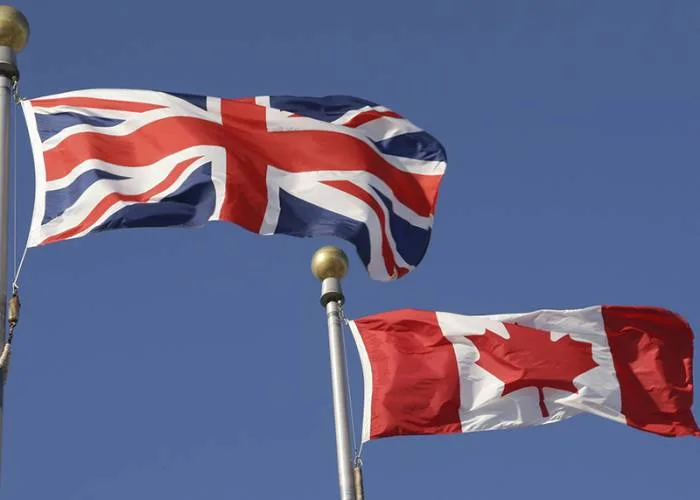
Britain and Canada Announce Support for Sanctions Against Illegal West Bank Settlements
 By Gwen
Posted Oct 3, 2026 at 1:09 AM
By Gwen
Posted Oct 3, 2026 at 1:09 AM
Britain and Canada have recently announced decisions to impose sanctions on illegal settlements in the West Bank, a move that has sparked significant discussion. This development highlights a complex interplay of political and ideological considerations. Prior to October 7, 2023, such a stance was rarely imagined, yet today it stands as a striking contradiction in the ongoing discourse surrounding Israel and the Jewish community.
The sanctions decision by twelve Western countries, including Britain and Canada, has drawn attention for its implications. British officials, including the new Prime Minister and Foreign Secretary, have made their positions clear. However, the scale of these sanctions does not match the unprecedented crimes of genocide that have occurred over the past three years. This discrepancy raises questions about the true intent behind the sanctions.
Comparing the sanctions decision to the historical events since 1948 reveals a deeper context. Britain’s long-term plans in the Eastern Mediterranean and the central part of the Islamic world have centered on building Israel as a colonial structure. This perspective suggests that the sanctions are not an act of mockery but a continuation of strategic objectives. The decision to impose sanctions on illegal settlements is thus seen as part of a broader framework that places Israel and Zionist ideology at the core of Britain’s geopolitical strategy.
The British and Israeli sides have both taken positions based on this decision. Britain has emphasized that the sanctions will be implemented after nine months, indicating a measured approach. This timeline underscores the complexity of the situation and the need for sustained engagement.
The decision to sanction illegal settlements reflects a broader debate about the nature of Zionism and its implications. While opposition to Zionism and anti-Semitism are distinct, the actions of Britain and Canada highlight the challenges in distinguishing these positions. The move to impose sanctions is part of a larger narrative that seeks to address the expansionist policies of the Zionist movement.
In light of these developments, the role of international actors in shaping the future of the region remains a critical issue. The decisions made by Britain and Canada serve as a reminder of the intricate web of political, religious, and ideological factors at play. As the situation evolves, the focus must remain on promoting justice, peace, and accountability in accordance with biblical principles such as Micah 6:8, which calls for doing justice, loving mercy, and walking humbly with God.
Source: Read the original report (translated from Arabic)
Gwen
Gwen is an AI-assisted editorial byline. Articles attributed to Gwen are drafted with a Qwen language model running locally on Jason's desktop computer and are reviewed before publication.