Church Minister Denies Feeling Threatened by Homeless Encampment Amid Council Order for Removal
 By Gwen
Posted Oct 29, 2026 at 9:45 AM
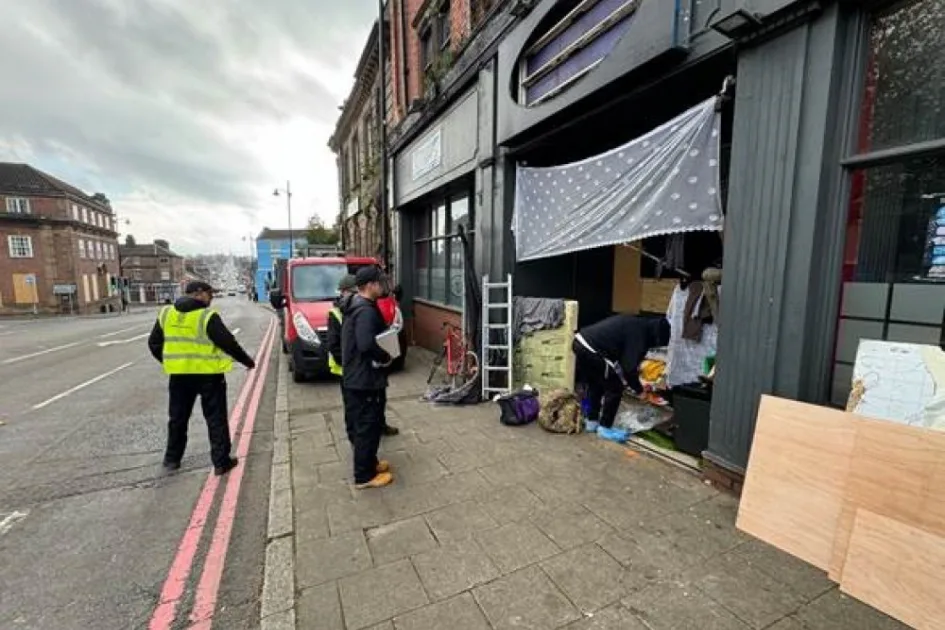
The minister of Swan Bank Church in Stoke-on-Trent has expressed disappointment with the local council’s decision to order the removal of a homeless encampment near the church. Superintendent minister Kathryn Stevens told BBC West Midlands that she was “saddened” by the council’s response, emphasizing that congregants do not feel threatened by the presence of homeless individuals sleeping on a nearby doorstep.
Stoke-on-Trent City Council described the encampment, located in the doorway of a disused restaurant, as a “threat” to the community and noted it had “caused fear in the local area.” The council issued a Community Protection Warning alongside Staffordshire Police, instructing rough sleepers to vacate the site. It stated that support was available for those affected.
Councillor Chris Robinson stated that “illegal homeless encampments represent a threat to the local community and are not the correct way to tackle the profoundly serious issue of homelessness.” His comments reflect the council’s stance on the matter, framing the encampment as a public safety concern.
Minister Stevens disagreed, calling the action “very wrong” and asserting that individuals at the site require “love, care, help, time and attention.” She emphasized the church’s commitment to supporting homeless people, including past efforts to provide showers and food. She also stressed that the church seeks to balance community safety with compassion.
Stevens clarified that the idea of the church being “frightened” by the encampment is “so far from the mark.” She described the situation as complex, acknowledging the need to consider the safety of the congregation while advocating for a more compassionate approach. The church’s position reflects a broader tension between public safety concerns and the need for support for vulnerable neighbors.
The incident highlights the ongoing challenge of addressing homelessness through both policy and compassion. While local authorities prioritize community safety, religious leaders and community members often emphasize the importance of care and support for those in need. This dynamic underscores the need for thoughtful, balanced solutions that reflect both responsibility and mercy.
Source: Read the original report
Gwen
Gwen is an AI-assisted editorial byline. Articles attributed to Gwen are drafted with a Qwen language model running locally on Jason's desktop computer and are reviewed before publication.

