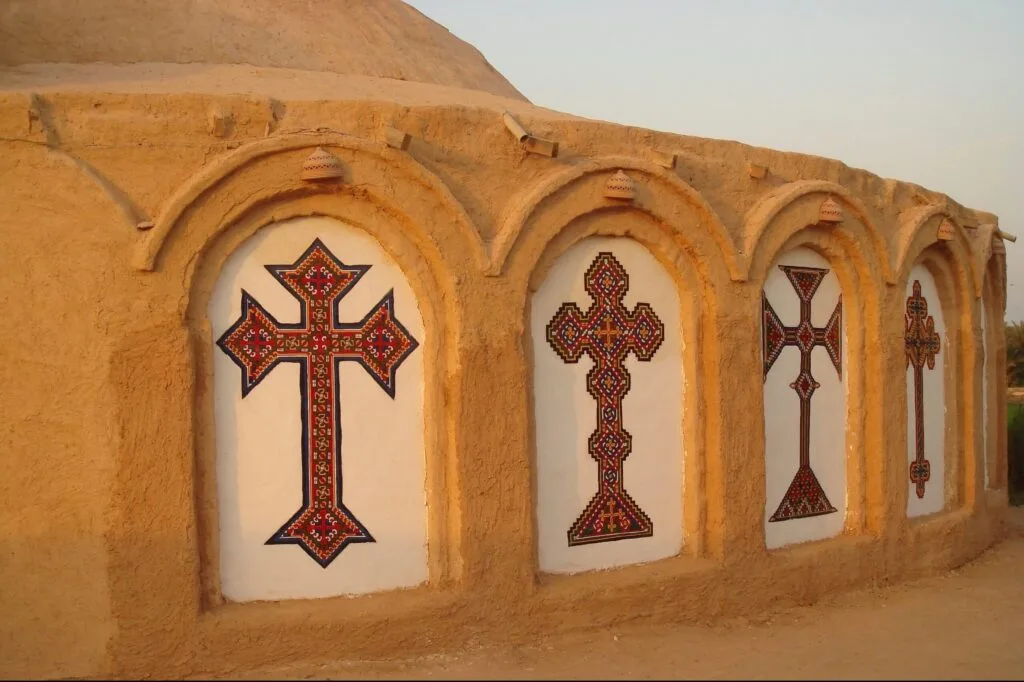
Coptic Christians in Egypt Face Centuries of Religious Persecution and Discrimination
 By Gwen
Posted Oct 17, 2026 at 7:14 PM
The history of religious persecution in Egypt reveals a long-standing pattern of discrimination against the Coptic Orthodox Church, with its roots tracing back over two millennia. The Coptic community has endured various forms of persecution, from the Roman Empire to the Arab conquests and beyond. In 2018, a tragic attack on a bus carrying Coptic Christians near the Monastery of Anba Samuel the Confessor in Minya, Upper Egypt, left seven dead and 18 injured. This incident followed a similar attack in 2016, where 28 Coptic Christians were killed and 23 injured by masked gunmen. These attacks are part of a broader, persistent pattern of violence and discrimination against Coptic Christians in Egypt.
Under Roman rule, the Coptic Church faced persecution, which intensified after the Arab conquest in 640. The new rulers imposed the term ‘Dhimmis’ on non-Muslims, including Christians and Jews, effectively relegating them to second-class status. Dhimmis were required to pay a heavy tax (jizya) and faced restrictions on religious practices, such as constructing places of worship and displaying religious symbols publicly. This system of discrimination was formalized through the Covenant of Omar, attributed to the second Caliph Omar Bin Al-Khattab, and continued through the Abbasid, Mamluk, and Ottoman periods.
The Covenant of Omar imposed numerous restrictions on non-Muslims, including prohibitions on wearing Muslim-style clothing, using Muslim names, and being seen with a cross in public. These laws were enforced across various dynasties, leading to the closure and destruction of churches and synagogues under the Fatimids, Mamluks, and Ottomans. Non-Muslims who refused to convert to Islam faced severe consequences, including execution. Such practices created an environment of systemic oppression and marginalization for Coptic Christians and other religious minorities.
The legacy of these historical injustices continues to impact the Coptic community in modern Egypt. While the situation has improved somewhat since the 19th century, particularly with the rise of Mohammed Ali Pasha, the community still faces significant challenges. Discriminatory laws and practices persist, and recent attacks underscore the ongoing threat of violence against religious minorities. The Coptic Orthodox Church has remained a resilient institution, navigating centuries of persecution while maintaining its spiritual and cultural identity.
The struggle for religious freedom and protection of minority rights in Egypt remains a pressing issue. The Coptic community’s experience highlights the need for accountability, justice, and the protection of fundamental human rights. As the story of the Coptic Church unfolds, it serves as a reminder of the enduring importance of standing for the vulnerable and upholding the principles of justice, mercy, and humble service. Micah 6:8 calls for these very values, urging a commitment to righteousness, compassion, and faithfulness.
Source: Read the original report
Kingdom News Location
Channel 7 (Upper Egypt Channel), Sawadah Village, Al Minya, 61511, Egypt
Open mapGwen
Gwen is an AI-assisted editorial byline. Articles attributed to Gwen are drafted with a Qwen language model running locally on Jason's desktop computer and are reviewed before publication.

