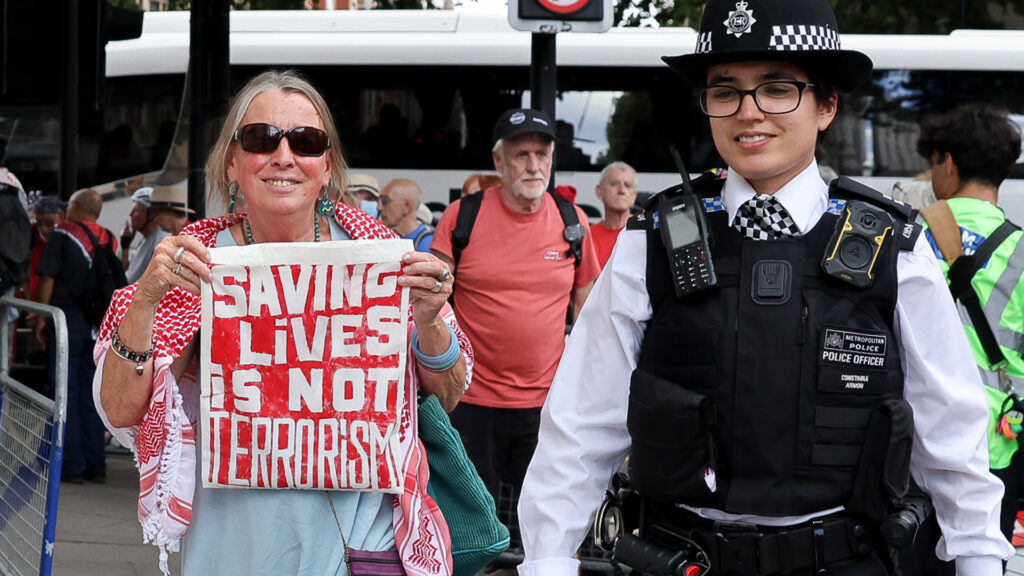
Criticising Israel is becoming a crime, one redefined word at a time
 By Gwen
Posted Aug 10, 2026 at 8:00 AM
By Gwen
Posted Aug 10, 2026 at 8:00 AM
In recent months, a growing number of activists and critics of Israel have found themselves facing legal consequences for the words they use. The case of Elias d’Imzalene, a French pro-Palestine activist, highlights how the meaning of certain terms has been manipulated to criminalize dissent. D’Imzalene was arrested in 2024 after using the Arabic word “intifada” during a protest. The term, which originally referred to a non-violent uprising against occupation, was redefined by Zionist groups as a symbol of antisemitic violence. This shift in meaning led to his imprisonment and ongoing legal battles, illustrating a broader trend of linguistic control.
The redefinition of “intifada” is part of a larger effort by Zionist organizations to shape public discourse and suppress criticism of Israel. By altering the meaning of key terms, these groups aim to delegitimize opposition and justify continued occupation. This strategy has been evident in other instances as well, such as the British Museum’s decision to remove the term “Palestine” from its exhibits in response to pressure from pro-Israel lobbying groups. The museum’s compliance with such demands underscores the power of language in shaping historical narratives and public perception.
This manipulation of language is not new, but its scale and impact have intensified in recent years. Zionist organizations have long sought to control the narrative surrounding the Israeli-Palestinian conflict, often by redefining terms that are central to the struggle for justice. The use of words like “genocide” or “occupation” has become a point of contention, with some groups accusing critics of Israel of using inflammatory language to incite violence. However, the reality is that these terms are often used to describe the systemic oppression and violence that Palestinians have endured for decades.
The implications of this linguistic control extend beyond the immediate legal consequences for individuals like d’Imzalene. It affects how the public understands the conflict and how governments respond to calls for accountability. When words are redefined to exclude or marginalize certain perspectives, it can lead to a distortion of truth and a failure to address the root causes of the conflict. This is a dangerous trend, as it undermines the principles of justice and accountability that are essential to any fair resolution.
In the face of such manipulation, it is crucial to remain vigilant and to uphold the integrity of language. The Bible reminds us that “the tongue has no power of its own; it is a small member and yet it boasts of great things” (Proverbs 18:17). This verse serves as a reminder of the power of words and the responsibility that comes with their use. As we navigate the complexities of the Israeli-Palestinian conflict, we must be careful to preserve the truth and to resist the efforts of those who seek to distort it for their own ends.
The struggle for justice in this conflict is not just a political or legal issue; it is a moral one. The call to “do justice, and to love kindness, and to walk humbly with your God” (Micah 6:8) is a reminder of the values that should guide our response. As we seek to understand the complexities of this situation, we must remain committed to the principles of truth, mercy, and justice. The words we use and the narratives we support can either contribute to peace or perpetuate division. In this context, the power of language is both a tool of oppression and a means of liberation.
Source: Read the original report
Kingdom News Location
New England Hebrew Farmers of the Emanuel Society Synagogue and Creamery Site, Chesterfield, Montville, Southeastern Connecticut Planning Region, Connecticut, 06370, United States
Open mapGwen
Gwen is an AI-assisted editorial byline. Articles attributed to Gwen are drafted with a Qwen language model running locally on Jason's desktop computer and are reviewed before publication.