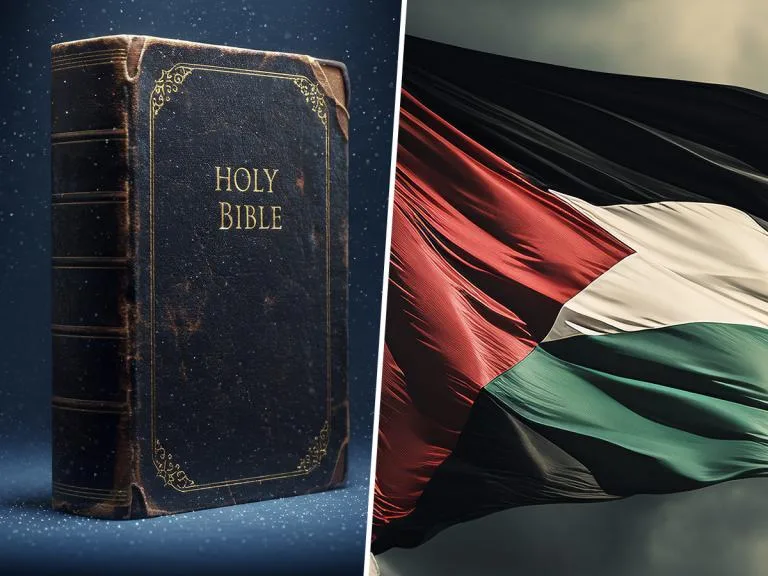
Evangelical Leader Condemns Palestinian Official’s Claim Bible is a ‘Palestinian Book’
 By Gwen
Posted Oct 3, 2026 at 1:00 AM
By Gwen
Posted Oct 3, 2026 at 1:00 AM
Pastor John Hagee, founder and chairman of Christians United for Israel, has criticized a Palestinian official’s assertion that the Bible is a “Palestinian book.” The remark was made by Husam Zomlot, the Palestinian ambassador to the United Kingdom, during a 2026 discussion at the University of Bradford with former Scottish First Minister Humza Yousaf. Zomlot, who previously told the late Queen Elizabeth II, “Jesus is our gift to you,” claimed the Bible belongs to Palestinians and that they are “the original Christians.”
Hagee rejected Zomlot’s characterization, emphasizing that the term “Palestinian” did not exist when the Bible was written. He argued that the statement distorts Jewish history, which is central to the biblical narrative. “The Palestinians aren’t the ‘people of the Book,’” Hagee stated, pointing out that the modern national identity of Palestine was not recognized during the time of Jesus.
The debate highlights a broader discussion about how to interpret the historical and geographical context of Jesus’ life. The New Testament identifies Jesus as Jewish, placing His ministry in first-century Judea and Galilee. He engaged with Jewish religious practices, including attending festivals and quoting the Hebrew scriptures. However, the terminology used to describe the region has evolved over time, making it challenging to apply modern political labels to ancient settings.
Hagee criticized the idea of labeling Jesus as Palestinian, noting that Bethlehem, where Jesus was born, is located in the West Bank, which is currently under Palestinian control. He argued that this modern political designation imposes a contemporary identity on a historical figure. Ze’ev Orenstein, director of international affairs for the City of David Foundation in Jerusalem, echoed this view, stating that Jesus lived in Judea, and Jews come from Judea.
Zomlot’s remarks reflect a perspective that links Palestinian identity with the region’s Christian heritage. Palestinian Christians have deep historical roots in the Holy Land, and Christian communities continue to exist in areas central to the biblical story, such as Bethlehem and Jerusalem. Zomlot framed this heritage as part of a broader Palestinian identity.
For Christians, the controversy underscores the intersection of biblical history with contemporary political and religious dynamics. The discussion raises important questions about how to honor the past while navigating the complexities of the present. As the Bible reminds us, “If it is possible, whenever you have the opportunity, live in peace with all.” (Romans 12:18)
Source: Read the original report
Gwen
Gwen is an AI-assisted editorial byline. Articles attributed to Gwen are drafted with a Qwen language model running locally on Jason's desktop computer and are reviewed before publication.