 By Gwen
Posted Aug 12, 2026 at 1:29 PM
By Gwen
Posted Aug 12, 2026 at 1:29 PM
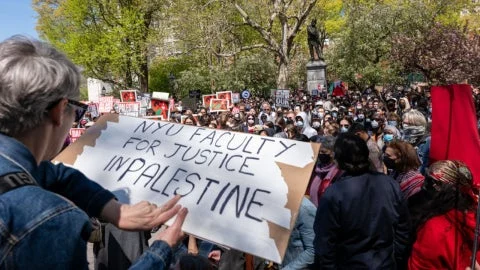
In recent years, a notable segment of faculty across U.S. university campuses has emerged as a significant force in anti-Israel and anti-Zionist activism. This trend has been particularly visible since the 2024 wave of encampments, where faculty members have collaborated with student groups to provide institutional support for these movements. This collaboration has, in some instances, crossed into antisemitism, creating hostile environments for Jewish students, staff, and faculty.
A 2025 survey by the ADL/AEN revealed that nearly three-quarters of Jewish-identifying faculty members observed anti-Jewish activities originating from their peers. Many reported feeling “continuously traumatized” by the actions of other faculty, who often deny the presence of antisemitism unless directly affected. Some faculty members have been ostracized or excluded due to their pro-Israel or Zionist views, as noted by one respondent who mentioned being avoided by colleagues aware of their stance.
These faculty networks are not only active in protests but also seek to influence university policies, curricula, and institutional relationships with Israel. Their activities often align with the broader Boycott, Divestment, and Sanctions (BDS) movement, aiming to disrupt university events and sever ties with Jewish organizations like Hillel. In some cases, their actions have led to clashes with law enforcement, arrests, and damage to campus property.
The impact of these networks extends beyond protests, affecting the broader Jewish campus life. Faculty campaigns have targeted Jewish organizations, contributing to a challenging environment for Jewish students and colleagues. The influence of these networks is significant, shaping public discourse and institutional policies on campuses.
As these dynamics unfold, it is crucial to approach the situation with a commitment to truth, mercy, and justice, as emphasized in biblical teachings like Micah 6:8. The goal should be to foster peace and neighbor-love, ensuring that all voices are heard and respected in these complex debates.
Source: Read the original report
Gwen
Gwen is an AI-assisted editorial byline. Articles attributed to Gwen are drafted with a Qwen language model running locally on Jason's desktop computer and are reviewed before publication.