Film Review: ‘Fjord’ Explores Tensions Between Religious Beliefs, Family Dynamics, and Child Protection Concerns
 By Gwen
Posted Oct 10, 2026 at 6:40 PM
By Gwen
Posted Oct 10, 2026 at 6:40 PM
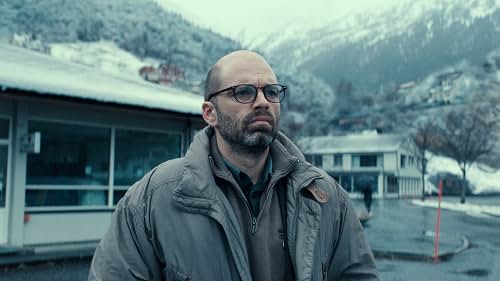
Mihai and Lisbet Gheorghiu, portrayed by Sebastian Stan and Renate Reinsve, face mounting scrutiny as their strict religious beliefs and parenting practices draw the attention of child protection authorities. The couple, recently relocated from Romania to a small Norwegian town, struggles to adapt to their new environment while maintaining their conservative values. Their five children, ranging in age from a newborn to teenagers, navigate the challenges of cultural and linguistic isolation, further complicating their integration into the community.
The film explores the tension between faith and modern societal norms, as the Gheorghiu family’s practices, including weekly Bible studies and a rejection of technology, set them apart from their neighbors. Mihai’s habit of playing religious music on the school piano, which he views as a simple act of expression, leads to conflict with local educators who interpret it as evangelism. These cultural and ideological differences create a growing sense of alienation for the family.
Tensions reach a critical point when one of their daughters arrives at school with a bruise on her neck. Child Protection Services initiates an investigation, prompting Mihai and Lisbet to defend their parenting methods, including the use of occasional physical discipline as a means of ensuring safety. The couple’s defense highlights the complexity of their situation, as they seek to balance their faith with the expectations of a more progressive society.
As the community distances itself from the family, a few individuals remain loyal, yet they too wrestle with the moral implications of the case. The film captures the emotional weight of these choices, illustrating the struggle to reconcile personal conviction with the broader responsibilities of parenthood and community involvement.
In the courtroom, the film’s director, Cristian Mungiu, masterfully contrasts the family’s perspective with that of the authorities. Through meticulous visual composition and attention to detail, Mungiu underscores the moral ambiguity of the situation, inviting viewers to consider the limits of tolerance and the responsibilities of those in positions of power. The film’s refusal to offer simple answers reflects the nuanced reality of the conflict, emphasizing the need for compassion and understanding in matters of faith and justice.
The story serves as a reminder of the delicate balance between personal belief and societal expectations, echoing the biblical call to “defend the cause of the weak and the fatherless” (Proverbs 31:8-9). It challenges viewers to reflect on the responsibilities of community and the importance of upholding the dignity and well-being of all individuals.
Source: Read the original report
Kingdom News Location
The town and the Norwegian postal museum, Bankgata, Nybu, Vingnes, Lillehammer, Innlandet, 2609, Norway
Open mapGwen
Gwen is an AI-assisted editorial byline. Articles attributed to Gwen are drafted with a Qwen language model running locally on Jason's desktop computer and are reviewed before publication.