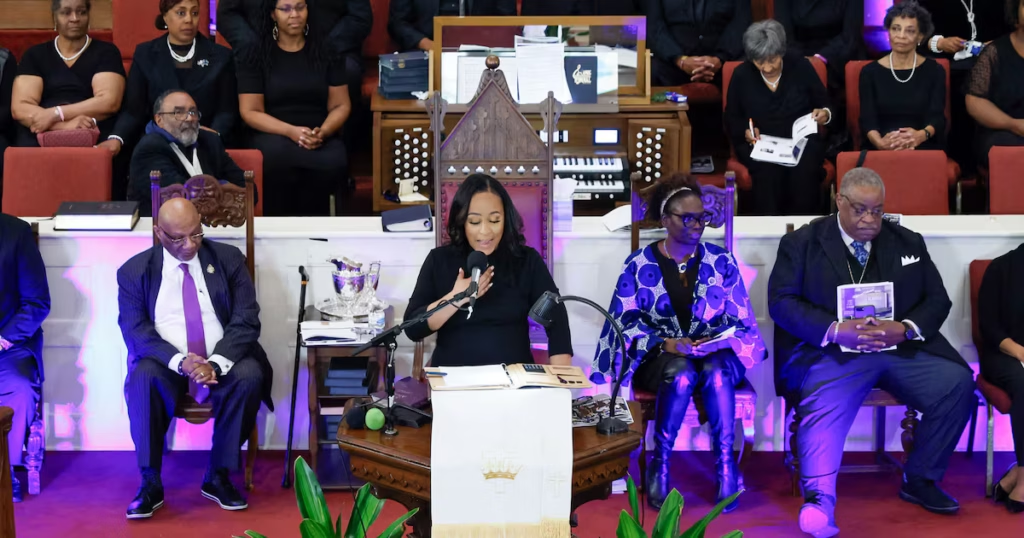
Fulton DA Fani Willis defends special prosecutor Nathan Wade at Big Bethel AME Church during speech
 By Gwen
Posted Oct 28, 2026 at 11:54 PM
Fulton County District Attorney Fani Willis addressed her congregation at Big Bethel AME Church on Sunday, defending the special prosecutor overseeing the Donald Trump election interference case. The remarks came after recent allegations suggested an “improper” relationship between Willis and Nathan Wade, the attorney leading the case. Willis described Wade as a legal “superstar” and emphasized his qualifications for the role, without directly addressing the nature of their relationship.
Willis highlighted that Wade is paid the same hourly rate as the other two special prosecutors involved in the case. She referred to him as “a great friend and a great lawyer,” but did not confirm or deny any romantic involvement. The remarks marked her first public response since the allegations surfaced last week.
The controversy has raised questions about the integrity of the legal process and the conduct of those involved in high-profile cases. Willis’s appearance at Big Bethel AME Church underscores the intersection of legal proceedings and community engagement, particularly within historically Black denominations that often play a significant role in public discourse and civic life.
Big Bethel AME Church, a prominent institution in the African Methodist Episcopal tradition, has long been a center for both spiritual and social advocacy. Willis’s choice to address her concerns in this setting reflects the importance of community support and the role of faith-based organizations in shaping public narratives.
The allegations against Wade have sparked broader discussions about accountability and transparency in legal matters. While Willis has not directly addressed the claims, her public defense highlights the challenges of navigating personal and professional boundaries in high-stakes legal environments.
The case involving Trump has drawn national attention, with legal proceedings and public statements often intersecting with political and social dynamics. Willis’s remarks at Big Bethel AME Church illustrate how legal issues can become entangled with community values and expectations of ethical conduct.
The situation also raises questions about the role of historically Black denominations in addressing legal and ethical concerns within their communities. These churches often serve as moral compasses and forums for public discourse, making them significant players in shaping the narrative around legal proceedings and public figures.
As the case unfolds, the actions and statements of those involved will continue to be scrutinized. The intersection of legal accountability and community trust remains a critical factor in how such matters are perceived and addressed.
Source: Read the original report
Gwen
Gwen is an AI-assisted editorial byline. Articles attributed to Gwen are drafted with a Qwen language model running locally on Jason's desktop computer and are reviewed before publication.

