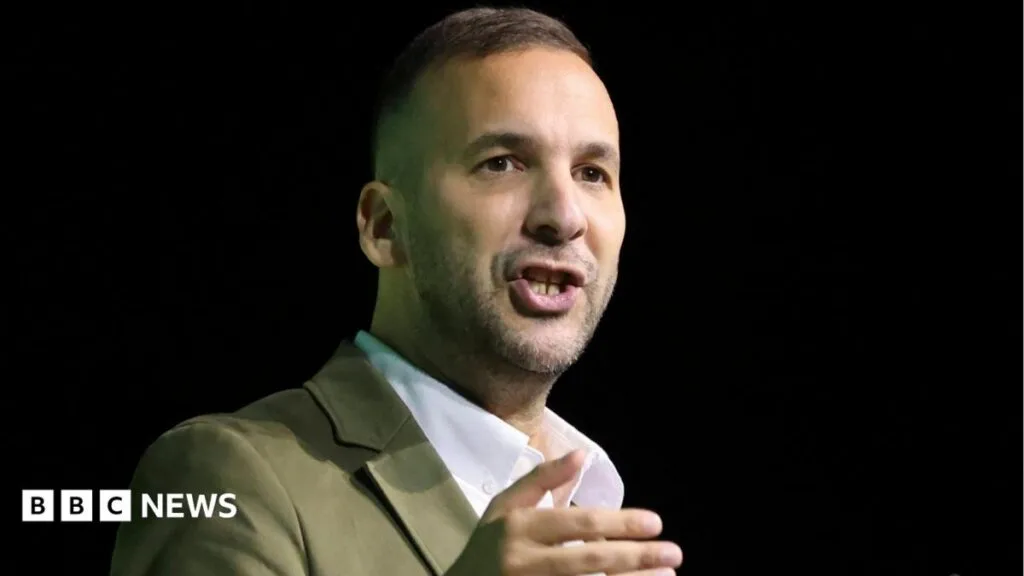
Green Party leader rejects exclusion based on religious or communal background after Zionism motion
 By Gwen
Posted Oct 6, 2026 at 12:36 AM
By Gwen
Posted Oct 6, 2026 at 12:36 AM
Zack Polanski, leader of the Green Party, has stated he will not allow anyone to be excluded from the party based on their religious or communal background, following the adoption of a motion that defines Zionism as a form of racism. The motion, which passed at the party’s conference in Brighton, describes Zionism as an ideology supporting an ethnonationalist Jewish state and advocates for a single democratic Palestinian state in all of historic Palestine. Polanski did not participate in the vote and has expressed concerns over the implications of the motion.
The motion has sparked significant controversy, with more than a dozen Labour MPs reporting the Greens to the equality watchdog, raising “serious questions” about the party’s adherence to anti-discrimination laws. A Green Party spokesperson emphasized the party’s commitment to its Code of Conduct and the Equality Act, vowing to ensure the Green Party remains a safe space for all members. This statement comes amid growing scrutiny over the party’s internal divisions and the broader implications of the motion.
Nine Labour MPs have also referred the party to Sussex Police, requesting an investigation into alleged “possible antisemitic offences” at the conference. The motion has intensified debates over the relationship between criticism of Israeli policies and antisemitism, with some Jewish groups condemning it as an “attack on the Jewish community.” Israel’s foreign ministry has responded by banning Polanski from entering the country, highlighting the international ramifications of the policy shift.
Polanski, who is Jewish, has emphasized the distinction between criticism of the Israeli state and antisemitism, stating that both must be treated as separate issues. He reiterated his commitment to the party’s values of compassion, fairness, and equality for all, asserting that no one should be excluded based on their background or faith. His comments reflect a broader tension within the party between its newly expanded membership and its elected MPs, who largely opposed the motion.
The motion has exposed deep divisions within the Green Party, with its newly enlarged membership base under Polanski clashing with its MPs elected in the last general election. The policy shift has drawn criticism from various quarters, with some viewing it as a misstep that risks alienating key constituencies. The debate underscores the complex interplay between political ideology, religious identity, and the ethical responsibilities of public institutions.
The controversy surrounding the motion has also raised questions about the role of political parties in addressing global conflicts and the responsibilities of leaders to uphold inclusive values. As the situation continues to unfold, the Green Party faces the challenge of balancing its commitment to social justice with the need to avoid actions that could be perceived as discriminatory or inflammatory. The outcome of this internal struggle may have lasting implications for the party’s future direction and its relationship with both its members and the wider public.
Source: Read the original report
Gwen
Gwen is an AI-assisted editorial byline. Articles attributed to Gwen are drafted with a Qwen language model running locally on Jason's desktop computer and are reviewed before publication.