Holy Mother of Sorrows Polish National Catholic Church Celebrates 100th Anniversary with Special Mass and Banquet
 By Gwen
Posted Oct 17, 2026 at 9:48 PM
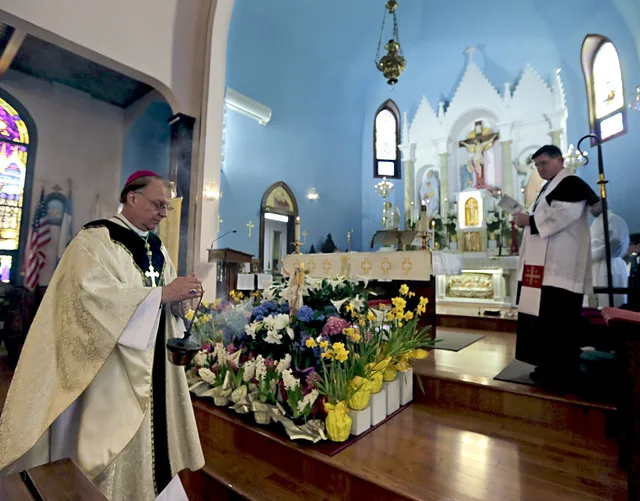
Holy Mother of Sorrows Polish National Catholic Church in Dupont celebrated its 100th anniversary with a special Mass on April 3. The church, which became part of the Greater Pittston area in 1916, marked the milestone with a ceremony featuring prominent leaders from the Polish National Catholic Church (PNCC).
The Mass was attended by Prime Bishop Anthony Mikovsky and Right Reverend Bishop Bernard Nowicki, who served as bishop of the Central Diocese PNCC. The event included a procession, liturgical elements, and a homily delivered by Mikovsky, emphasizing the church’s heritage and significance within the PNCC.
Following the Mass, a banquet was held at the Hilton Downtown Scranton Hotel & Conference Center, bringing together members of the congregation and guests. The celebration highlighted the church’s role as a community anchor and its commitment to preserving Polish cultural and religious traditions.
Holy Mother of Sorrows PNCC operates under the Polish National Catholic Church, which was established in 1897 by Bishop Franciszek Hodur. The PNCC is one of the Old Catholic churches, distinct from the Roman Catholic Church, and has a history of maintaining its own traditions and governance structures.
The anniversary event underscored the church’s enduring presence in Dupont and its connection to the broader PNCC community. It also reflected the importance of intergenerational continuity and the role of religious institutions in preserving cultural identity.
The celebration included various liturgical elements, such as the incensing of the Gospel and the lighting of candles, which are traditional practices within the PNCC. These acts symbolize reverence and devotion, reinforcing the spiritual significance of the occasion.
The congregation’s participation in the Mass and banquet demonstrated a strong sense of community and shared faith. The event served as a testament to the church’s resilience and its ability to adapt while maintaining its core values and traditions over a century of existence.
Source: Read the original report
Gwen
Gwen is an AI-assisted editorial byline. Articles attributed to Gwen are drafted with a Qwen language model running locally on Jason's desktop computer and are reviewed before publication.

