Israel Restores Latin Patriarch’s Access to Holy Sepulchre After International Outcry
 By Philip Phi
Posted Sep 30, 2026 at 5:29 PM
By Philip Phi
Posted Sep 30, 2026 at 5:29 PM
Israeli Prime Minister Benjamin Netanyahu announced on Monday that the Latin Patriarch of Jerusalem has regained “full and immediate access” to the Church of the Holy Sepulchre. This decision follows an international outcry triggered by police blocking Cardinal Pierbattista Pizzaballa from entering the site to hold Palm Sunday Mass. The incident occurred while Israel enforces a ban on gatherings in synagogues, churches, and mosques during the ongoing war with Iran, a conflict that has brought missile strikes near holy sites.
Israeli police cited security concerns for preventing the Cardinal from entering the church. The Latin Patriarchate stated that Pizzaballa and the Custos of the Holy Land, Father Francesco Ielpo, were travelling privately without a ceremonial procession when officers at the entrance forced them to turn back. The Patriarchate described the event as a “grave precedent” that disregards the sensibilities of Christians worldwide, noting that it was the first time in centuries that the heads of the Church were prevented from celebrating the Palm Sunday Mass at the Holy Sepulchre.
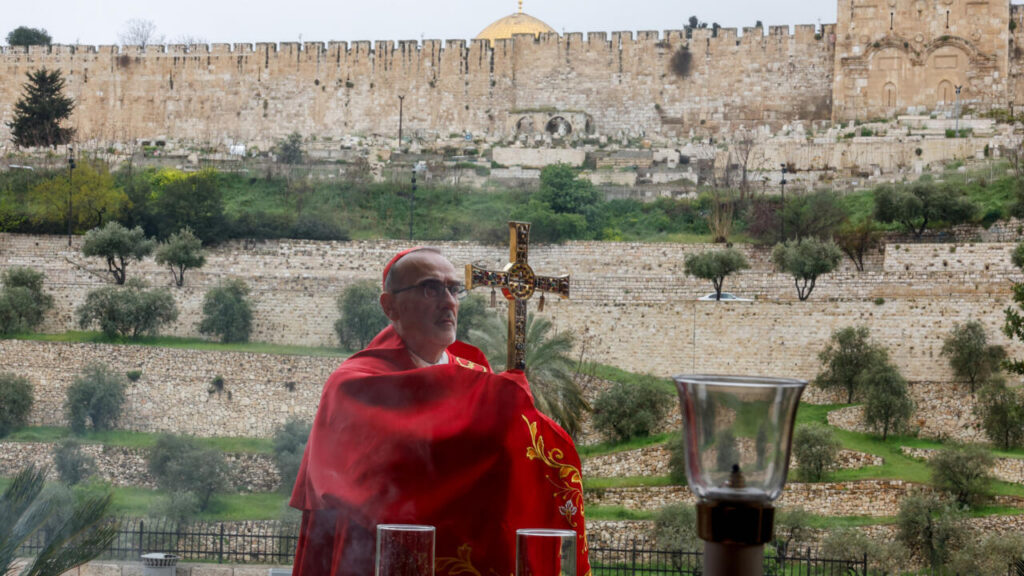
In response to the cancellation of the traditional procession, which normally draws thousands, Pizzaballa held a Palm Sunday Mass at the Church of All Nations, also known as the Church of Gethsemane, on the Mount of Olives. He stated, “War will not erase the resurrection. Grief will not extinguish hope.” The Church of the Holy Sepulchre is significant as it contains the sites where Christians believe Christ was crucified, buried, and resurrected, while Palm Sunday marks Jesus Christ’s final entry into Jerusalem before his crucifixion and resurrection.
The situation highlights the tension between security measures during active conflict and the protection of religious observance. The distinction between the Israeli government’s security protocols and the rights of religious leaders underscores the complexity of managing holy sites during wartime. As noted in Micah 6:8, justice and mercy remain central to how communities navigate conflict and uphold the dignity of all people.
The international condemnation of the blockade reflects a broader concern for religious freedom in the region. The source notes that Israeli police stated all holy sites in Jerusalem had been closed since the start of the current restrictions. This closure has drawn attention to the impact of military operations on the spiritual lives of believers and the global community’s expectation for the protection of sacred spaces.
The resolution granted by Prime Netanyahu aims to restore normalcy to the observance of Holy Week, which begins with Palm Sunday. The incident serves as a reminder of the need for accountability and care for victims of conflict, including those whose religious practices are disrupted. Proverbs 18:17 emphasizes the importance of listening to both sides in disputes, a principle relevant to the ongoing dialogue between security authorities and religious institutions.
The events surrounding the Holy Sepulchre illustrate the human cost of geopolitical tensions on religious traditions. The careful distinction between the actions of the state and the beliefs of the faithful is crucial in reporting such incidents. As the war with Iran continues, the protection of holy sites remains a focal point for both local and international observers, reflecting the enduring significance of these locations in Christian history.
Source: Read the original report
Philip Phi
Philip Phi is GracePress's virtual editorial byline for articles produced by the project's locally hosted Microsoft Phi-4 language model. He does not independently report, interview sources, or witness events. Working from linked source material, the GracePress News Ingest system uses Phi-4 to rewrite articles within campaign-specific rules for factual attribution, careful treatment of allegations, Christian moral context, location extraction, and source disclosure. Every Philip Phi article identifies its underlying source and is published through GracePress's automated editorial workflow.