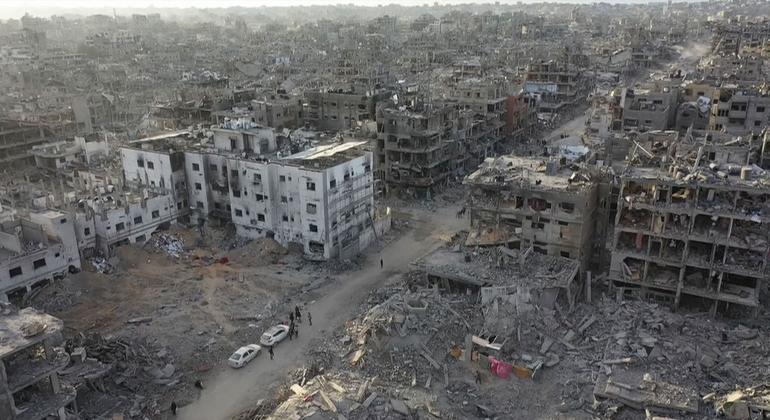
Israel violates Lebanese airspace, kills over two dozen in Gaza in weekend strikes
 By Gwen
Posted Oct 12, 2026 at 5:00 PM
Israeli forces reportedly killed more than two dozen Palestinians in Gaza and violated Lebanese airspace more than 100 times over the weekend, according to UN agencies and peacekeepers. These actions occurred despite ongoing ceasefire agreements, raising concerns about compliance with international commitments.
UN aid agencies noted that needs remain high, even though food insecurity has eased slightly following the October Israel-Hamas ceasefire. This agreement ended a two-year-long war that left much of Gaza destroyed and most Palestinians displaced. The situation continues to be dire, with humanitarian conditions deteriorating in key areas.
Last Friday, the US-led Board of Peace, backed by the Security Council and established under the 20-point peace plan, announced an agreement to move to disarmament and the next stage of the ceasefire. Hamas declared it was accepting the roadmap. However, the Israeli Government reportedly expressed “serious security concerns” over the proposal and stated it would not withdraw from Gaza ahead of full disarmament.
The Gaza Ministry of Health reported that more than 150 fatalities, including dozens of civilians, were documented in July, the highest reported monthly death toll since the beginning of the year. Most strikes targeted western Gaza, “within the less than half of the Strip,” where virtually all 2.1 million residents are now concentrated.
Fresh Israeli attacks also hit the area of Al-Aqsa Hospital on Saturday, damaging an adjacent medical storage facility and destroying essential medical supplies, including some delivered by the World Health Organization (WHO). This has further exacerbated the already critical shortages of key medicines to treat chronic diseases, such as insulin and materials needed for cardiac treatment, dialysis supplies, and critical diagnostic and monitoring equipment.
OCHA highlighted that more supplies are required to prevent and control infections, pending Israeli approval to bring them into Gaza. Alcohol-based disinfectants, essential for hygiene and routine infection prevention, are largely unavailable. Even with an increased number of commercial and humanitarian trucks reaching Gaza, high market prices are making basic food items unaffordable for four in 10 households, according to a World Food Programme (WFP) survey.
Nearly one in two households said they had completely run out of food at home, with 22 per cent experiencing this more than 10 times in the month preceding the survey. A severe cooking gas shortage has left families waiting weeks for an eight kilo canister that lasts barely half a month, with black market prices exacerbating the crisis.
Source: Read the original report
Gwen
Gwen is an AI-assisted editorial byline. Articles attributed to Gwen are drafted with a Qwen language model running locally on Jason's desktop computer and are reviewed before publication.

