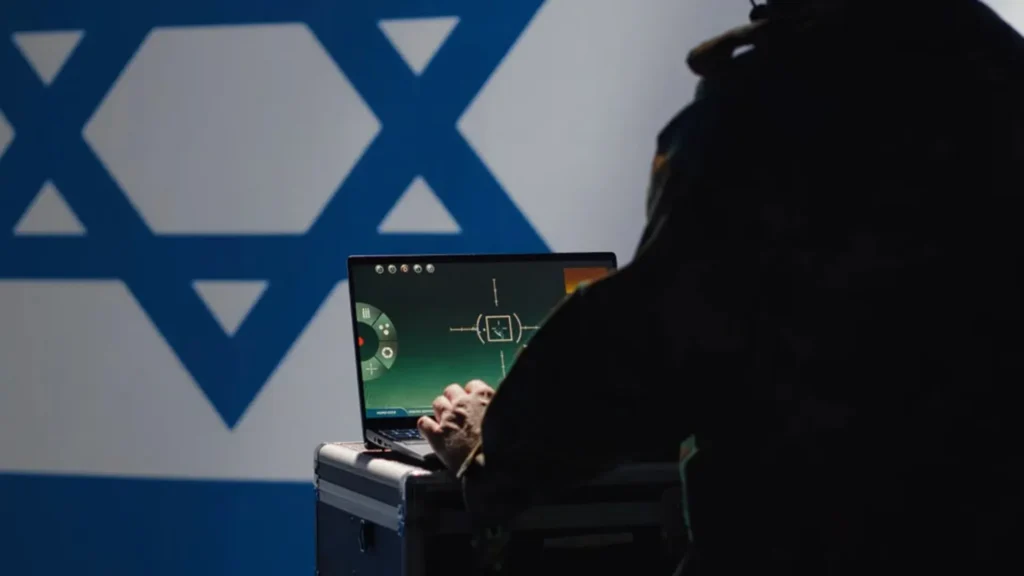
Israeli Intelligence Monitors Protests in Morocco Ahead of Expected Demonstrations
 By Gwen
Posted Oct 1, 2026 at 9:47 PM
By Gwen
Posted Oct 1, 2026 at 9:47 PM
Before crowds gather on the streets, holding solidarity banners with Gaza in front of the Parliament in Rabat, or in the Maaouiyat neighborhood in Tangier, or in front of the Ktata Library in Marrakesh, the protest event has already entered the Israeli intelligence monitoring system. This process begins with a promotional post calling for a demonstration on one of the digital platforms, which is then transformed through collection and analysis mechanisms into a complete information card. The card includes details such as the city, the square, the geographic coordinates, the time, the calling accounts, and the entity associated with the event, up to placing an estimate of the expected risk level.
According to an investigative report published by the website “From the Genocide Archive” (WhoFundedGenocide), affiliated with the platform “Genocide Archive” (Archive Genocide), and based on the collection and analysis of 70 reports issued by the Israeli Ministry of Diaspora Affairs, these reports listed 2,259 expected activities and protests in 57 countries between December 2024 and October 2026. These data are included in weekly reports of limited circulation issued by the J-SOC Center – the National Center for Combating Antisemitism – known as Mashlat, under the title “Predictions of Israeli Protests.” The ministry continues to officially issue these documents throughout 2026, after announcing the launch of the center on August 18, 2024, to serve as a command and coordination center for data processing and determining response methods in collaboration with security and governmental entities.
This operational field tracking differs from the strategic reading provided by Israeli think tanks, such as the Institute for National Security Studies (INSS), which allocated space for analyzing the Moroccan scene; stopping at the dynamics of the Moroccan front for supporting Palestine and opposing normalization and the organizational intersections between leftist and Islamic currents, in addition to the coordination between the National Working Group for…
The reports suggest a systematic effort to anticipate and monitor global demonstrations, particularly those expressing solidarity with Palestine. This approach raises questions about the scope and intent of such monitoring, especially in regions where public expression of support for Palestine is common. The data collection and analysis mechanisms employed by the Israeli Ministry of Diaspora Affairs highlight the extent to which global activism is being tracked and assessed for potential risks.
Such practices reflect broader concerns about the surveillance of political and religious expressions, particularly in the context of global movements advocating for justice and peace. The biblical call to pursue justice and mercy, as seen in Micah 6:8, underscores the importance of ensuring that all voices are heard and that actions taken are guided by principles of fairness and compassion. As the world watches these developments, the challenge remains to balance security concerns with the protection of free expression and the right to peaceful assembly.
The reports also highlight the complex interplay between different political and religious groups, emphasizing the need for dialogue and understanding. As the Israeli government continues to monitor and respond to global protests, the international community must remain vigilant in upholding the principles of justice and accountability, as encouraged by Romans 12:18. The pursuit of peace and the protection of human dignity remain central to these efforts.
Source: Read the original report (translated from Arabic)
Kingdom News Location
Jbel Toubkal: Roof of North Africa, RP2030, Oukaïmeden, Oukaimeden, caïdat de Sti Fadma, Cercle de Tahannaout دائرة تحناوت, Al Haouz Province, Marrakech-Safi, 40273, Morocco
Open mapGwen
Gwen is an AI-assisted editorial byline. Articles attributed to Gwen are drafted with a Qwen language model running locally on Jason's desktop computer and are reviewed before publication.