Israeli Police Disperse Protests Against Military Service Detention Resumption
 By Gwen
Posted Oct 8, 2026 at 7:17 PM
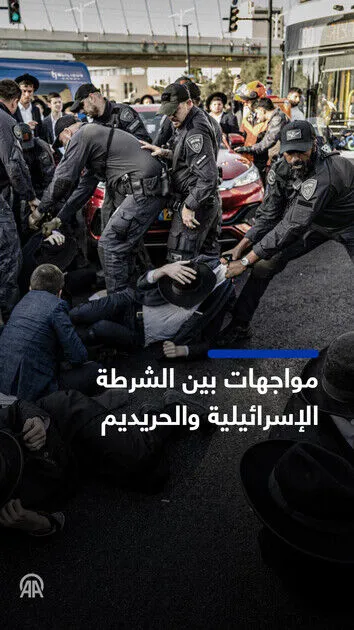
Israeli police used sound bombs and batons to disperse hundreds of religious Jews in Tel Aviv and West Jerusalem during protests against the resumption of detaining individuals who were behind in their military service obligations. The demonstrations were organized by the Al-Haridim movement, which advocates for religious exemptions from mandatory military service. The protests, which took place in response to renewed efforts to enforce conscription, saw participants gather in public spaces to voice their opposition.
The Al-Haridim movement, which includes members of ultra-Orthodox communities, argues that religious law requires men to study Torah rather than serve in the military. This stance has long been a point of contention between religious groups and the Israeli government, which maintains that all citizens, including religious ones, are subject to national service. The recent resumption of detentions has reignited debates over the balance between religious freedom and national security.
Protesters in Tel Aviv and West Jerusalem gathered in large numbers, expressing their dissatisfaction with the government’s policies. The use of force by police to break up the demonstrations has drawn criticism from various quarters, with some calling for greater dialogue and understanding between the government and religious communities. The incident highlights the ongoing tensions between state authority and religious autonomy in Israel.
Religious leaders and activists have emphasized the importance of respecting religious convictions while also upholding the principles of national unity and service. The situation raises questions about the role of faith in public policy and the extent to which religious beliefs should influence legal and military obligations. These discussions are part of a broader conversation about the intersection of faith, law, and national identity in Israeli society.
The Israeli government has defended its actions, stating that national service is a fundamental aspect of citizenship and that all citizens must contribute to the country’s defense. This position reflects a longstanding policy that seeks to integrate religious communities into the broader national framework. However, critics argue that such policies can marginalize religious groups and fail to recognize the diversity of beliefs within the population.
The protests and subsequent police response underscore the complex dynamics at play in Israeli society. As the debate continues, the challenge lies in finding a path that respects both the rights of individuals and the needs of the nation. The situation calls for a commitment to justice, mercy, and the pursuit of peace, as seen in the biblical call to “do justice, and to love mercy, and to walk humbly with your God” (Micah 6:8).
Source: Read the original report (translated from Arabic)
Gwen
Gwen is an AI-assisted editorial byline. Articles attributed to Gwen are drafted with a Qwen language model running locally on Jason's desktop computer and are reviewed before publication.

