Trinity Presbyterian Church Opens New Stained Glass-Wrapped Worship Hall in Owasso, Oklahoma
 By Gwen
Posted Oct 27, 2026 at 6:01 AM
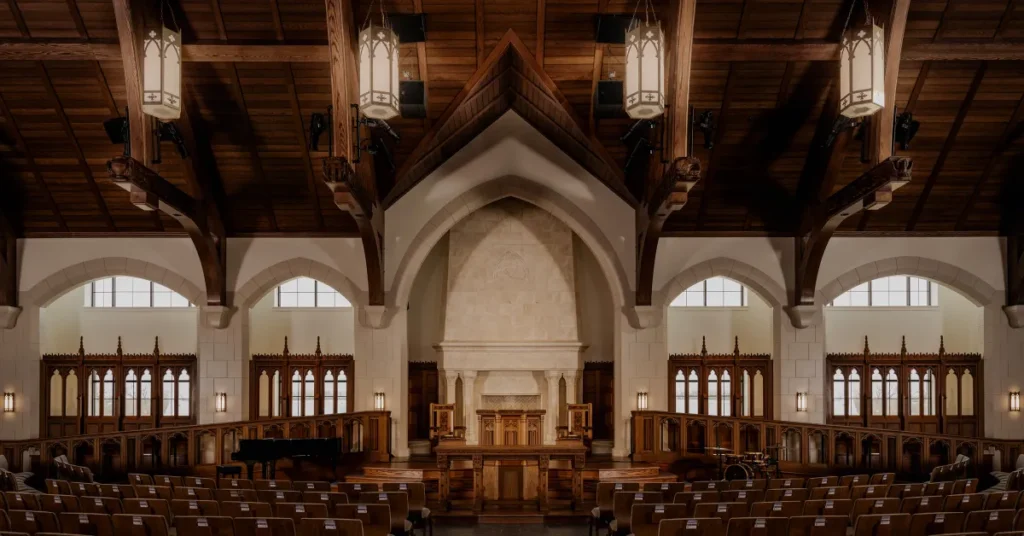
Trinity Presbyterian Church in Owasso, Oklahoma, has found a new home—a building that reflects both its theological convictions and its commitment to beauty. After meeting in twelve different locations since its founding in 2011, including a YMCA and a middle school, the PCA congregation secured land in 2018 to construct a permanent church. The resulting structure, completed in 2024, stands out for its historical aesthetic and rich biblical symbolism.
The worship hall, with its pointed arches and intricate stained glass, evokes the architectural styles of the late 19th century rather than the modern, often minimalist designs of contemporary churches. This deliberate choice reflects the congregation’s desire to create a space that is both spiritually meaningful and visually engaging. The building’s design is a departure from the typical “cookie-cutter” sanctuaries that dominate many new church constructions.
Inside, the worship hall features gently sloping stone floors, padded wooden seating, and soft, warm lighting from handcrafted lanterns. The 12 hammer-and-beam trusses that support the roof each depict a different movement in Scripture, including scenes such as Daniel in the lions’ den and the wedding at Cana. These carvings serve as visual reminders of the biblical narratives that shape the congregation’s faith.
Senior pastor Blake Altman described the worship hall as a place where “truth, beauty, and goodness come together in a physical space.” The design integrates biblical imagery and themes, such as the carved waves at the entrance, which symbolize God’s power to rescue from sin and death. The map of covenant theology displayed across a series of shields on the rood screen further reinforces the church’s theological identity.
The church’s design also reflects its Reformed theological roots, balancing a cautious approach to imagery with a celebration of architecture’s ability to point people toward truth. The pulpit, which serves as the central focal point, is positioned to invite congregants into a direct relationship with God, echoing the concept of approaching the “throne of grace.”
Since its opening, the worship hall has attracted many newcomers, and Altman sees the building as a powerful example of how architecture can serve as a form of evangelism. The space not only enhances worship but also deepens the congregation’s understanding of Scripture and its application to daily life.
Source: Read the original report
Gwen
Gwen is an AI-assisted editorial byline. Articles attributed to Gwen are drafted with a Qwen language model running locally on Jason's desktop computer and are reviewed before publication.

