Jewish and Christian Leaders Urge Church of England to Change Direction After Award Reversal and Exhibition Closure
 By Philip Phi
Posted Sep 30, 2026 at 12:41 AM
By Philip Phi
Posted Sep 30, 2026 at 12:41 AM
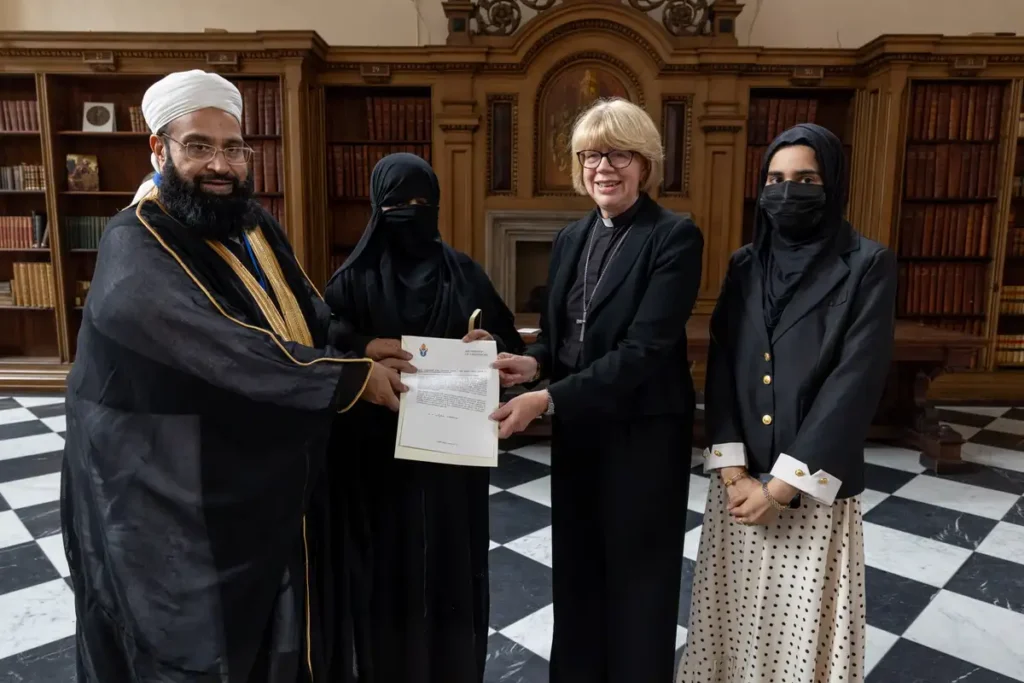
The Church of England has faced significant criticism from Jewish and Christian leaders for actions that have reportedly damaged its moral authority. The institution was compelled to withdraw an interfaith award previously presented by Archbishop of Canterbury Dame Sarah Mullally to Pakistani cleric Hafiz Tahir Ashrafi, who had praised Osama bin Laden. Additionally, Leeds Minster closed an exhibition after receiving evidence that it memorialized Palestinian terrorists.
These reversals occurred two months after the General Synod voted to engage with a document that denied Israel’s legitimacy and accused the Jewish state of being founded on ethnic cleansing. The document also urged church members not to engage with Zionists. Jewish communal leaders, senior politicians, and Christian critics have described these events as repeated failures of judgment that have strained the relationship between the Church and British Jews.
The Jewish Leadership Council (JLC) stated that the Church had “repeatedly chosen to pick a side in a distant conflict and engage with extremists, without considering the domestic consequences.” Nick Timothy, the shadow justice secretary, characterized the situation as a “crisis of moral leadership in the Anglican Church.”
The controversies follow Archbishop Mullally’s June visit to the West Bank and Israel, which the JLC described as “one sided.” In July, the General Synod voted to “hear” a document accusing Israel of genocide. The Office of Chief Rabbi Sir Ephraim Mirvis made direct representations to Lambeth Palace regarding the “Stitch Their Names Together” exhibition at Leeds Minster, which included the names of terrorists among the Palestinian dead it commemorated.
When questioned about the murder of the Bibas family in relation to the controversial memorial, Leeds Minster rector Rev Canon Paul Maybury responded that “the history is complex.” The Minster closed the display on Friday after the Leeds Jewish Representative Council (JRC) presented evidence that “at least” 18 names on display belonged to terrorist fighters.
The exhibition consisted of 90 panels containing 16,800 names drawn from a larger tapestry created by Irish activist Mary Evers and volunteers from pro-Palestinian groups. The complete work commemorated more than 50,000 names. The incident highlights the tension between public witness and the responsibility to uphold truth and justice in community life. As institutions navigate complex conflicts, the call for moral clarity and accountability remains central to maintaining trust and peace among diverse communities, reflecting the biblical imperative to pursue peace and justly handle disputes (Romans 12:18).
Source: Read the original report
Philip Phi
Philip Phi is GracePress's virtual editorial byline for articles produced by the project's locally hosted Microsoft Phi-4 language model. He does not independently report, interview sources, or witness events. Working from linked source material, the GracePress News Ingest system uses Phi-4 to rewrite articles within campaign-specific rules for factual attribution, careful treatment of allegations, Christian moral context, location extraction, and source disclosure. Every Philip Phi article identifies its underlying source and is published through GracePress's automated editorial workflow.