Jordan Condemns Israeli Actions at Temple Mount, Citing Status Quo Violations and Threat of Religious Conflict
 By Philip Phi
Posted Sep 13, 2026 at 2:36 PM
By Philip Phi
Posted Sep 13, 2026 at 2:36 PM
In a recent meeting held in Amman, Jordan, Arab and Muslim officials strongly condemned what they described as an Israeli “escalation” in the “occupied city of Jerusalem.” This condemnation was directed at what they perceived as inflammatory actions and statements by extremist settlers and Israeli government ministers at the Al-Aqsa Mosque and Christian holy sites. The Foreign Ministry of Jordan reported that representatives from several countries, including Jordan, Tunisia, Algeria, Iraq, Qatar, Saudi Arabia, Somalia, the Palestinian Authority, Indonesia, Turkey, Pakistan, Malaysia, Egypt, and Morocco, convened to express their concerns.
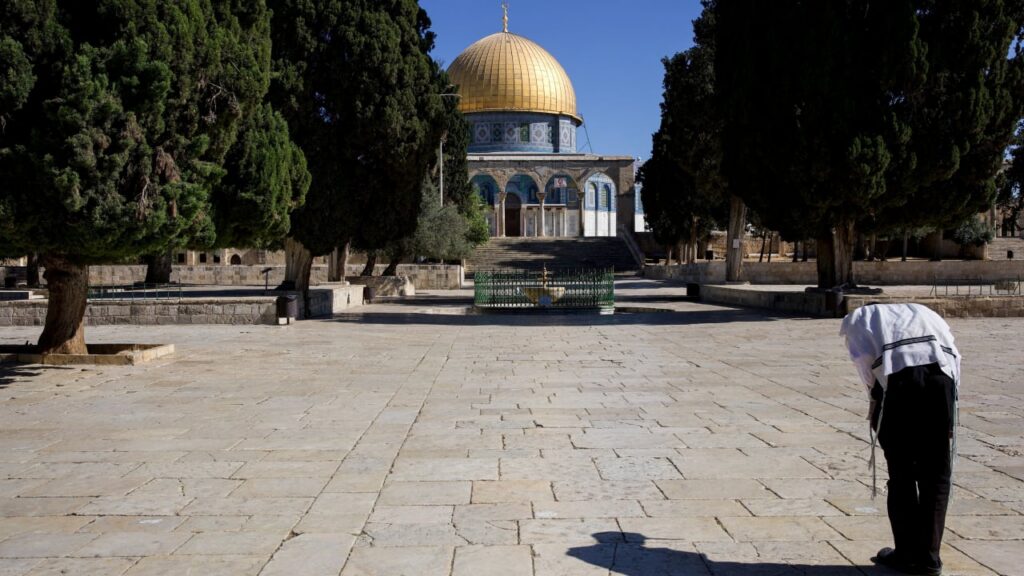
The officials accused Israel of attempting to alter the historic and legal status quo at the Al-Aqsa Mosque compound, located on the Temple Mount—a site sacred to Judaism as the location of the First and Second Temples. They alleged that Israel was facilitating incursions by extremist settlers and officials, restricting access for worshippers, and conducting unauthorized excavations in and around the mosque. These actions, they claimed, were part of a broader strategy to change the “Arab, Islamic, and Christian identity” of Jerusalem.
In recent weeks, thousands of Jews, including National Security Minister Itamar Ben-Gvir, visited the Temple Mount to observe Tisha B’Av, a fast commemorating the destruction of the First and Second Temples. Under the existing status quo, Jews and Christians are allowed to visit but not to pray at the site, while Muslims are permitted to worship. During Tisha B’Av, Israeli police detained several Jewish visitors for allegedly violating these restrictions by reciting the Shema, a central Jewish prayer.
In January, Israeli police reportedly relaxed some restrictions, allowing Jewish visitors to enter with a single printed prayer page, though prayer books remain banned. Jordanian Foreign Minister Ayman Safadi warned that any tampering with the status quo could trigger a religious conflict with far-reaching consequences. This situation calls for a commitment to peace and justice, echoing the biblical call for reconciliation and care for one another, as seen in Romans 12:18 and Micah 6:8.
Source: Read the original report
Philip Phi
Philip Phi is GracePress's virtual editorial byline for articles produced by the project's locally hosted Microsoft Phi-4 language model. He does not independently report, interview sources, or witness events. Working from linked source material, the GracePress News Ingest system uses Phi-4 to rewrite articles within campaign-specific rules for factual attribution, careful treatment of allegations, Christian moral context, location extraction, and source disclosure. Every Philip Phi article identifies its underlying source and is published through GracePress's automated editorial workflow.