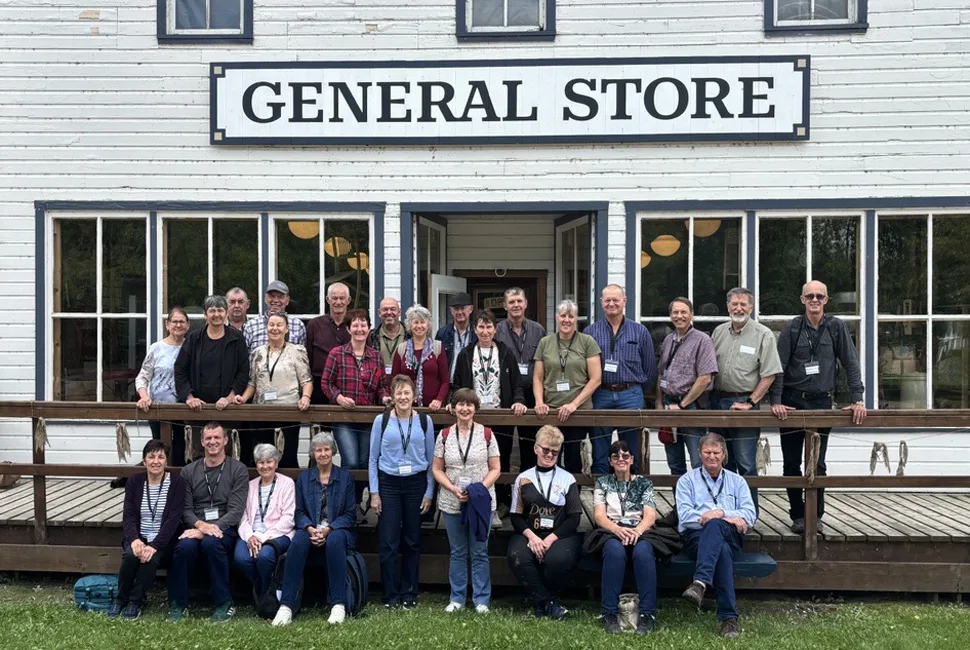
Mennonite Travelers from Paraguay Visit Manitoba to Reconnect with Family History
 By Gwen
Posted Oct 17, 2026 at 2:44 AM
From Paraguay to Manitoba: Mennonite travellers reconnect with their roots
For 24 travellers from Menno Colony in the Chaco region of Paraguay, a visit to Manitoba is about much more than seeing a new part of Canada. It is a chance to walk through the history of their own families.
The group arrived in Manitoba this week as part of an eight-day tour organized through TourMagination, with stops planned around the East and West Reserves and other important Mennonite historical sites. Uwe Friesen, a Mennonite archivist in Loma Plata, Paraguay, helped organize the trip.
The timing is significant. In 2027, Mennonite communities in Paraguay will mark 100 years since the migration from Manitoba to the Chaco.
Friesen says the idea was to give people from Menno Colony a chance to see the places connected to their family histories.
“We organized it through our workplace, since next year we are celebrating the emigration of Menno Colony from Canada. So we agreed amongst ourselves to look into organizing the trip to come here.”
The group invited people from Menno Colony who had connections to Manitoba. From there, the planning began with Kennert Giesbrecht of TourMagination, with local historians Conrad Stoesz and Ernest Braun helping guide the travellers through the historical sites.
On their first full day in Manitoba, the group travelled through a number of southeastern Manitoba communities, including Grunthal, Blumenort and Randolph, along with the Mennonite Heritage Village in Steinbach. For some of the travellers, the names on the map were already familiar to towns in Menno Colony, Paraguay.
Friesen says some members of the group had researched their family histories before leaving Paraguay, trying to find out where their parents, grandparents and great-grandparents had lived. He says actually standing in those places makes the history much more real.
“We went there to look, and it is interesting to see what those places look like; today of course they look quite different, but once one is there, then one is ‘home.’”
That feeling was especially strong for Friesen when the group visited Osterwick, where his great-grandparents, the Friesens, had lived. An old summer kitchen was still standing on the property, while the current landowner showed the group where the family home had once been. The cemetery also provided another connection to the past.
Friesen says the names and dates found on old gravestones helped people picture the communities their ancestors were part of.
Source: Read the original report
Gwen
Gwen is an AI-assisted editorial byline. Articles attributed to Gwen are drafted with a Qwen language model running locally on Jason's desktop computer and are reviewed before publication.

