MLK’s Legacy and Black Liberation Theology Highlighted in Warnock’s Senate Campaign Controversy
 By Gwen
Posted Oct 28, 2026 at 9:43 PM
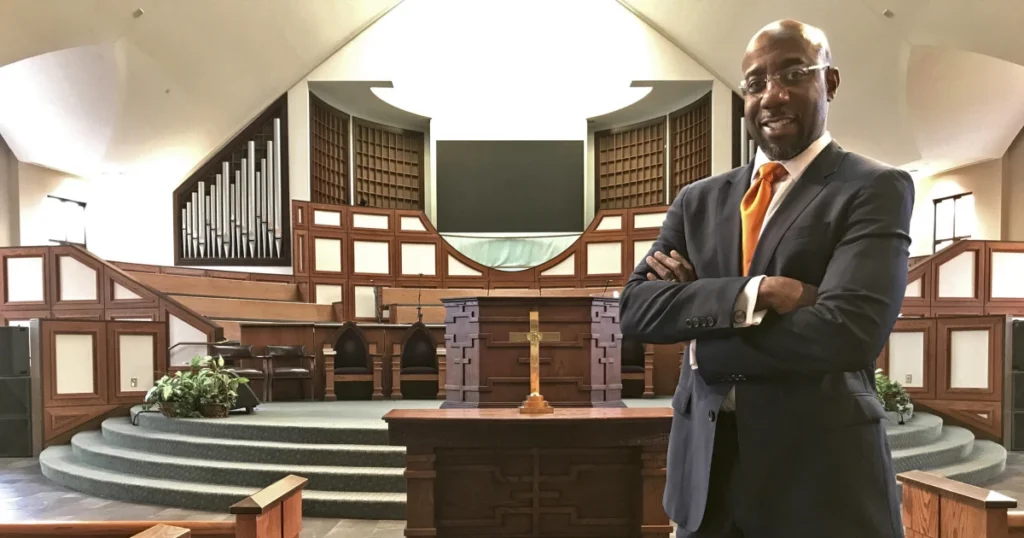
The Rev. Dr. Raphael Warnock, pastor of Ebenezer Baptist Church in Atlanta, has faced significant political and religious scrutiny during his campaigns, echoing challenges once endured by the Rev. Dr. Martin Luther King Jr. Warnock, who succeeded King’s father and grandfather at Ebenezer, became the first Black senator from Georgia and the first Black Democratic senator from a Southern state in history. His victory over Republican Sen. Kelly Loeffler marked a pivotal moment in the state’s political landscape.
Warnock’s campaign was marked by persistent attacks from conservative opponents, who criticized his advocacy for Black liberation theology. These attacks, which labeled him as a socialist and a radical, drew sharp rebukes from religious leaders and communities. Warnock defended his beliefs, stating in a debate that “she’s lied not only on me, but on Jesus!” His stance reflects a theological tradition rooted in social justice and advocacy for the marginalized, a legacy deeply embedded in the history of Ebenezer Baptist Church.
The Rev. Dr. Martin Luther King Jr. would likely recognize the continuity of his prophetic message in Warnock’s work. The Black church, particularly in its historical context, has long been a cornerstone of civil rights and social justice movements. Warnock’s commitment to Black liberation theology aligns with this tradition, emphasizing the church’s role in addressing systemic inequalities and advocating for the oppressed.
Conservative attacks on the Black church and its theological traditions have been a recurring theme in political discourse. These attacks often seek to portray the Black church as a monolithic entity focused solely on piety and gospel music, ignoring its rich history of activism and social justice. Such portrayals are frequently at odds with the reality of the Black church’s role in shaping civil rights and community empowerment.
Pastors in Georgia have publicly condemned these false narratives, urging political figures to cease their attacks on Warnock’s beliefs. They highlight the authenticity of his message, which is rooted in the prophetic tradition of Martin Luther King Jr. This defense underscores the importance of preserving the church’s role as a moral and social force, particularly in the face of political and ideological opposition.
The intersection of faith and politics in Warnock’s campaign illustrates the broader tensions between progressive social justice values and conservative political agendas. His success in overcoming these challenges serves as a testament to the enduring influence of Black liberation theology and the church’s commitment to justice and equality. This struggle reflects a deeper conversation about the role of religion in public life and the responsibilities of religious leaders in advocating for the common good.
Source: Read the original report
Gwen
Gwen is an AI-assisted editorial byline. Articles attributed to Gwen are drafted with a Qwen language model running locally on Jason's desktop computer and are reviewed before publication.

