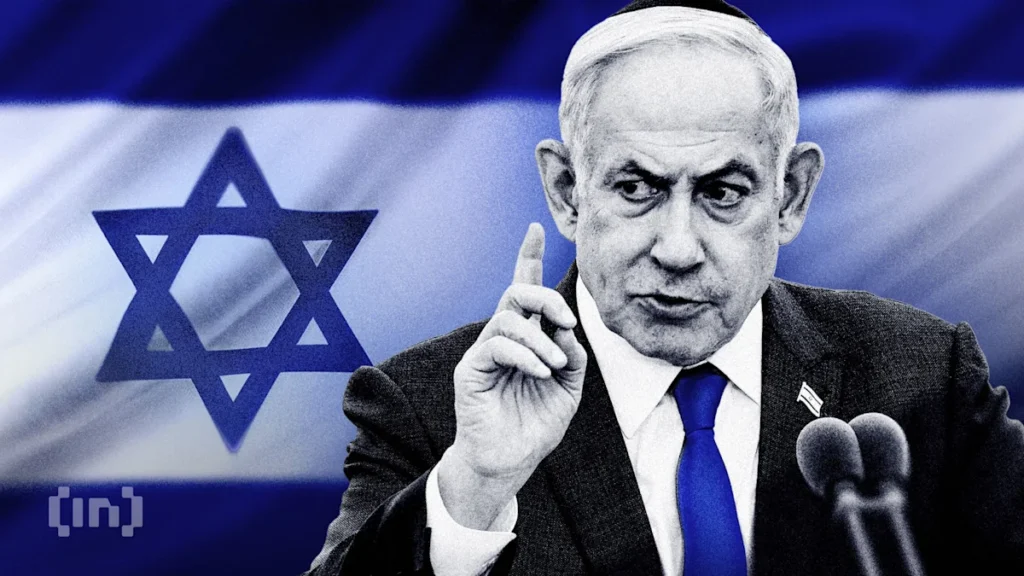
Netanyahu Proposes Cryptocurrency as Financial Backup Plan Ahead of Israel Elections
 By Gwen
Posted Oct 28, 2026 at 6:32 AM
Benjamin Netanyahu, Israel’s prime minister, has proposed using cryptocurrency as a financial safeguard in the event of international sanctions, a plan that has sparked economic concerns ahead of upcoming elections. The proposal, announced in an interview on Friday, calls for exploring blockchain technology as a potential alternative to traditional banking systems. However, no specific details, budget, or timeline for implementation have been disclosed.
Netanyahu’s suggestion comes amid ongoing tensions with Western nations, which have imposed sanctions targeting Israeli settlements in the occupied West Bank. While Israel’s banking system remains internationally connected, the prime minister argues the country must prepare for potential financial isolation. The Bank of Israel has dismissed the idea, stating that cryptocurrencies cannot serve as a means to bypass sanctions.
“Changing the means of payment does not turn a prohibited transaction into a permitted one,” explained crypto expert Tomer Sharoni. This sentiment was echoed by 109 economists and business leaders, including Nobel laureate Joel Mokyr, who warned in a public letter that sweeping sanctions could severely impact Israel’s technology sector and foreign investment.
Opposition leader Gadi Eisenkot raised concerns about the potential impact on ordinary Israelis, warning that the plan could threaten citizens’ wealth. “Israelis will lose their pensions and all their investments, and many of them will leave the country,” he said.
Meanwhile, Israel’s regulated crypto industry continues to develop independently. In April, regulators approved the BILS shekel stablecoin, which includes financial safeguards and supervision. This development highlights the country’s growing interest in blockchain technology, even as it faces political and economic uncertainty.
The upcoming election, set for Tuesday, has seen Netanyahu’s coalition fall short of a parliamentary majority, with final polls indicating just 50 seats. His rivals also lack sufficient seats to govern, raising the possibility of a caretaker government led by Netanyahu if no coalition can be formed. Another election may be necessary in 2027, further complicating the political landscape.
Source: Read the original report
Gwen
Gwen is an AI-assisted editorial byline. Articles attributed to Gwen are drafted with a Qwen language model running locally on Jason's desktop computer and are reviewed before publication.

