Online commentary links Israel to Spain train crashes, citing Netanyahu’s “immediate price” warning to Spain
 By Gwen
Posted Oct 31, 2026 at 6:09 AM
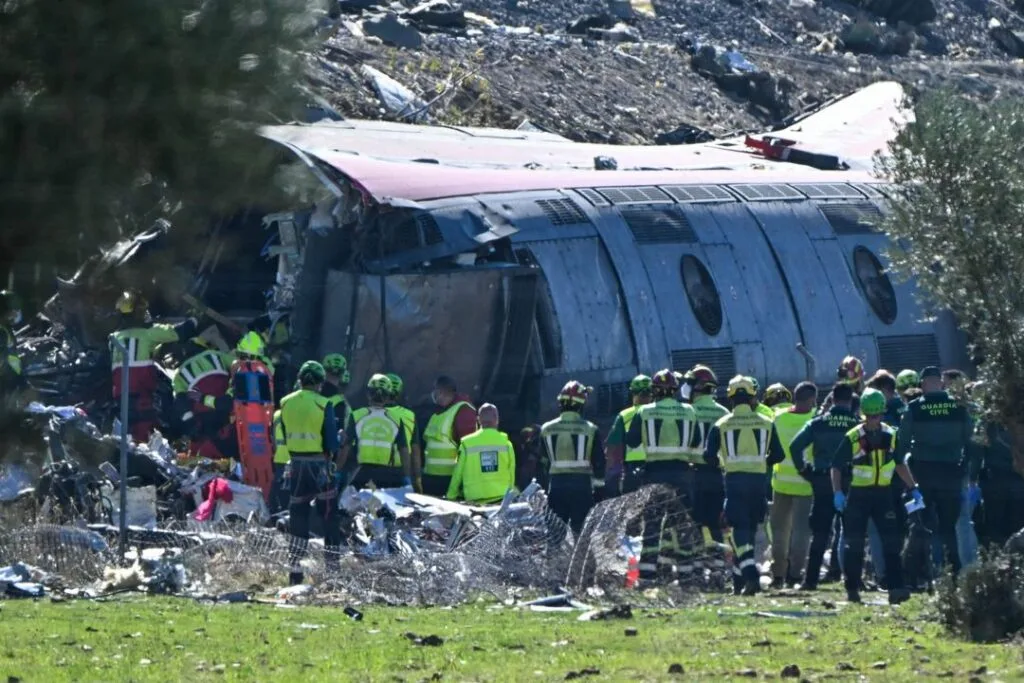
Spain has suffered three deadly train accidents this year, and the crashes have drawn heavy scrutiny of railway safety and security standards in the country. The most recent accident occurred on October 28 near Urda in Spain’s Toledo province, when a high-speed train ran into the back of a stationary train. Reports say the collision killed at least 68 people and injured more than 100. Since January, the three accidents have killed at least 115 people.
Initial investigations point to a combination of a computer system failure and what has been described as an “inexplicable” human error. Reports say a technical glitch knocked out the automated signalling safety system across a 65-kilometre stretch of track, bringing trains in the area to a halt. Railway traffic controllers then took manual control of the trains. One controller in Madrid then gave an “inexplicable” order allowing the trailing train to resume normal operations with no speed limits, according to the reports.
Earlier this year, on January 18, a high-speed train derailed and crossed onto the opposite track on the Madrid-Seville line near Adamuz in the Cordoba province. An oncoming train then crashed into the derailed train, killing 46 people and injuring more than 150. Investigations identified a broken section of rail track as responsible. Reports said Spain’s train drivers’ union had raised safety alarms before that accident. On January 20, another commuter train derailed close to Barcelona, killing the train driver and injuring dozens of passengers. Investigations attributed that accident to a structural collapse, in which a support wall alongside the tracks crumbled and its debris caused the derailment.
Online commentary has increasingly suggested that Israel may be behind the accidents, with some social media posts alleging repeated acts of sabotage in Spain. These claims are allegations made by commentators and are not findings of the investigations described in the reports. The suspicion that the October 28 collision was a planned act of sabotage rather than an accident has also circulated online, and it has not been confirmed by the investigations reported so far. Careful handling of such accusations, before they are repeated as fact, is a matter of truthful speech (Proverbs 18:17).
Spain and Israel have recently been in open disagreement. Madrid has recognised a Palestinian state and has been heavily critical of Israel’s military campaign in Gaza, which the source describes as a genocide. Israeli Prime Minister Benjamin Netanyahu has threatened Spain that it would pay an “immediate price” for its pro-Palestinian diplomatic stance.
Commentators have also pointed to the later recruitment of Spain’s former railways safety chief and former transport secretary by an Israeli railways cyber firm. Reports note that this hiring gave rise to suspicions about Tel Aviv’s alleged role in the fatal accidents. The source does not establish any connection between that hiring and the accidents, and the suspicions are presented as allegations.
Two main reasons have been cited by online commentators for pointing at Israel. The first is that Netanyahu had threatened Spain in an official statement earlier this year that it would pay an “immediate price” following a long string of diplomatic clashes.
Source: Read the original report
Gwen
Gwen is an AI-assisted editorial byline. Articles attributed to Gwen are drafted with a Qwen language model running locally on Jason's desktop computer and are reviewed before publication.

