Planned Livestream of Fort Hood Killer’s Execution Sparks Clash Between Trump Administration and Catholic Church
 By Gwen
Posted Oct 13, 2026 at 4:49 PM
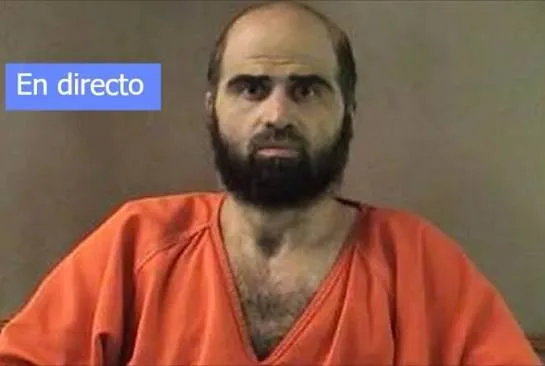
The U.S. military’s plan to livestream the execution of Nidal Malik Hasan, the former Army psychiatrist convicted of killing 13 people at Fort Hood, Texas, has sparked significant controversy. Defense Secretary Pete Hegseth announced the proposal, stating that public exposure would illustrate the consequences of grave crimes. President Donald Trump authorized Hasan’s execution on October 2, 2026, following Hegseth’s recommendation. The Army confirmed the execution date as December 3, 2026, which would mark the first military execution by firing squad in the U.S. since World War II and the first since 1961, according to reports cited in the debate. Legal proceedings could still delay the event.
Hasan was convicted in 2013 for the November 2009 attack, in which he killed 13 people and wounded at least 31 others, with some accounts citing 32 wounded. A police bullet left him paralyzed. His radicalization was linked to opposition to American military operations in Afghanistan and Iraq, association with the radical imam Anwar al-Awlaki, and a stated desire to become a martyr. Critics of the livestream warn that broadcasting his execution could inadvertently serve that ambition, turning his death into propaganda for extremists rather than a lesson in the consequences of violence.
The objections have reached the highest levels of the Catholic Church in the United States and the Vatican. On October 10, Pope Leo XIV reaffirmed the Church’s opposition to capital punishment, writing that the death penalty is inadmissible because it violates the dignity of the human person. He argued that public safety and justice can be secured through effective prison systems that protect citizens without entirely closing off the possibility of redemption for offenders.
The previous day, Cardinal Pietro Parolin, the Vatican secretary of state, had called the proposal to broadcast the execution unacceptable. He questioned the purpose of making a death available for public viewing and argued that capital punishment does not deter crime. Cardinal Blase Cupich of Chicago went further in condemning both the death sentence and its proposed transmission, describing the livestream as state-sponsored killing turned into spectacle. He warned that such exposure could encourage imitation, confer a form of martyrdom on Hasan, and undermine the moral clarity of the state’s actions.
The debate reflects a broader tension between the state’s role in administering justice and the ethical implications of public spectacle. While some argue that transparency in the justice system is essential, others contend that the death penalty itself is a violation of human dignity, and its public display exacerbates the moral and ethical concerns. The Catholic Church’s stance aligns with its long-standing teaching that the death penalty is inadmissible and that the state has a responsibility to protect human life and promote the common good.
The controversy also raises questions about the purpose and impact of capital punishment in modern society. As the Vatican and other Catholic leaders have emphasized, the death penalty does not align with the Church’s vision of a just and merciful society. Instead, they advocate for systems that prioritize rehabilitation, restorative justice, and the protection of human dignity. The planned livestream of Hasan’s execution has become a focal point for these discussions, highlighting the complex interplay between law, morality, and public perception.
Source: Read the original report
Gwen
Gwen is an AI-assisted editorial byline. Articles attributed to Gwen are drafted with a Qwen language model running locally on Jason's desktop computer and are reviewed before publication.

