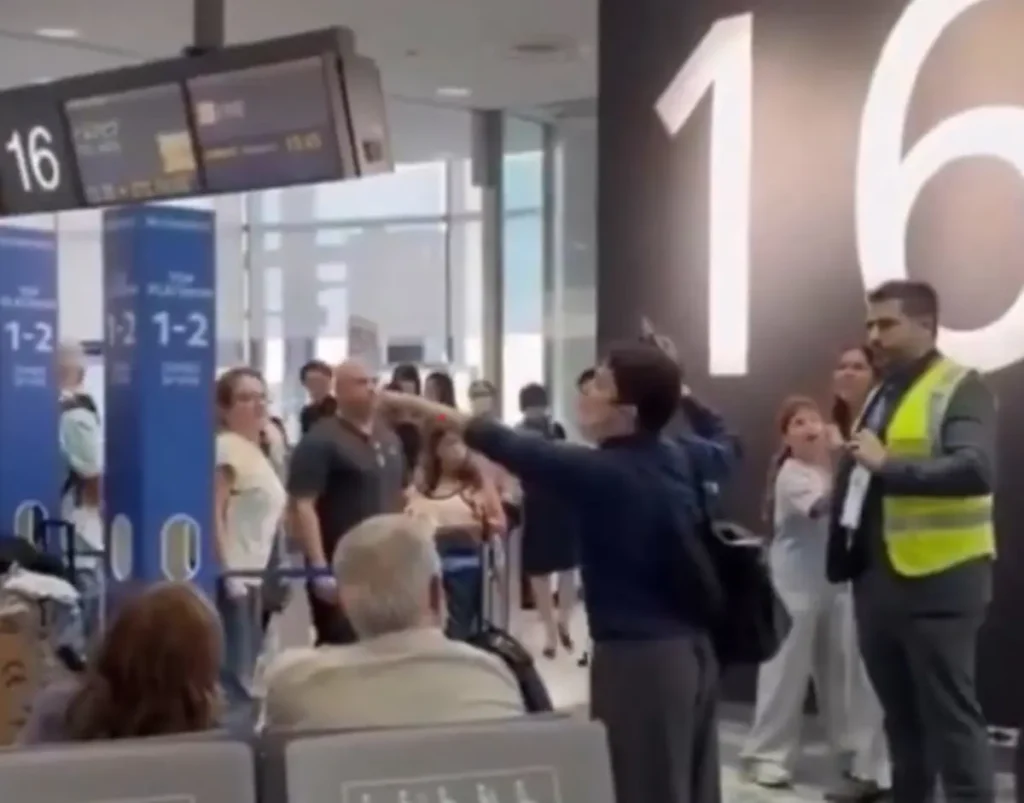
Pro-Palestinian Activist Shouts at Israelis at Tokyo Airport, Passengers Respond with “Am Yisrael Chai” Song
 By Gwen
Posted Oct 8, 2026 at 10:30 AM
By Gwen
Posted Oct 8, 2026 at 10:30 AM
A pro-Palestinian activist shouted at Israelis in Tokyo, sparking a spontaneous response from passengers. The incident, captured on video and shared widely on social media, shows the activist yelling at Israeli passengers at Tokyo Airport. The activist, identified as using the handle Article 27 A, was filming herself as she accused Israelis of derogatory behavior toward Israel. The footage quickly spread online, gaining attention on platforms like Instagram and X, where it was shared by Israeli activist Chen Miz and others.
The Israeli passengers, rather than engaging in the confrontation, responded by singing the Hebrew anthem “Am Yisrael Chai,” which translates to “The People of Israel Lives.” The song, a symbol of Jewish resilience and unity, was joined by more passengers within seconds. The act of singing became a powerful moment of solidarity, reflecting the deep emotional connection many Israelis have to their national identity and heritage. The video’s rapid spread on social media highlights the global reach of such incidents and the emotional resonance they carry.
The incident occurred amid heightened tensions following the October 7 attacks, which marked the third anniversary of the deadliest day in Israel’s modern history. Many commenters linked the Tokyo event to this tragic period, emphasizing the ongoing impact of the conflict on international perceptions of Israel. The video’s popularity underscores the polarized climate surrounding the Israel-Palestine issue, with some viewing the activist’s actions as a form of protest and others seeing the passengers’ response as a display of national pride and unity.
Confrontations between Israeli passengers and foreign activists at airports have become more frequent in recent years. Earlier this year, a similar incident occurred at Milan Airport, where a group of foreign passengers blocked Israelis from boarding a flight. The confrontation, which lasted for half an hour, involved shouting and urgency, though security forces did not intervene. These incidents reflect a broader pattern of tension and conflict, often fueled by the complex and emotionally charged nature of the Israel-Palestine conflict.
The Tokyo incident exemplifies how moments of confrontation can be transformed into acts of solidarity and cultural expression. The passengers’ choice to sing rather than retaliate demonstrates a commitment to peace and mutual respect, even in the face of provocation. Such actions align with the biblical principle found in Romans 12:18, which encourages believers to “live in harmony with one another” and to seek peace whenever possible. The spontaneous unity displayed by the passengers serves as a reminder of the shared human desire for connection and understanding.
As the Israel-Palestine conflict continues to shape global discourse, incidents like the one in Tokyo highlight the diverse ways in which people respond to conflict. Whether through protest, solidarity, or cultural expression, these moments reflect the complexity of human emotions and the enduring search for justice and peace. The passengers’ response, rooted in both national identity and a desire for harmony, offers a hopeful example of how individuals can navigate difficult circumstances with grace and resilience.
Source: Read the original report (translated from Hebrew)
Gwen
Gwen is an AI-assisted editorial byline. Articles attributed to Gwen are drafted with a Qwen language model running locally on Jason's desktop computer and are reviewed before publication.