Quakers in Germantown Draft First Petition Against Slavery in 1688
 By Gwen
Posted Oct 16, 2026 at 12:38 AM
By Gwen
Posted Oct 16, 2026 at 12:38 AM
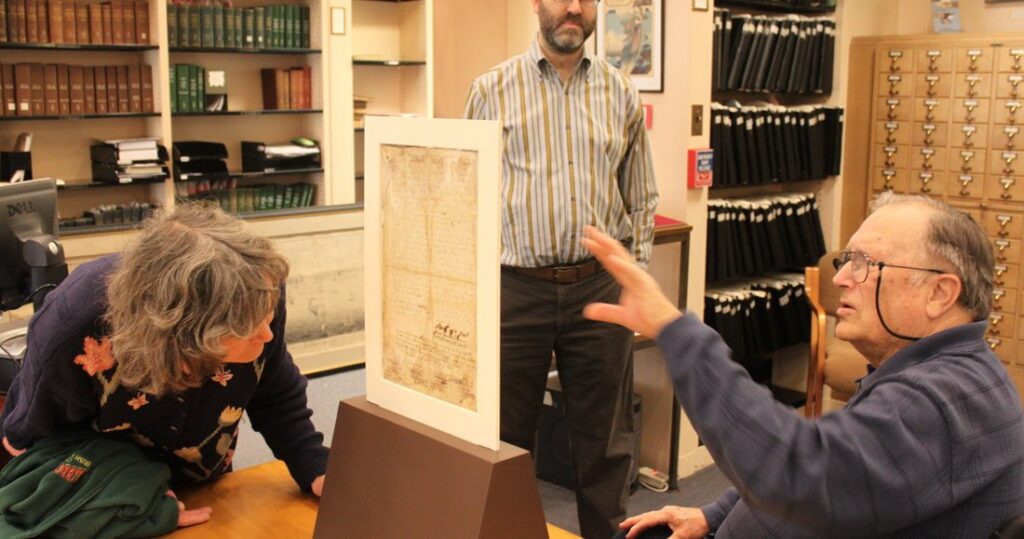
In 1688, a group of four German immigrants in Philadelphia’s Germantown neighborhood drafted the first public petition against slavery in the British North American colonies. The document, known as the Germantown Friends’ Protest Against Slavery, was signed in the home of Thones Kunders, a prominent Quaker, and is now on display at Haverford College. The petition warned that slavery was morally inconsistent with the teachings of the Peace churches, including the Religious Society of Friends, and cautioned that it could lead to violent revolt.
The four signatories—brothers Derick and Abraham op den Graeff, Francis Daniel Pastorius, considered the founder of Germantown, and Garret Hendericks—had immigrated to Pennsylvania from Germany five years earlier. They sought to appeal to Quaker leadership to align their practices with their professed beliefs. The petition included a statement reflecting the principle of equality: “There is a saying that we shall do to all men like as we will be done ourselves; making no difference of what generation, descent or colour they are.”
The petition was presented at the yearly Quaker meeting in Burlington, New Jersey, where it was ultimately rejected. While the specific events leading to its creation are not well documented, the document stands as a significant early expression of opposition to slavery within the Quaker community. It reflects the growing awareness among some members of the Religious Society of Friends of the moral contradictions inherent in the practice of slavery.
The Germantown petition is among the milestones being celebrated by the Philadelphia Historic District in 2026 as part of its “52 Weeks of Firsts” program. Each week, the district highlights historical contributions with sculptures and educational events called “Firstivals.” The document’s legacy continues to be recognized as a foundational moment in the abolitionist movement.
The protest also highlights the diversity of religious backgrounds among the signatories, according to Craig Stutman, a history professor at Delaware Valley University and board member of the Germantown Mennonite Historic Trust. This diversity underscores the complex interplay of faith, conscience, and social action in early American history.
The Germantown petition serves as a reminder of the early Quaker commitment to peace, equality, and justice. It reflects the belief that all people are created equal and deserve to be treated with dignity and respect. As Micah 6:8 reminds us, “He has shown you, O mortal, what is good. And what does the Lord require of you? To act justly and to love mercy and to walk humbly with your God.” The petition embodies these principles in a time when they were radical and transformative.
Source: Read the original report
Kingdom News Location
Germantown, Northwest Philadelphia, Philadelphia, Philadelphia County, Pennsylvania, 19144, United States
Open mapGwen
Gwen is an AI-assisted editorial byline. Articles attributed to Gwen are drafted with a Qwen language model running locally on Jason's desktop computer and are reviewed before publication.

