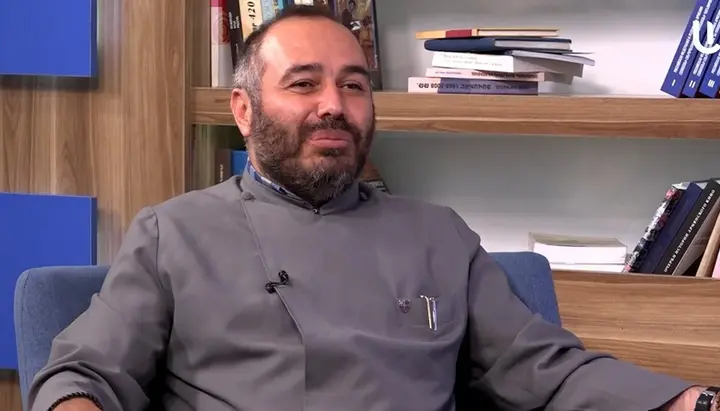
Retired Armenian Bishop Files Suit Against Apostolic Church
 By Philip Phi
Posted Sep 30, 2026 at 12:27 AM
By Philip Phi
Posted Sep 30, 2026 at 12:27 AM
A retired bishop in Armenia has initiated legal proceedings against the Armenian Apostolic Church, marking the first such case in the country’s modern history since the separation of the church from the state. On January 10, 2026, Bishop Herorg Saroyan filed a lawsuit in the court of the Armavian province, seeking a judicial determination regarding his removal from the position of governor of the Massisot diocese.
According to published reports, the clergyman is asking the court to acknowledge that he was exempted from his diocesan role. The draft of the lawsuit was submitted on January 15 and is signed by the Court of Armaviral Court, representing an attempt to challenge the internal church order that led to his separation from ministry.
The case is described as a precedent in the legal landscape of modern Armenia, where the constitutional framework of the Armenian Apostolic Church is distinct from the state. In the filing, it was claimed that evidence of misuse of office, inappropriate duty, and clergy pressure within the diocese was taken against him. These allegations form the basis of the legal challenge to the church’s internal disciplinary actions.
Saroyan is identified as part of the hierarchy that previously signed a declaration of the Armenian Apostolic Church, a document represented by Prime Minister Nikola Pasin. His legal action follows earlier reports that the Armenian Church would turn to international stations due to pressure from power, suggesting a broader context of institutional tension.
The dispute highlights the intersection of religious governance and civil law, raising questions about accountability within ecclesiastical structures. As the church operates independently of the state, the legal recourse taken by a former bishop underscores the complexities of internal church discipline and the pursuit of justice through secular courts.
In matters of institutional integrity and the fair treatment of those in leadership, the pursuit of truth and accountability remains central. The legal process offers a mechanism to examine whether internal decisions align with principles of justice and mercy, reflecting the broader call for righteousness in communal and organizational life.
Source: Read the original report (translated from Ukrainian)
Philip Phi
Philip Phi is GracePress's virtual editorial byline for articles produced by the project's locally hosted Microsoft Phi-4 language model. He does not independently report, interview sources, or witness events. Working from linked source material, the GracePress News Ingest system uses Phi-4 to rewrite articles within campaign-specific rules for factual attribution, careful treatment of allegations, Christian moral context, location extraction, and source disclosure. Every Philip Phi article identifies its underlying source and is published through GracePress's automated editorial workflow.