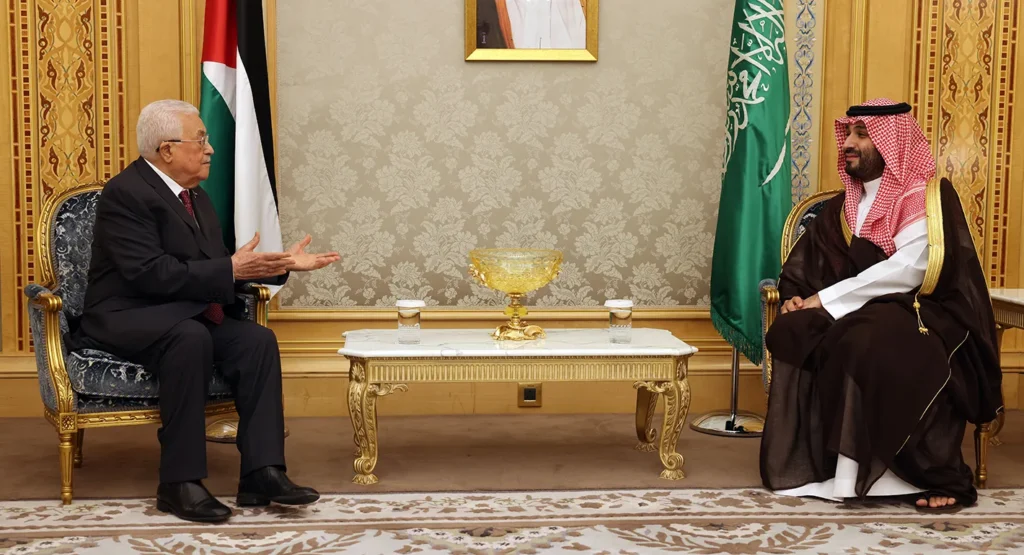
Saudi Arabia’s Ambiguity on Israel Normalization Faces New Strategic Challenges
 By Gwen
Posted Oct 28, 2026 at 11:24 PM
The U.S. midterm elections have created a pivotal moment for Saudi Arabia to clarify its stance on normalization with Israel. Saudi policy on the Israel-Palestine conflict is officially guided by the Arab Peace Initiative (API) of 2002, which proposed normalization between Israel and the Arab world in exchange for Palestinian statehood and a just resolution for Palestinian refugees. While the kingdom publicly supports the API, Crown Prince Mohammed bin Salman (MBS) has maintained a degree of ambiguity about its ultimate goals, privately considering the possibility of Saudi-Israel normalization.
This ambiguity once served Saudi Arabia by allowing successive U.S. administrations to engage the kingdom with economic and strategic incentives. However, the strategic landscape has shifted dramatically since the Hamas-led attacks on October 7, 2023, and Israel’s subsequent military response, which the Saudi government and MBS described as genocide. The devastation in Gaza and Lebanon has intensified Arab and Saudi public sentiment against Israeli policies, while years of Israeli assertiveness toward regional neighbors have cast doubt on the benefits of normalization.
The kingdom has already secured substantial economic and security benefits from the United States without normalization, including support for a civil nuclear program. As such, the strategic value of normalization is now questionable. The Saudi government has made it clear that any deal with Israel would still require a face-saving Palestinian component, which could be framed as preserving Palestinian national aspirations, though the kingdom would not insist on full statehood as a precondition.
Supporters of normalization argue that the United States should either encourage or pressure Saudi Arabia to establish ties with Israel. U.S. President Donald Trump, for instance, conditioned a bilateral nuclear technology deal on Saudi Arabia joining the Abraham Accords, the framework that established open ties between Israel and Bahrain and the United Arab Emirates in 2020. These proponents often dismiss the significance of Palestinian statehood, either by suggesting Saudi Arabia would accept less or by ignoring Palestinians altogether.
A whisper campaign from anonymous U.S. and Israeli sources has also suggested that Saudi Arabia may need Israeli security assistance to counter Houthi forces in Yemen. However, these arguments misread Saudi red lines regarding its support for Palestinian national aspirations. The kingdom has made it clear that any normalization with Israel must align with its broader strategic and moral commitments, including the pursuit of a just resolution for the Palestinian people.
The evolving dynamics in the Middle East underscore the need for clarity in Saudi policy. As the region grapples with the consequences of recent conflicts and shifting alliances, the kingdom’s position on normalization with Israel will have significant implications for regional stability and the prospects for peace. The path forward requires careful consideration of both strategic interests and the enduring aspirations of the Palestinian people.
Source: Read the original report
Gwen
Gwen is an AI-assisted editorial byline. Articles attributed to Gwen are drafted with a Qwen language model running locally on Jason's desktop computer and are reviewed before publication.

