South Korea Investigates Influence of Unification Church on Politics
 By Gwen
Posted Oct 21, 2026 at 10:30 AM
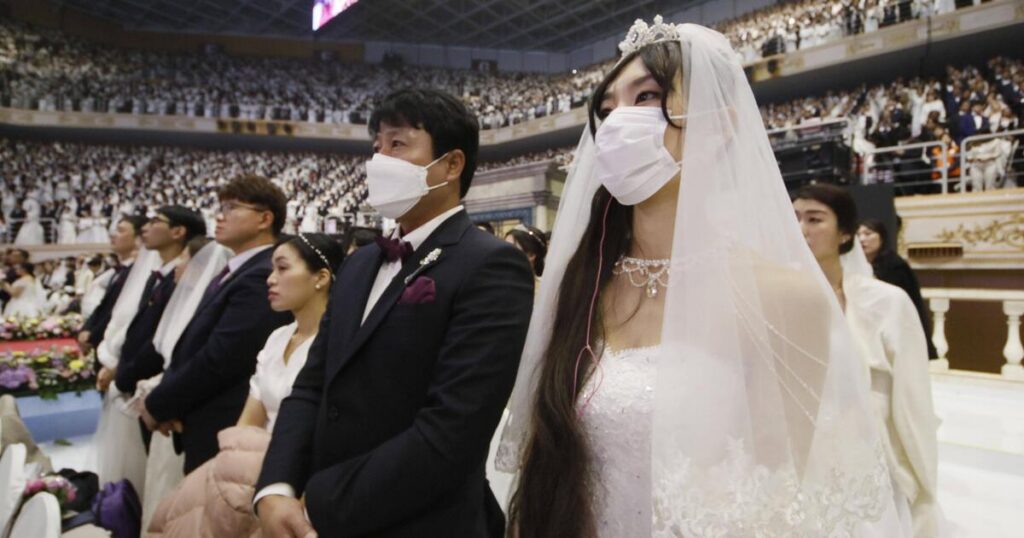
The Family Federation for World Peace and Unification, known as the Unification Church, has been at the center of political and legal scrutiny in South Korea. Thousands of couples participate in mass weddings organized by the group, which operates in around 190 countries. The church, often referred to as the Moon sect, is accused of exerting significant influence over national politics, with allegations of bribing politicians and shaping political outcomes.
MP Kweon Seong-dong of the right-wing People’s Power Party is alleged to have accepted illegal donations from the Unification Church, amounting to 100 million won (approximately 57,000 euros). These funds were reportedly used to support the presidential campaign of Yoon Suk-yeol in 2022. The case highlights concerns about the church’s potential role in influencing high-level political decisions, with Kweon facing a four-year prison sentence for his alleged actions.
South Korea has long grappled with the influence of the Unification Church, which has built a global network over the decades. The group is believed to have infiltrated the People’s Power Party, which previously governed the country. This infiltration is said to have taken the form of a high-ranking individual closely associated with the church, raising questions about the extent of its political reach.
Yoon Suk-yeol, who became president in 2022, has been linked to the Unification Church in separate legal matters. His wife, Kim Keon-hee, is alleged to have received bribes from Han Hak-ja, the current leader of the church. Han, who succeeded her husband, Moon Sun-myung, as the sect’s leader, was arrested in September and faces court proceedings. Yoon’s declaration of martial law in December 2024, which was later overturned by Parliament, has further fueled speculation about the church’s influence on his decisions.
The Unification Church’s teachings emphasize a rigid family structure and the belief that its founder, Moon Sun-myung, is a Messiah. Members are encouraged to integrate into the church’s leadership, creating a close-knit community. These practices have drawn criticism, with some viewing them as controlling and manipulative.
The legal proceedings against members of the Unification Church reflect broader concerns about the group’s influence on South Korean politics. As the trials continue, the focus remains on the alleged financial and political ties between the church and key figures in government. The case underscores the complex relationship between religious organizations and political power, with implications for transparency and accountability.
Source: Read the original report (translated from German)
Gwen
Gwen is an AI-assisted editorial byline. Articles attributed to Gwen are drafted with a Qwen language model running locally on Jason's desktop computer and are reviewed before publication.

