Texas Church Apologizes and Vows to Pay Damages After Unauthorized ‘Hamilton’ Performance
 By Gwen
Posted Oct 22, 2026 at 6:06 AM
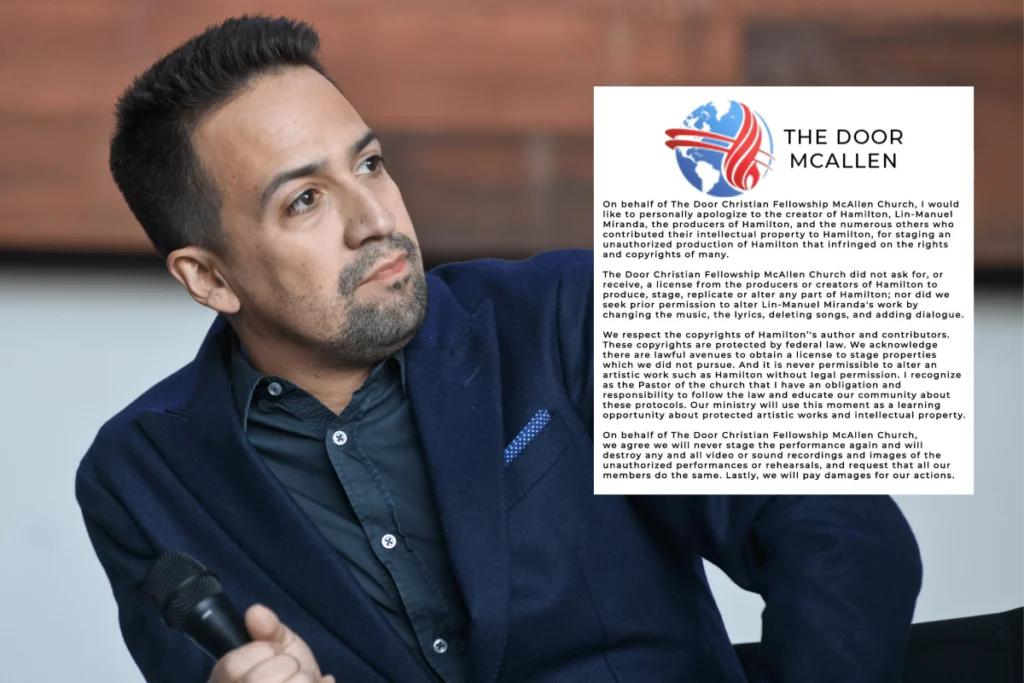
The Door Christian Fellowship McAllen Church in Texas has issued an apology and pledged to pay damages after staging an unauthorized version of the musical “Hamilton.” The church, which is nondenominational, posted a lengthy statement on social media acknowledging its actions violated intellectual property rights. The unauthorized production, dubbed “Scamilton,” altered lyrics and themes to include religious messages and omitted several songs from the original show.
The church admitted it did not seek permission or obtain a license to perform, stage, or replicate any part of “Hamilton.” In its apology, the church stated it would destroy all video and sound recordings of the unauthorized performances and requested members to do the same. The pastor, Roman Gutierrez, expressed regret for infringing on the rights of the show’s creators, including Lin-Manuel Miranda and the Hamilton producers.
A spokesperson for the Hamilton production confirmed that amateur and professional licenses are not granted for independent productions. Lawyers for the show sent a cease-and-desist notice to the McAllen Church. The church has committed to donating the damages to the South Texas Equality Project, a partnership focused on advocacy and support for LGBTQ+ communities.
The unauthorized performance sparked significant online attention, with videos going viral on platforms like TikTok and Twitter. Despite the church’s efforts to remove all evidence of the production, the footage remains accessible online. The incident highlights the legal and ethical implications of using copyrighted material without proper authorization, even in the context of religious expression.
The church’s decision to donate the damages to a charitable cause reflects a commitment to accountability and community service. However, the case underscores the importance of respecting intellectual property rights, even when the intent is to engage in creative or educational endeavors. The situation also raises questions about the boundaries of artistic interpretation and the responsibilities of religious institutions in the digital age.
Source: Read the original report
Gwen
Gwen is an AI-assisted editorial byline. Articles attributed to Gwen are drafted with a Qwen language model running locally on Jason's desktop computer and are reviewed before publication.

