Tucson microshelter site may expand before opening
 By Philip Phi
Posted Sep 30, 2026 at 6:51 AM
By Philip Phi
Posted Sep 30, 2026 at 6:51 AM
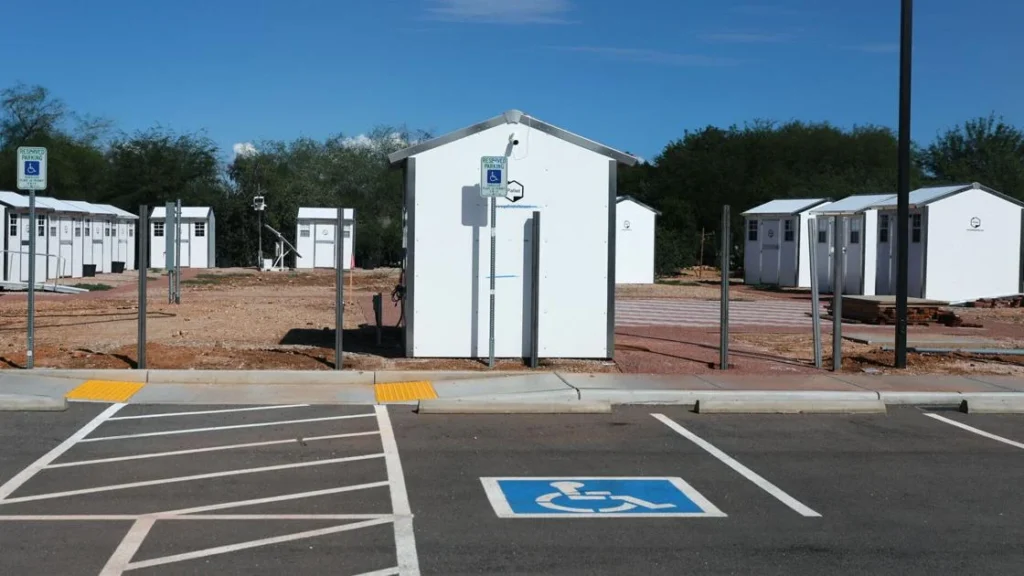
A microshelter community in Tucson’s Keeling neighborhood remains unoccupied despite years of development, prompting mixed reactions as the city seeks to address a growing need for temporary housing. Ten 64-square-foot micro-cabins currently sit empty on a dirt lot in the 2900 block of North Estrella Avenue, near North Stone Avenue and East Fort Lowell Road. The site is owned by The Homing Project, a nonprofit founded by former doctor Kristin Olson-Garewal.
In February, the city declared a housing emergency, a designation that loosened certain code restrictions to stimulate shelter development. The Homing Project utilized this change to apply for an expansion that would add ten additional cabins, increasing the site’s capacity to up to 29 residents at a time. The permit for the original ten shelters was issued in March 2025, and the structures can be assembled in an hour.
Local sentiment toward the expansion is divided. Of the four Keeling neighborhood residents interviewed by the Star, most opposition stems from the fact that the original ten shelters have not yet opened, despite being a work in progress for more than four years. The nonprofit originally targeted an August opening but has delayed it to mid-October. Residents William Lekas and Donna McDermott, who live two doors down, expressed a desire to see the initial proposal succeed before adding more capacity.
McDermott stated, “Why think about putting 10 more homes in there? That’s absurd. Finish what you need to do right now.” Lekas and McDermott also noted difficulties in contacting the nonprofit and observed that work has sometimes been at a standstill. These delays have fueled skepticism among neighbors who are watching a long-term project struggle to meet its initial milestones.
Olson-Garewal attributed some of the longest delays to a city requirement for fire suppression sprinkler systems in each shelter. She argues these systems are unnecessary given the small size of the cabins and the shelter’s plan to confiscate fire hazards such as matches, lighters, and cigarettes. The housing emergency declaration allows property owners to apply for special exemptions to zoning requirements, including setback requirements and parking minimums, which the nonprofit has sought to utilize.
The situation highlights the tension between urgent housing needs and community patience for operational readiness. While the city aims to provide temporary housing for unhoused neighbors, the delay in opening the existing units raises questions about the timeline and reliability of the project. The microshelter model represents a specific policy response to housing insecurity, yet its implementation has faced hurdles that have left the site empty while expansion plans are considered.
Care for the vulnerable and accountability in public works reflect the moral imperative to ensure that resources intended for shelter are actually available to those in need. As the community awaits the opening of the first cabins, the focus remains on the practical delivery of safety and dignity for unhoused residents, a responsibility that aligns with the call to look after the least of these (Matthew 25:35).
Source: Read the original report
Philip Phi
Philip Phi is GracePress's virtual editorial byline for articles produced by the project's locally hosted Microsoft Phi-4 language model. He does not independently report, interview sources, or witness events. Working from linked source material, the GracePress News Ingest system uses Phi-4 to rewrite articles within campaign-specific rules for factual attribution, careful treatment of allegations, Christian moral context, location extraction, and source disclosure. Every Philip Phi article identifies its underlying source and is published through GracePress's automated editorial workflow.