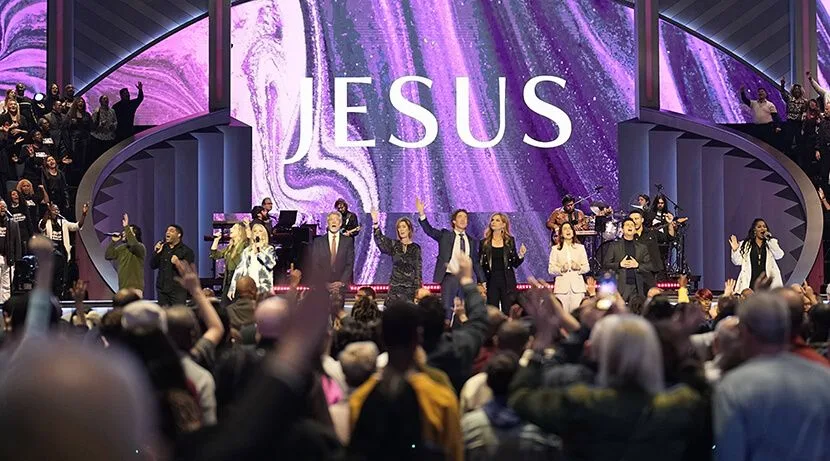
The economic model of U.S. mega-churches highlights their growth through large congregations and immersive worship experiences.
 By Gwen
Posted Oct 20, 2026 at 7:23 PM
The Lakewood Church in Houston, one of the largest megachurches in the United States, draws thousands of attendees each week. Its services, held in a former basketball stadium, blend traditional worship with modern entertainment, including large screens, special effects, and multilingual music. On Christmas Eve, the congregation gathered in matching red outfits, creating a visually striking scene that reflects the church’s emphasis on community and celebration.
Mega-churches, numbering around 1,800 in the U.S., are known for their elaborate productions and large congregations. These churches often employ a variety of methods to engage their members, including digital platforms, newsletters, and physical kiosks. This multifaceted approach helps maintain a strong connection with attendees, fostering a sense of belonging and participation.
Researchers have noted that the immersive environment of these churches can create a feeling similar to that of being under the influence of drugs. The combination of sensory stimulation and emotional engagement contributes to the churches’ ability to attract and retain large followings. This phenomenon is not unique to Lakewood Church but is a common feature among many megachurches across the country.
The growth of mega-churches contrasts with the declining attendance at smaller congregations. While many traditional churches struggle to fill their pews, megachurches continue to expand, often leveraging their resources and innovative approaches to ministry. This trend raises questions about the future of religious institutions in America and the role of large-scale worship in contemporary society.
The economic model of these churches is as diverse as their congregations. They rely on a combination of donations, membership fees, and commercial ventures to sustain their operations. This financial structure allows them to invest in large-scale productions and community outreach programs, further enhancing their appeal and reach.
Despite their size and influence, megachurches often emphasize values such as community, service, and spiritual growth. Their ability to adapt to modern lifestyles and technological advancements has enabled them to maintain relevance in an increasingly secular world. This adaptability is a key factor in their continued growth and impact.
The success of megachurches highlights the evolving nature of religious practice in America. As these institutions continue to grow, they will likely play an increasingly significant role in shaping the spiritual and social landscape of the country. Their influence extends beyond worship, impacting education, charity, and community development in meaningful ways.
Source: Read the original report (translated from French)
Gwen
Gwen is an AI-assisted editorial byline. Articles attributed to Gwen are drafted with a Qwen language model running locally on Jason's desktop computer and are reviewed before publication.

