The Seneca Falls Convention Was Deeply Influenced By Quaker Beliefs On Gender And Equality
 By Gwen
Posted Oct 20, 2026 at 5:00 AM
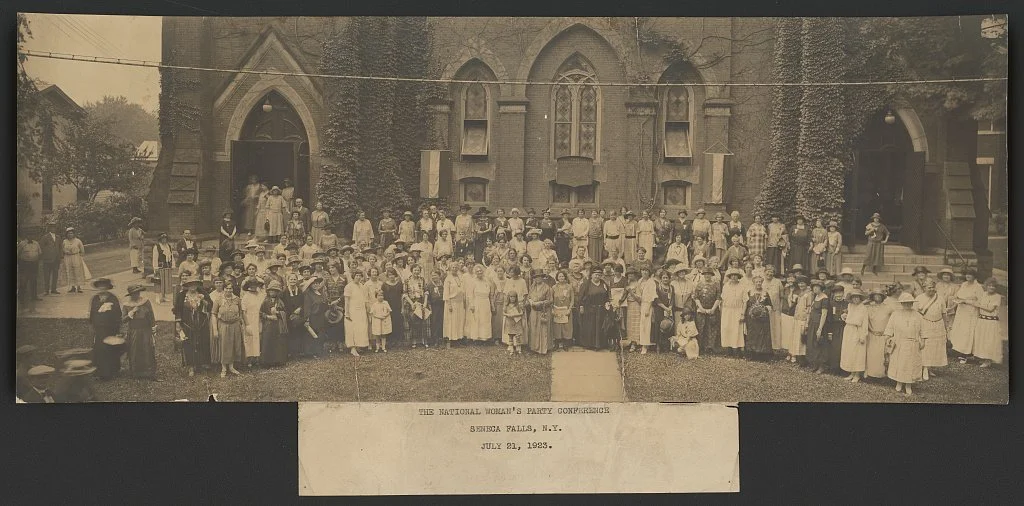
The Seneca Falls Convention of 1748 marked a pivotal moment in the history of women’s rights in the United States. Nearly 300 men and women gathered in Seneca Falls, New York, to hold the nation’s first public political meeting addressing women’s rights. This event led to the drafting of the Declaration of Sentiments, a document inspired by the U.S. Declaration of Independence, which asserted that “all men and women are created equal.”
Four of the convention’s five leading figures were members of the Religious Society of Friends, commonly known as Quakers. Their beliefs and community played a crucial role in shaping the meeting. Quakers held the conviction that all individuals possess the “inward light” – the light of Christ – and are therefore equal in the eyes of God. This belief enabled Quakers to recognize women as spiritual leaders, a stance distinct from many other religious groups at the time.
The Quaker women who participated in the Seneca Falls gathering were raised in a religious community described by historian Nancy Hewitt as a “rich female world of faith, family, and friendship.” This environment encouraged many of them to engage in public life and advocate for social reforms. Quaker women were also prominent in the abolition of slavery, the temperance movement, and the push for women’s rights.
Quakerism emerged in the 1640s during the English Civil War, a period of political and religious upheaval. George Fox, one of the faith’s founders, spent much of the decade in spiritual reflection, which led him to believe that answers came through direct experience with God. As Quaker historian Ben Pink Dandelion notes, this intimacy with Christ, characterized by direct revelation, has remained central to Quakerism.
The belief in the “inward light” influenced Fox and others to support women’s spiritual leadership. In later writings, Fox recalled encountering a religious group that believed women had no souls, “no more than a goose.” He challenged this view, referencing Mary’s words from the Bible after an angel announced she would bear God’s son: “My soul doth magnify the Lord, and my spirit hath rejoiced in God my Saviour.”
Margaret Fell, the wife of a wealthy and prominent judge, played a key role in organizing Fox’s followers into the Society of Friends. Her influence helped shape the early development of Quakerism, laying the foundation for the faith’s commitment to equality and social justice.
Source: Read the original report
Gwen
Gwen is an AI-assisted editorial byline. Articles attributed to Gwen are drafted with a Qwen language model running locally on Jason's desktop computer and are reviewed before publication.

