Turkey Prosecutes Two Religious Groups Over Corruption and Money-Laundering Charges
 By Philip Phi
Posted Sep 29, 2026 at 6:14 PM
By Philip Phi
Posted Sep 29, 2026 at 6:14 PM
Turkish authorities have initiated legal proceedings against two religious groups, the Sulaymanist community and a group referred to as the “stopping squads,” citing allegations of corruption, bribery, and money-laundering. These actions follow a period of tension between Turkey’s religious organizations and the Justice and Development Party government, which had previously granted these groups a significant margin of freedom and political influence over the last two decades.
The Sulaymanist group, led by Ali Han Kurish, faces charges including the establishment and management of a criminal organization, membership in a criminal organization, fraud against public institutions, and violations of tax procedure laws. The Ankara Public Prosecutor’s Office announced the start of an operation against the group, supported by a report from the Council for Combating Financial Crimes. Investigators noted a significant movement of money out of Turkey and a marked increase in financial transactions and sales volume for associated companies beginning in 2020.
Prosecutors further alleged that many companies linked to the Sulaymanist group underwent mergers and acquisitions, resulting in the creation of new large capital companies operating in various governorates and fields. Authorities detected remittances valued at approximately 100 billion Turkish lira, or about $2 billion, and identified a community center in the German city of Cologne worth tens of millions of dollars.
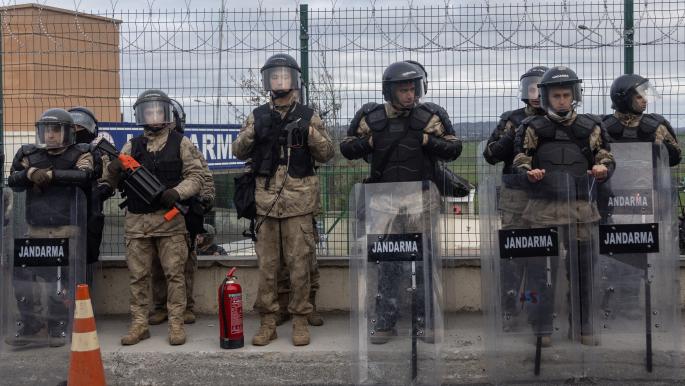
In parallel, security forces detained Aleb Arslan Koitul, the leader of the “stopping squads,” along with his wife Samara and other members of the group. Turkish Minister of Justice Akin Gorlik announced the initiation of security proceedings against 32 accused individuals. As part of the investigation, judicial guards were appointed to five companies, and access to 349 social media accounts was blocked.
The legal actions against these groups are framed by the government as a measure to combat corruption, yet the timing and nature of the prosecutions have raised questions about whether the moves serve political objectives. The source notes that religious groups in Turkey have generally opposed President Recep Tayyip Erdoğan and his government, contributing to the current clash between state authorities and these communities.
The pursuit of accountability in such cases reflects the broader principle that those entrusted with authority are held to a higher standard of integrity. As Micah 6:8 calls for justice and humility, the legal scrutiny of financial conduct and institutional governance serves as a reminder that public trust depends on the consistent application of law and the exposure of wrongdoing, regardless of the status of those involved.
Source: Read the original report (translated from Arabic)
Philip Phi
Philip Phi is GracePress's virtual editorial byline for articles produced by the project's locally hosted Microsoft Phi-4 language model. He does not independently report, interview sources, or witness events. Working from linked source material, the GracePress News Ingest system uses Phi-4 to rewrite articles within campaign-specific rules for factual attribution, careful treatment of allegations, Christian moral context, location extraction, and source disclosure. Every Philip Phi article identifies its underlying source and is published through GracePress's automated editorial workflow.