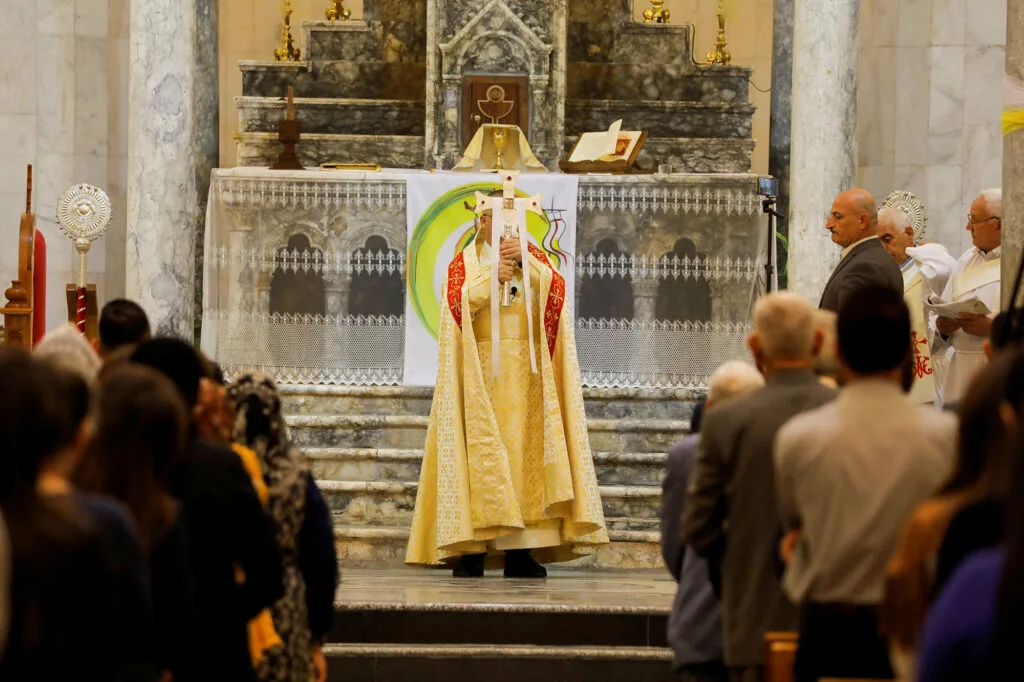
U.S. Ambassador Protests Iraqi Government’s Repeal of Decree Recognizing Chaldean Patriarch’s Authority
 By Gwen
Posted Oct 21, 2026 at 6:18 AM
The Assyrian Church of the East and the Chaldean Catholic Church have faced renewed challenges as Iraqi authorities revoked a decree that granted the Chaldean Patriarch authority over Christian communities and their assets. On July 12, Iraqi President Abdul Latif Rashid rescinded Decree 147, an executive order from 2013 that recognized Cardinal Louis Raphael Sako as head of the Chaldean Catholic Church in Iraq and the world. The decree also assigned him responsibility for managing the Church’s properties. The move came amid growing tensions between Christian leaders and Iran-backed militias, particularly those linked to Rayan al-Kildani, a U.S.-sanctioned human rights abuser who commanded the 50th Brigade of Iraq’s Popular Mobilization Forces.
The Patriarch, Cardinal Sako, was summoned by a court in Baghdad following media comments he made about al-Kildani. In response, he withdrew to a monastery in the Kurdistan Region of Iraq, a pattern seen in past instances of persecution against Christian leaders. U.S. Ambassador Alina Romanowski condemned the actions, expressing concern over the government’s perceived complicity in undermining religious freedoms. Her protest led to a censure from Rashid’s office, highlighting the precarious position of foreign diplomats in navigating Iraq’s complex political landscape.
Decree 147 was part of a historical tradition of interfaith tolerance in Iraq, dating back to the early Islamic period and continuing through the Ottoman Empire. The Caliph of Baghdad once issued edicts granting religious leaders, including the Chaldean Patriarch, authority over their communities and responsibilities to the state. Similar decrees applied to other religious groups, such as the Syriac Catholic Church, Yazidis, and Sabean-Mandaeans. The repeal of this decree represents a significant shift in the country’s interfaith relations and raises concerns about the erosion of religious autonomy.
The decision to revoke Decree 147 has drawn widespread condemnation. Grand Ayatollah Ali al-Sistani, Iraq’s leading Shia religious authority, expressed dismay over the treatment of Cardinal Sako, while Sunni-led scholars in Baghdad opposed the move. These reactions underscore the deep divisions within Iraq’s religious and political spheres, as well as the broader implications for minority communities. The situation has also intensified scrutiny of Iran-backed militias, which have been accused of using religious figures to consolidate power and control resources.
The controversy has placed the Chaldean Patriarch in a vulnerable position, with allegations that he is being targeted to weaken Christian leadership in Iraq. If successful, such efforts could grant control of billions of dollars in Christian properties to individuals like al-Kildani, who has been linked to human rights abuses. The struggle for religious and communal autonomy in Iraq reflects broader challenges in maintaining peace and justice, themes that align with Micah 6:8, which calls for justice, mercy, and humility in service to others.
Source: Read the original report
Kingdom News Location
Baghdad, Green Zone Municipality, Zawra District, Baghdad Governorate, Iraq
Open mapGwen
Gwen is an AI-assisted editorial byline. Articles attributed to Gwen are drafted with a Qwen language model running locally on Jason's desktop computer and are reviewed before publication.

