UK Green Party Approves Definition of Zionism as Racism in Controversial Proposal
 By Gwen
Posted Oct 4, 2026 at 1:06 PM
By Gwen
Posted Oct 4, 2026 at 1:06 PM
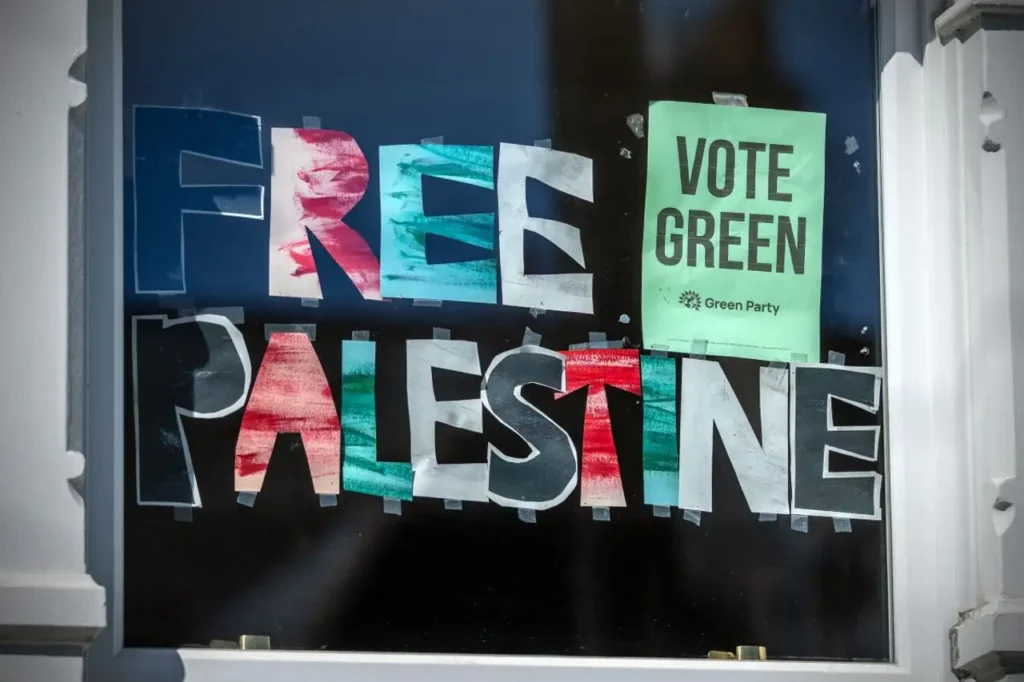
The UK Green Party has taken a controversial stance by approving a proposal that defines Zionism as racism. The decision was made at the party’s annual conference in Brighton, with a majority of 56% in favor and 44% opposing. The proposal, submitted by a group called “Greens 4 Palestine,” frames Zionism as a political ideology that seeks to establish a Jewish state through ethnic nationalism, potentially excluding or controlling non-Jewish populations. This interpretation contrasts with the broader view of Zionism as the right of the Jewish people to self-determination in their historic homeland, Israel.
The approved proposal also calls for the establishment of a single Palestinian state, granting equal rights to all, including Jews. However, it does not explicitly mention the coexistence of Israel alongside a Palestinian state in a two-state solution. This omission has sparked debate within the party, as the official policy previously supported one or two states through a democratic process.
The proposal came to a vote after winning first place in the party’s issue ballot. Green Party leader Zack Polanski did not vote but supported an amendment calling for a single Palestinian state with Jerusalem as its capital and protections for Jewish members of self-proclaimed groups. Both amendments were rejected by the vote, highlighting the internal divisions within the party.
Party officials were divided on the proposal. Deputy Leader Rachael Millward expressed opposition, while second Deputy Leader Death Ali supported the rejection. The party’s parliamentary leader, Dr. Elie Crape, urged members to reject the proposal, noting that former leaders Sian Berry, Adrian Ramsey, and Carla Denier had also opposed it. These internal disagreements underscore the complexity of the issue within the party.
The Green Party has long positioned itself against racism and the illegal occupation of Palestinian and Syrian territories. It has consistently called for an end to arms sales to the Israeli government and expressed concern over the situation in Gaza and the West Bank. These positions remain central to the party’s approach, even as the recent vote introduces a new dimension to its policy stance.
The decision has drawn mixed reactions from the Israeli public and political landscape. While some view the proposal as a dangerous precedent that could exacerbate tensions, others see it as a necessary critique of policies that have led to conflict and suffering. The debate reflects broader global discussions on the nature of Zionism and its implications for peace and justice.
In the context of these discussions, Micah 6:8 reminds us to act justly, love mercy, and walk humbly with God. As the world grapples with these complex issues, the call to seek peace and justice remains a vital guide for all.
Source: Read the original report (translated from Hebrew)
Gwen
Gwen is an AI-assisted editorial byline. Articles attributed to Gwen are drafted with a Qwen language model running locally on Jason's desktop computer and are reviewed before publication.