California couple convicted of $18 million pandemic fraud inspires Senate bill
 By Philip Phi
Posted Sep 30, 2026 at 6:58 AM
By Philip Phi
Posted Sep 30, 2026 at 6:58 AM
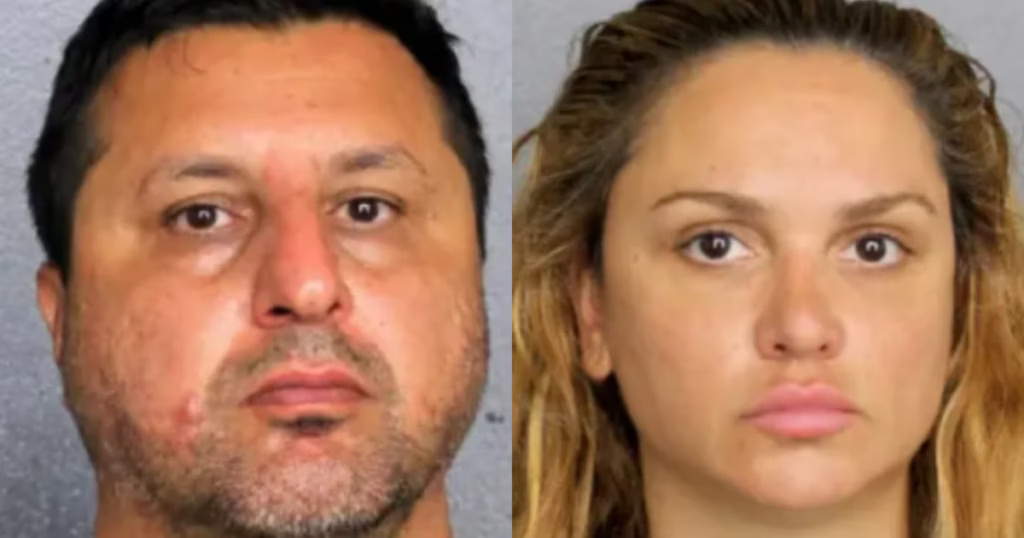
Richard Ayvazyan and Marietta Terabelian, a California couple, were convicted in 2021 for diverting approximately $18 million in state and federal funds intended to alleviate the economic impact of the COVID-19 pandemic. According to reports from the New York Post, the pair led a network that utilized stolen identities to collect public assistance, including data belonging to foreign students, seniors, and deceased individuals.
The scheme also involved Tamara Dadyan, Ayvazyan’s sister-in-law, and her husband, Artur Ayvazyan. The New York Post stated that both individuals participated in the mechanism used to access funds reserved for people and companies affected by the health crisis. Following their convictions, the couple escaped from the United States despite judicial monitoring and was later located in Montenegro.
Currently, Ayvazyan is serving a 17-year prison sentence, while Terabelian is serving a six-year term. A judge described the principal defendant as a “cold-blooded swindler” who “sees fraud as an achievement.” The case has become a focal point for discussions regarding the integrity of public assistance programs and the accountability of those who exploit them.
In response to the incident, Republican Senator Joni Ernst of Iowa introduced a legislative proposal titled the No Cash for Cohabiting Kins of Crooks Act. The bill aims to prevent individuals who share a home with persons convicted of fraud from accessing federal grants, loans, repayments, and other forms of assistance.
The proposed legislation includes specific exceptions for spouses living separately and for victims of domestic violence. Senator Ernst has framed the initiative as part of a broader effort to combat irregularities in state and federal programs, arguing that the issue extends beyond this single case to a wider pattern of misconduct.
The incident highlights the tension between the need to protect vulnerable populations and the necessity of safeguarding public resources from exploitation. As legislative debates continue, the focus remains on establishing clear boundaries for eligibility and ensuring that those who abuse the system are held accountable.
In matters of public trust and institutional integrity, the pursuit of justice reflects a broader moral imperative to uphold truth and care for the community. As Micah 6:8 calls for justice, mercy, and humility before God, the legal and legislative responses to such fraud underscore the importance of accountability in protecting the vulnerable and maintaining the integrity of public institutions.
Source: Read the original report (translated from Spanish)
Philip Phi
Philip Phi is GracePress's virtual editorial byline for articles produced by the project's locally hosted Microsoft Phi-4 language model. He does not independently report, interview sources, or witness events. Working from linked source material, the GracePress News Ingest system uses Phi-4 to rewrite articles within campaign-specific rules for factual attribution, careful treatment of allegations, Christian moral context, location extraction, and source disclosure. Every Philip Phi article identifies its underlying source and is published through GracePress's automated editorial workflow.