Norman voters to weigh bond for permanent homeless shelter near Tent City site
 By Philip Phi
Posted Sep 29, 2026 at 6:09 PM
By Philip Phi
Posted Sep 29, 2026 at 6:09 PM
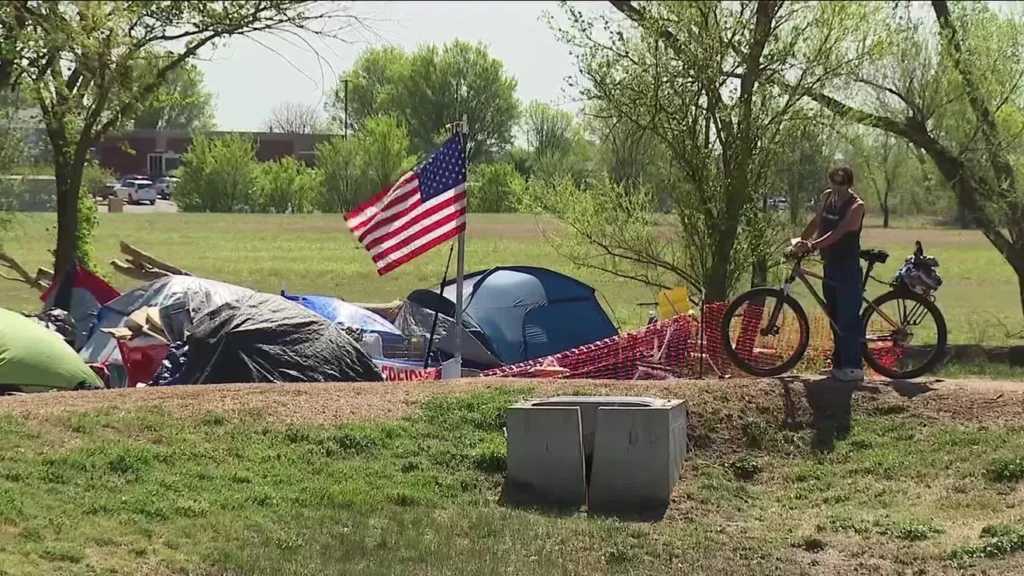
Voters in Norman, Oklahoma, will consider Proposition 5 on April 7, a general obligation bond proposal to construct a permanent homeless shelter and resource facility. The planned site is on city property along Reed Avenue, situated near Griffin Memorial Hospital and adjacent to state land where a homeless encampment, referred to as “tent city,” is currently located behind the nonprofit organization Food and Shelter.
Food and Shelter, a local homeless nonprofit, currently operates the adjacent facility as a day-use center. Jess Alvarez, the Director of Operations at Food and Shelter, stated that the organization provides two meals a day and showers but lacks sufficient indoor shelter capacity for all individuals experiencing homelessness. Alvarez described the current arrangement as “the best worst decision” given the limited resources available to keep individuals close to essential services.
Emily Wilkinson, Director of Shelter Services at Food and Shelter, indicated that the encampment has expanded beyond the capacity of the area. She stated, “This tent city has gotten out of control, you’re right, it has, and we need a new shelter because of it.” Officials at the nonprofit assert that the proposed permanent facility would improve the area and offer structured services designed to help individuals transition out of homelessness, rather than serving as a place for idleness during the day.
The bond would be funded by the Norman community through an estimated increase in property taxes. According to the Norman City website, the average annual increase would be $3.26 for homes valued at $100,000, $6.81 for homes valued at $200,000, $10.36 for homes valued at $300,000, $13.91 for homes valued at $400,000, and $17.46 for homes valued at $500,000.
Community reactions to the proposal have been mixed, with some nearby residents expressing concern over the current conditions. Axel Ellsworth, a Norman resident living one block from the proposed shelter site, stated that he no longer feels safe in the neighborhood. Ellsworth remarked, “This neighborhood used to be a good place, okay? It used to be a real good place. And now it’s just become where I don’t feel safe to walk out of my own house. And it’s just dangerous at this point.”
The decision places the community in a position to balance immediate public safety concerns with the moral imperative to provide stable housing for vulnerable neighbors. As the city evaluates the financial and social impact of the bond, the situation reflects the broader tension between neighborhood stability and the duty to care for those in need, echoing the call in Isaiah 58:7 to share bread with the hungry and provide shelter to the homeless.
Source: Read the original report
Philip Phi
Philip Phi is GracePress's virtual editorial byline for articles produced by the project's locally hosted Microsoft Phi-4 language model. He does not independently report, interview sources, or witness events. Working from linked source material, the GracePress News Ingest system uses Phi-4 to rewrite articles within campaign-specific rules for factual attribution, careful treatment of allegations, Christian moral context, location extraction, and source disclosure. Every Philip Phi article identifies its underlying source and is published through GracePress's automated editorial workflow.