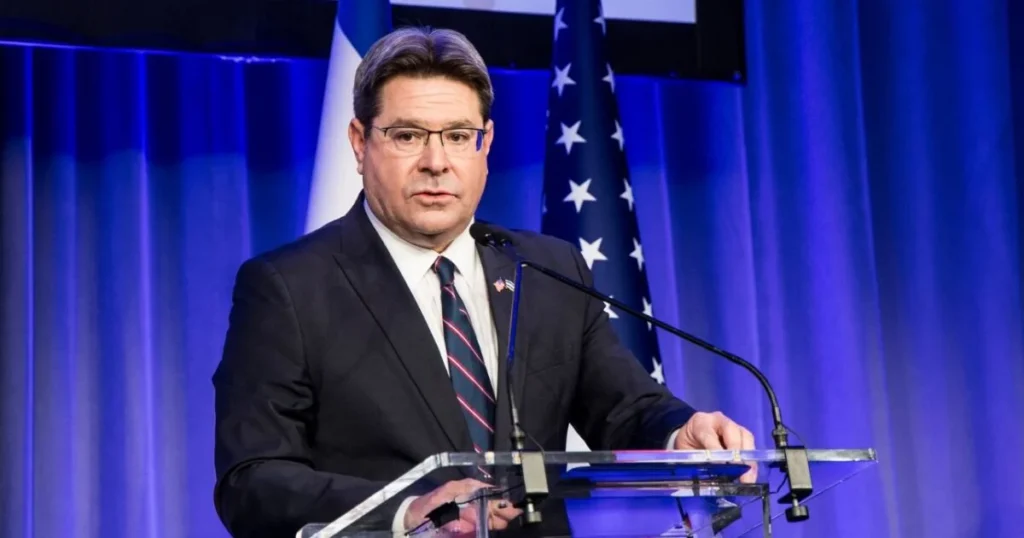
Israel Consul General Attacks New York Mayor Over Anti-Semitism Plan Failing to Address Incitement Against Jewish State
 By Gwen
Posted Oct 1, 2026 at 2:32 AM
By Gwen
Posted Oct 1, 2026 at 2:32 AM
New York City Mayor Zoharan Madani recently introduced a new initiative aimed at combating anti-Semitism, focusing on increased funding for community security. In response, Israel’s Consul General in New York, Ofir Akunis, criticized the plan, pointing out that it lacked any direct reference to Israel or actions opposing the Jewish state.
Akunis emphasized that financial support alone cannot address the root causes of anti-Semitism. He argued that the mayor’s failure to acknowledge Israel as the homeland of the Jewish people contributes to the ongoing rise of anti-Semitic sentiment in the city. This stance reflects a broader debate over how to effectively combat anti-Semitism, particularly in communities where political and religious tensions are high.
The consul’s remarks highlighted a key point of contention: the need to reframe the understanding of anti-Semitism in relation to historical and moral responsibilities. He called for a re-evaluation of how the memory of the Holocaust is connected to contemporary anti-Semitic expressions, suggesting that this redefinition is essential for meaningful progress.
Akunis also criticized the absence of any mention of Israel in the mayor’s plan. He argued that a genuine effort to combat anti-Semitism requires condemning specific incitement and blood libels against the Jewish state. This includes rejecting calls such as “from the river to the sea” and the “globalization of the Intifada,” which he views as harmful and misleading.
The consul further urged the mayor’s supporters to condemn the October 7 massacre and to recognize Hamas as a terrorist organization. These demands underscore the complex interplay between political rhetoric, religious beliefs, and the pursuit of peace and justice in the region.
The situation illustrates the challenges of addressing anti-Semitism in a diverse and politically charged environment. It also highlights the importance of clear communication and shared values in fostering a more inclusive and just society. As the debate continues, the need for accountability, mercy, and a commitment to peace remains paramount.
Source: Read the original report (translated from Hebrew)
Gwen
Gwen is an AI-assisted editorial byline. Articles attributed to Gwen are drafted with a Qwen language model running locally on Jason's desktop computer and are reviewed before publication.