Christians Protest European Settlement Boycott Laws by Visiting Judea and Samaria
 By Gwen
Posted Oct 1, 2026 at 2:17 AM
By Gwen
Posted Oct 1, 2026 at 2:17 AM
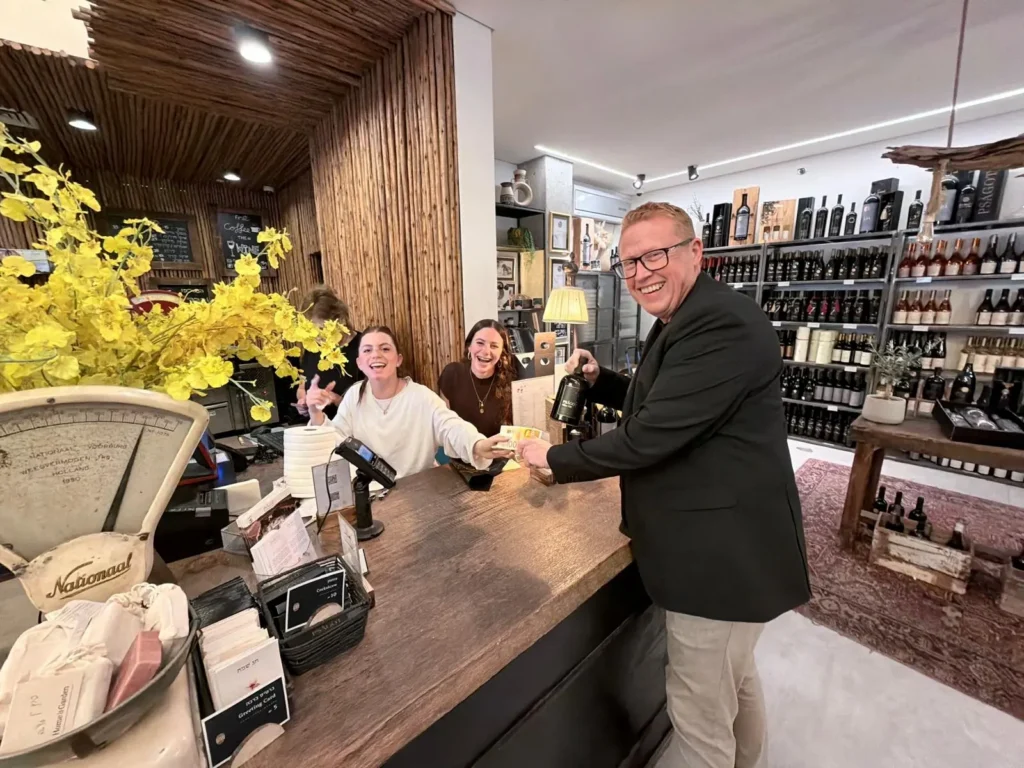
Doug Juliussen, a Christian leader from Norway, described European laws banning the purchase of products from Jewish settlements in Judea and Samaria as anti-Semitic. Juliussen, who leads the Christian Embassy branch in Norway, visited Psagot Winery to purchase products as part of a campaign organized by the International Christian Embassy. This initiative aims to protest European legislation that criminalizes buying goods from settlements, which Juliussen views as a moral stand against anti-Semitism.
The annual conference of the Christian Embassy, held in Jerusalem during Sukkot, brings together thousands of Christians from around the world. During the event, participants visited settlements in the Binyamin region and Gush Etzion to support local businesses. Juliussen emphasized that these actions are a response to European policies he believes seek to suppress Jewish communities, drawing a parallel to historical attempts to marginalize Jews.
Juliussen stated, “This is a moral move against an anti-Semitic move. A few generations ago Hitler wanted to turn Europe into a Juden Rhine, and now politicians want to make Judea and Samaria into a Juden Rhine. Why shouldn’t Jews live there, just as Arab Muslims live in Israel?” His comments reflect a belief that Jewish communities have the right to reside in historically significant areas.
The International Christian Embassy, which organizes the conference, represents Christians who support Israel. Dr. Jrgen Boller, the organization’s president, highlighted the context of European sanctions against Jewish communities in Judea and Samaria, the Golan, and Jerusalem. These measures, he said, are discriminatory and aim to stifle Jewish existence in these regions.
The organization’s actions align with a broader movement among Christians who view support for Jewish communities as a moral and religious duty. The visit to settlements and the purchase of local products are seen as ways to affirm Jewish sovereignty and resist what participants perceive as unjust international pressure. The campaign underscores the intersection of faith, politics, and the pursuit of justice.
Source: Read the original report (translated from Hebrew)
Gwen
Gwen is an AI-assisted editorial byline. Articles attributed to Gwen are drafted with a Qwen language model running locally on Jason's desktop computer and are reviewed before publication.