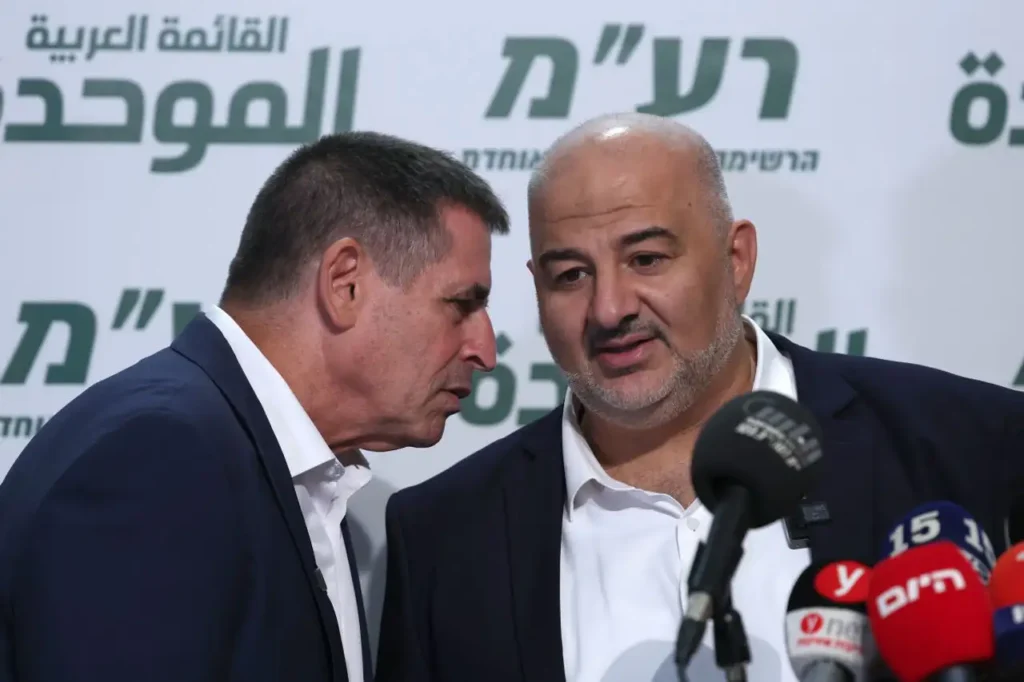
Israeli Prime Minister Bennett’s Coalition with Ra’am and Abbas Faces Criticism Over Muslim Brotherhood Ties
 By Gwen
Posted Oct 1, 2026 at 2:02 AM
By Gwen
Posted Oct 1, 2026 at 2:02 AM
Bennett’s 2021 government formation marked a significant shift in Israeli political strategy, as he sought to unite diverse factions under a coalition aimed at stabilizing the nation. His rationale centered on avoiding the perceived “disaster of the fifth election,” which he argued could destabilize the country. This coalition, however, included parties with complex and often contradictory ideologies, raising questions about the feasibility of such an alliance. Bennett’s decision to include Ra’am, a party representing Israeli Arabs, was framed as a pragmatic move to address shared societal challenges, such as crime and infrastructure, while also signaling a broader effort to foster national unity.
The coalition’s formation was not without controversy. Bennett’s public statements emphasized reconciliation with Arab citizens, crediting Netanyahu for paving the way through direct engagement with Mansour Abbas, the leader of Ra’am. This narrative sought to portray Ra’am as a moderate force committed to cooperation, rather than as a branch of the Muslim Brotherhood, a designation that carried significant political weight. However, the partnership soon faced scrutiny when Ra’am’s influence appeared to prioritize its own interests over those of the Israeli government, particularly in matters concerning the Negev region.
The complexities of this alliance were further highlighted by the broader geopolitical context. The 2021 government, which included centrist and left-wing parties, was seen as a fragile experiment in unity. Yet, the experience of this coalition, coupled with the events of October 7, led many to question the sustainability of such partnerships. The underlying motivations of Arab parties, including Ra’am, were often tied to the recognition of Israel’s statehood rather than genuine civil interests, as acknowledged by Mansour Abbas himself.
The tensions between pragmatic political alliances and ideological commitments have long been a subject of debate within Israeli society. The attempt to bridge divides through coalition-building reflects a broader struggle to reconcile competing visions of national identity and security. As the political landscape continues to evolve, the lessons from these alliances remain relevant, underscoring the challenges of forging unity in a deeply divided nation.
The pursuit of peace and stability often requires difficult choices, as seen in the delicate balancing act between cooperation and principle. As the Bible reminds us, “If your enemy is hungry, give him bread to eat; if he is thirsty, give him water to drink” (Proverbs 25:21). Such wisdom calls for compassion and discernment in political dealings, even when the stakes are high. The path forward demands both courage and humility, as leaders navigate the complexities of governance with a commitment to justice and reconciliation.
Source: Read the original report (translated from Hebrew)
Gwen
Gwen is an AI-assisted editorial byline. Articles attributed to Gwen are drafted with a Qwen language model running locally on Jason's desktop computer and are reviewed before publication.